Search for laundry room inspiration and you get a wall of stacked front loaders with a beautiful folding counter running the whole length above them. Gorgeous. Completely irrelevant if your washer opens from the top.
That was my situation for years.
A top loader cannot stack, needs vertical clearance for the lid, and eats the counter space every one of those photos depends on. So I stopped trying to copy them and worked out what actually fits around the machine I have, which turned out to be a better room anyway.
The measurements that change everything here
Lid clearance is the number that matters most. A top load lid needs somewhere between 18 and 24 inches of clear space above the machine to open fully, and most top loaders sit around 42 to 44 inches tall. That means the underside of any shelf or cabinet above it should be at least 60 to 66 inches from the floor, and higher if your lid hinges back rather than straight up.
Measure yours with the lid fully open before you mount anything. I did not, and I put a shelf at 58 inches which meant the lid stopped about three quarters of the way and I had to hold it with one hand while loading. It stayed like that for eight months out of pure stubbornness. Also check your side clearance, since most manufacturers want an inch or two on each side for vibration, and a machine wedged tight into a cabinet run will walk itself loose and rattle.
1. Put the shelf high and shallow
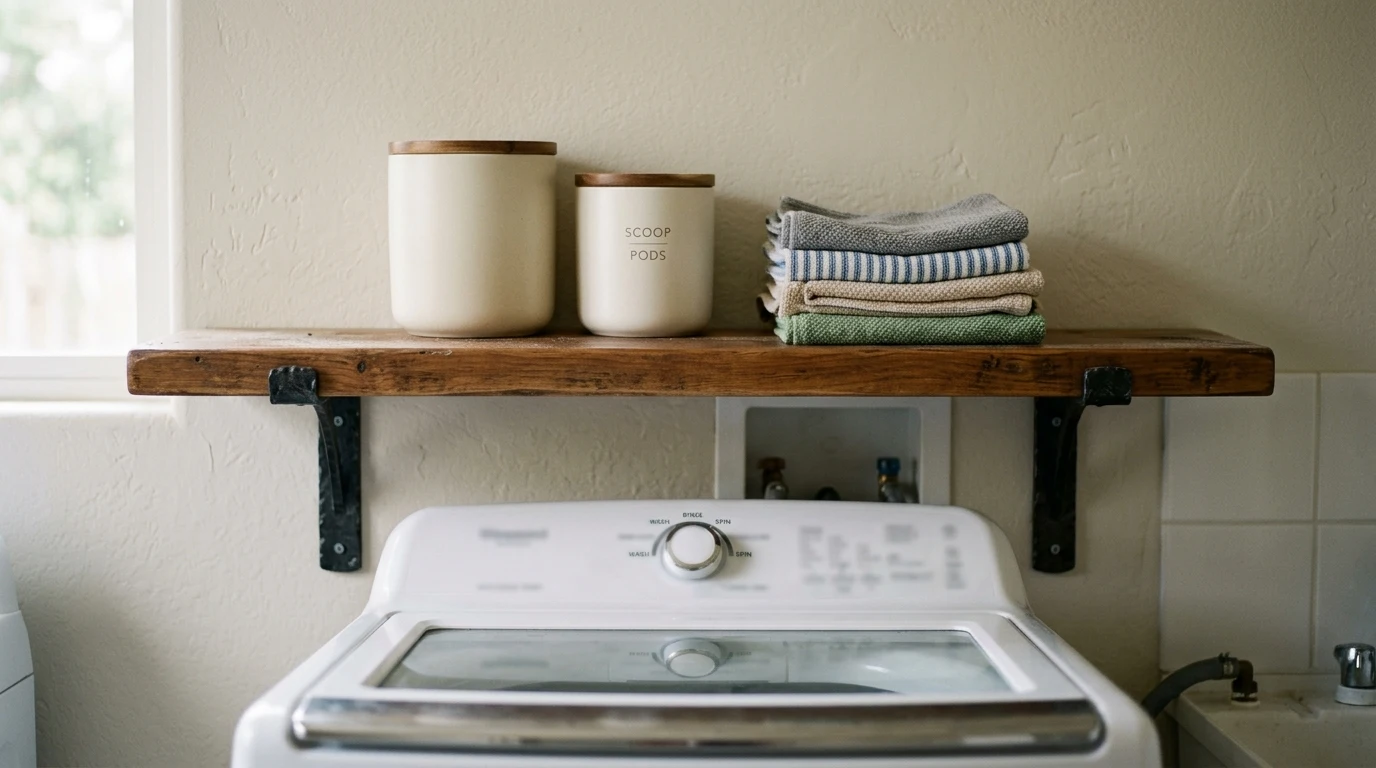
One shelf mounted at 66 inches or above, no more than 10 to 12 inches deep, running the length of the wall. Deep shelves at that height mean reaching over your head into a dark space, which nobody does more than twice. Shallow keeps everything visible and reachable.
2. Use the wall beside the machine, not just above it
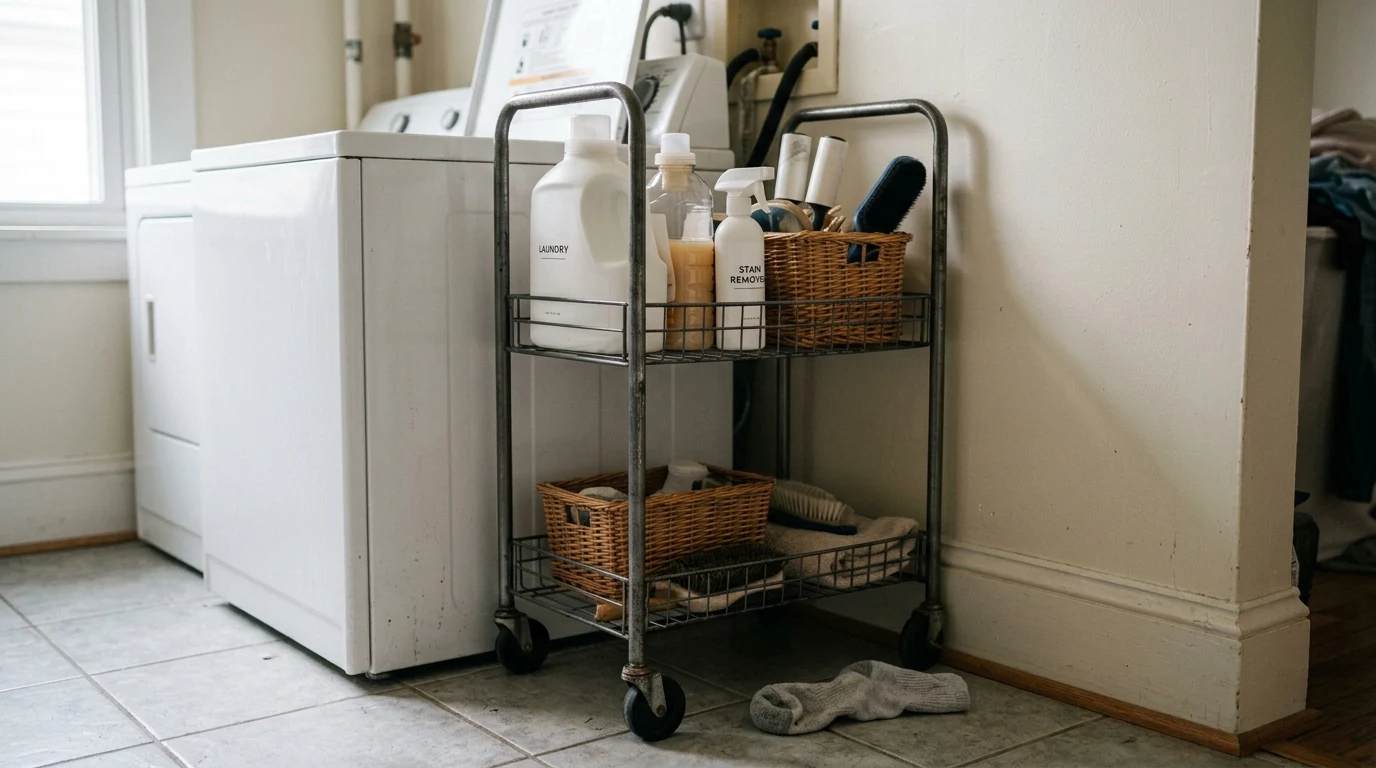
The space between the washer and the wall or door is usually dead. A narrow rolling cart or a slim shelf unit under 12 inches wide fits in most gaps and holds detergent, stain remover, and the odd sock pile. Rolling means you can pull it out to clean behind the machine, which you should do once a year.
3. Build a folding counter beside rather than above
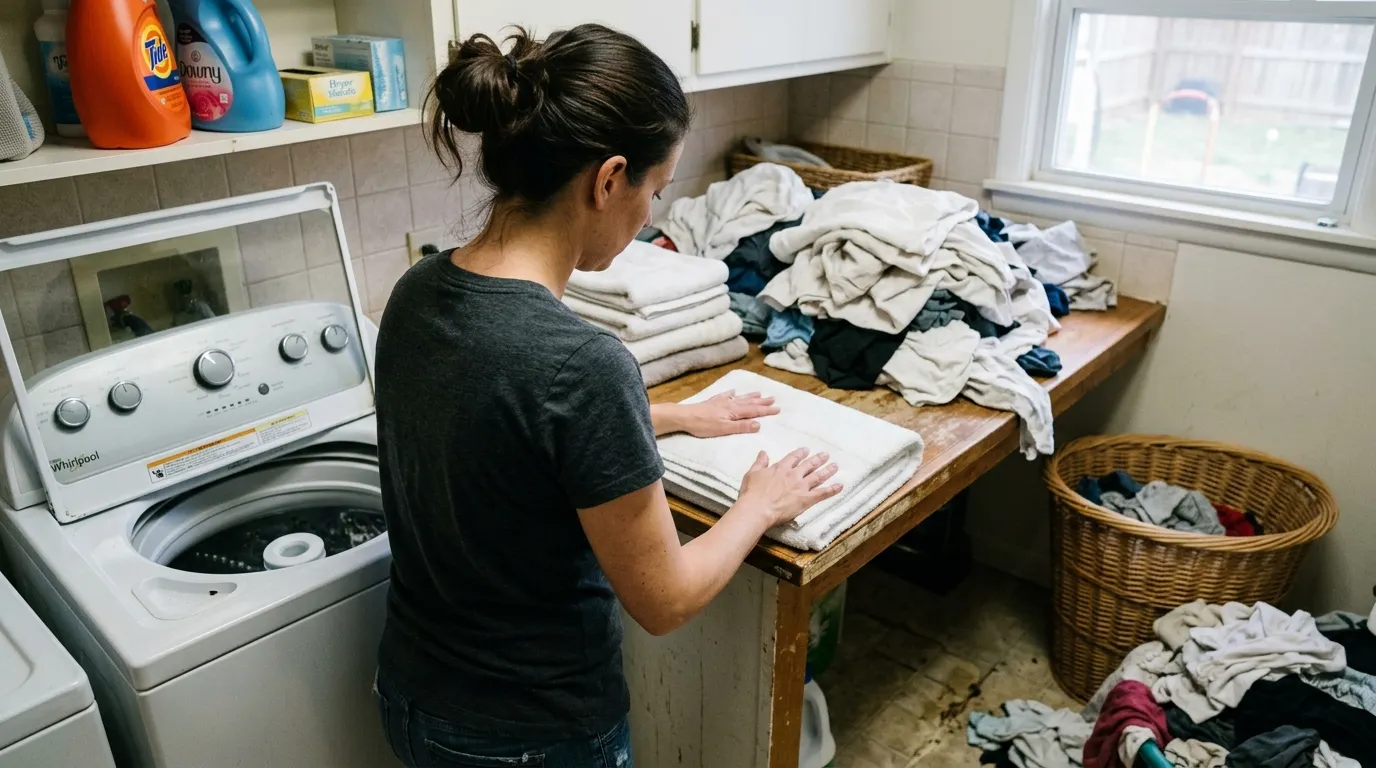
You cannot run a counter over a top loader, so put it next to one. Even 24 inches of counter on one side gives you somewhere to fold, and a countertop over the dryer works fine since dryers open from the front. If space is tight, a wall mounted drop leaf that folds flat does the job.
4. Add a rod or a bar for hanging
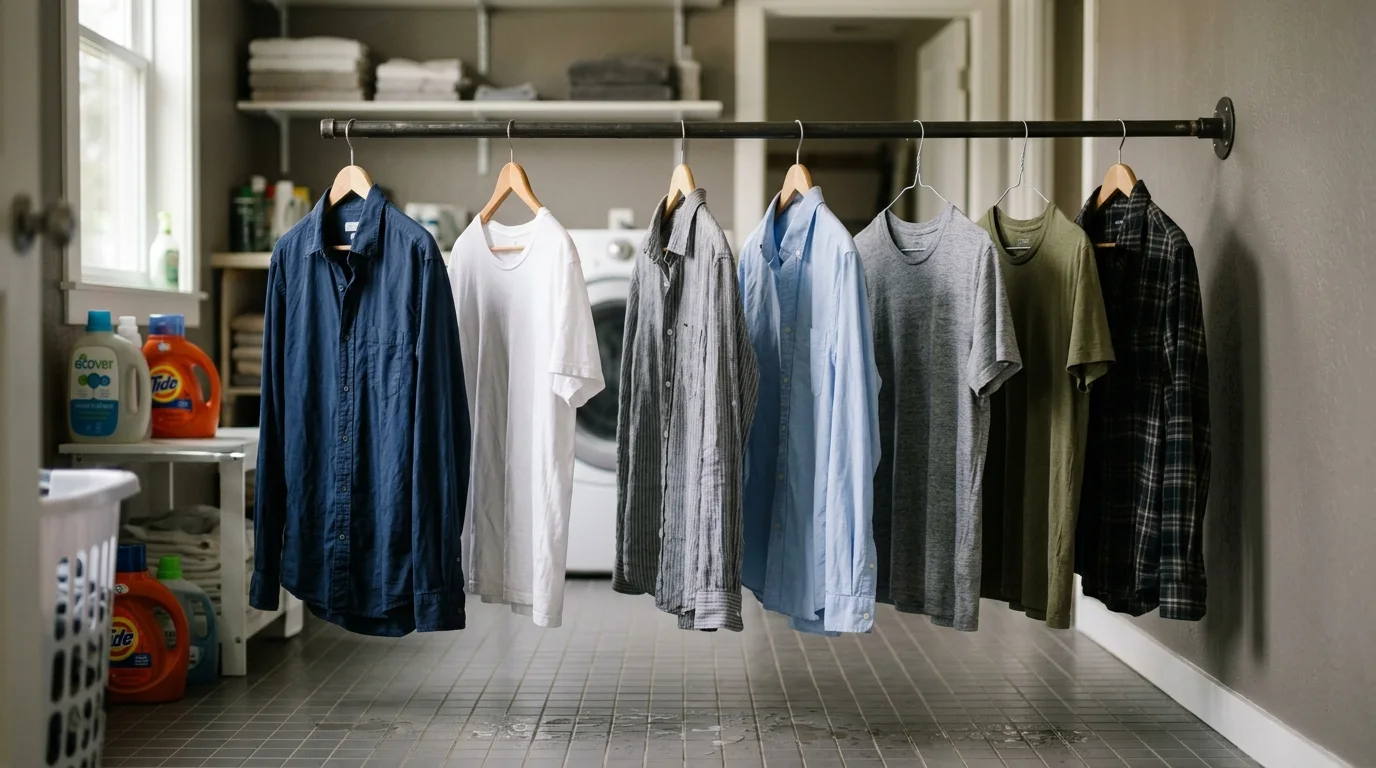
A simple wall mounted rod, or a bar spanning the gap between two shelf brackets, is the most useful thing in a laundry room after the machines. Hang anything that should not go in the dryer straight out of the wash. Mount it high enough that long items clear the floor, usually around 66 to 70 inches.
5. Deal with the vibration before the decor
Top loaders, especially high efficiency ones, can walk and thump on an uneven floor. Check the machine is level with a spirit level on top, front to back and side to side, and adjust the feet. Anti vibration pads under each foot cost very little and quiet the room noticeably.
6. Give the lid somewhere to be when it is open
Sounds obvious, and it is the thing people design around last. If your lid hinges backward, do not put anything on the wall behind it at lid height, including hooks, a paper towel holder, or a plant. I have chipped one lid and knocked a bottle off a shelf twice learning this.
7. Hide the detergent in a lidded bin, not on display
Laundry products are the loudest visual clutter in the room, all bright plastic and branding. Decant what you can into plain containers, or just put everything in two matching lidded bins on the high shelf. This one change makes more difference to how the room photographs than paint does.
8. Sort with three baskets, not one hamper
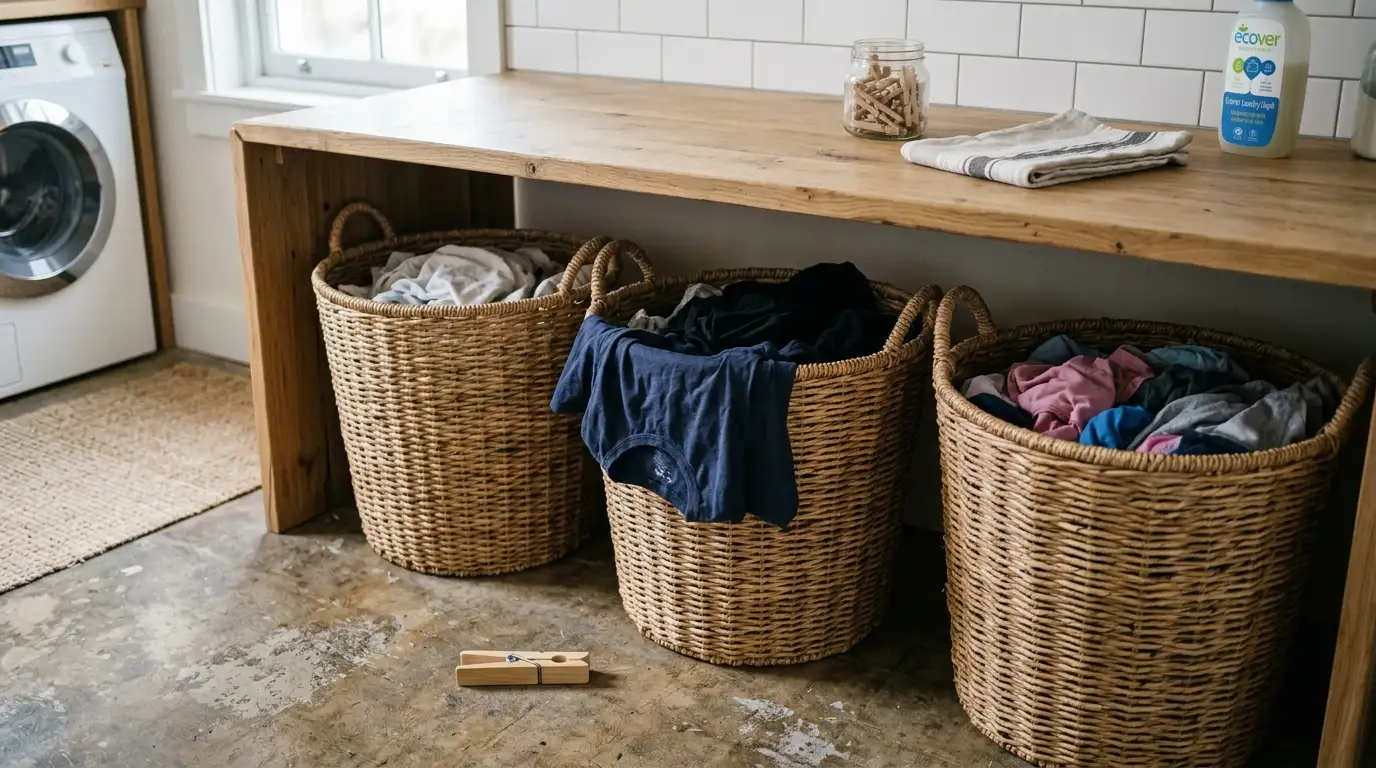
Lights, darks, and towels or delicates, in three labelled baskets under the counter or beside the machine. Sorting as you go rather than at wash time removes the single most annoying part of laundry. Woven or canvas rather than plastic, since they live in the open.
9. Light it properly, because most laundry rooms are grim
Usually one bare fixture and no window. Add an under shelf LED strip in a channel above the work area, and swap the main bulb for something in the 3500 to 4000K range, which is neutral enough to actually see stains. This is the one room where warm 2700K is not the right call.
10. Put a small rug down for your feet and the noise
An indoor outdoor rug or a washable runner in front of the machines. It absorbs some of the sound, it is warmer to stand on than tile at seven in the morning, and it catches the drips. Washable is the only sensible choice here, for reasons that will become obvious.
11. Paint it a color you would not use elsewhere
A laundry room is small, closed, and has no furniture to clash with, which makes it the low risk place to do something bold. Deep green, a strong blue, or a warm terracotta all look great with white machines. Use a scrubbable finish like satin, since this room takes splashes.
12. Add a drying rack that folds away
Wall mounted accordion racks fold flat to about two inches and hold a surprising amount. A ceiling mounted pulley rack works if you have the height. Either beats the freestanding rack that lives permanently in the corner and that everybody in the house walks into.
How to plan the room around the machine
Start by opening the lid all the way and measuring from the floor to the highest point of the open lid. Write that number down, add two inches, and that is the lowest anything can go on the wall above the washer. Then measure the width of your machines plus two inches of side clearance each and see what wall space is genuinely left over. Those two numbers tell you the entire layout before you buy anything. From there, spend in this order. Lighting first, since laundry rooms are almost always underlit and it costs very little. Then storage on the wall beside the machine rather than above it, then a folding surface, then the rod. Paint and the pretty stuff last. On budget, laundry rooms are cheap to transform because they are small, and a few hundred dollars goes further here than anywhere else in a house. And one honest note on the front loader question, since people ask. If you are choosing new machines and a stacked setup would genuinely solve your space problem, that is a real reason to switch. But if your top loader works fine, do not replace a functioning appliance to match a Pinterest layout. Work around it, get the shelf height right, and you will have a better room than the photo anyway because yours will actually suit how you do laundry.
Frequently asked questions
How much clearance does a top load washer need above it? Allow 18 to 24 inches above the machine for the lid to open fully, which usually puts the underside of any shelf at 60 to 66 inches from the floor. Measure with the lid fully open, since hinge styles vary.
Can you put a countertop over a top load washer? Not over the washer itself, since the lid needs to open. You can run a counter over a front loading dryer or beside the machines, and a wall mounted drop leaf surface works well in tight rooms.
How do I add storage to a laundry room with a top loader? Go high and shallow above the machine, and use the wall or gap beside it for a narrow rolling cart. Wall rods for hanging and lidded bins on a high shelf give you most of what a cabinet run would.
Why does my top load washer shake and move? Usually an unlevel machine or an unbalanced load. Check it with a spirit level front to back and side to side and adjust the feet, then add anti vibration pads underneath if the floor is uneven.
What is the best lighting for a laundry room? Neutral light in the 3500 to 4000K range, which is bright enough to spot stains without being harsh. Add an under shelf strip over any folding area, since overhead light alone casts shadows onto the work surface.
Final thoughts
Laundry rooms get ignored because nothing about them is fun, and then you spend a few hours a week in there anyway. Mine went from a place I avoided to a genuinely pleasant little room for about two hundred dollars and one weekend.
So measure your lid clearance before you do anything else, because everything on this list depends on that one number. If you get the high shelf and the rod in, come back and tell me how it went, since those two together carry most of the room.