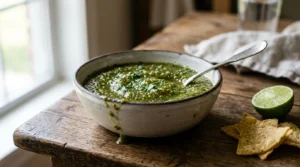
Use up and down arrow keys to resize the meta box pane.
Use up and down arrow keys to resize the meta box pane.
Use up and down arrow keys to resize the meta box pane.
Tomatillo sauce is one of those things that seems impossible to get wrong. Green things in a blender, some salt, done. And it usually comes out perfectly edible.
Mine was perfectly edible for years.
Use up and down arrow keys to resize the meta box pane.
It was also thin, sharp in a one note way, and it never tasted like the sauce at the taqueria down the road from my old apartment. Then somebody watched me make it, waited until I poured it into a bowl, and asked why I had not fried it. I had no idea what she meant, and finding out changed the recipe permanently.
The two decisions that shape everything
The first is how you cook the tomatillos, and there are three real options that give three genuinely different sauces. Raw gives you something bright, grassy, and aggressively tangy. Boiling gives a mild, smooth, uniformly green sauce, which is what a lot of taquerias serve because it is consistent and mellow. Roasting or charring gives sweetness, a little smoke, and the deepest flavor of the three, and that is the one I make most often.
The second is whether you fry the blended sauce in hot fat afterward. That is the step I was missing, and it is standard practice in Mexican home cooking. Blending raw ingredients gives you a mixture of separate flavors. Frying it for five minutes cooks off the raw edge, darkens the color, and pulls everything together into one thing. I noticed the difference immediately and I have never gone back.
1. Pick tomatillos that fill their husks
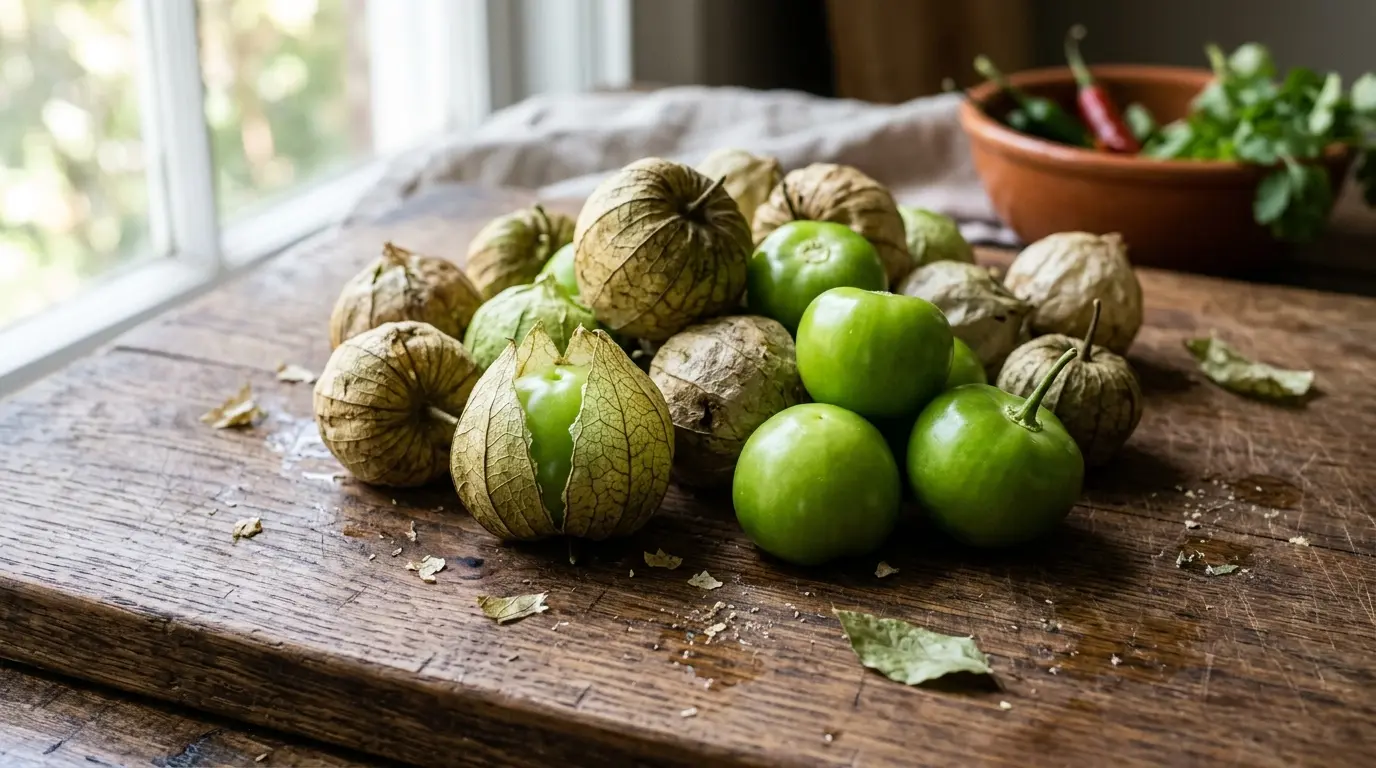
You want fruit that has swelled enough to split or fully fill the papery husk, firm to the touch with no soft spots. Small ones rattling around inside a loose husk are underripe and they carry a bitterness that no amount of salt covers. Slightly yellowing tomatillos are sweeter and less acidic, which is fine but makes a different sauce.
2. Husk them and wash the sticky film off
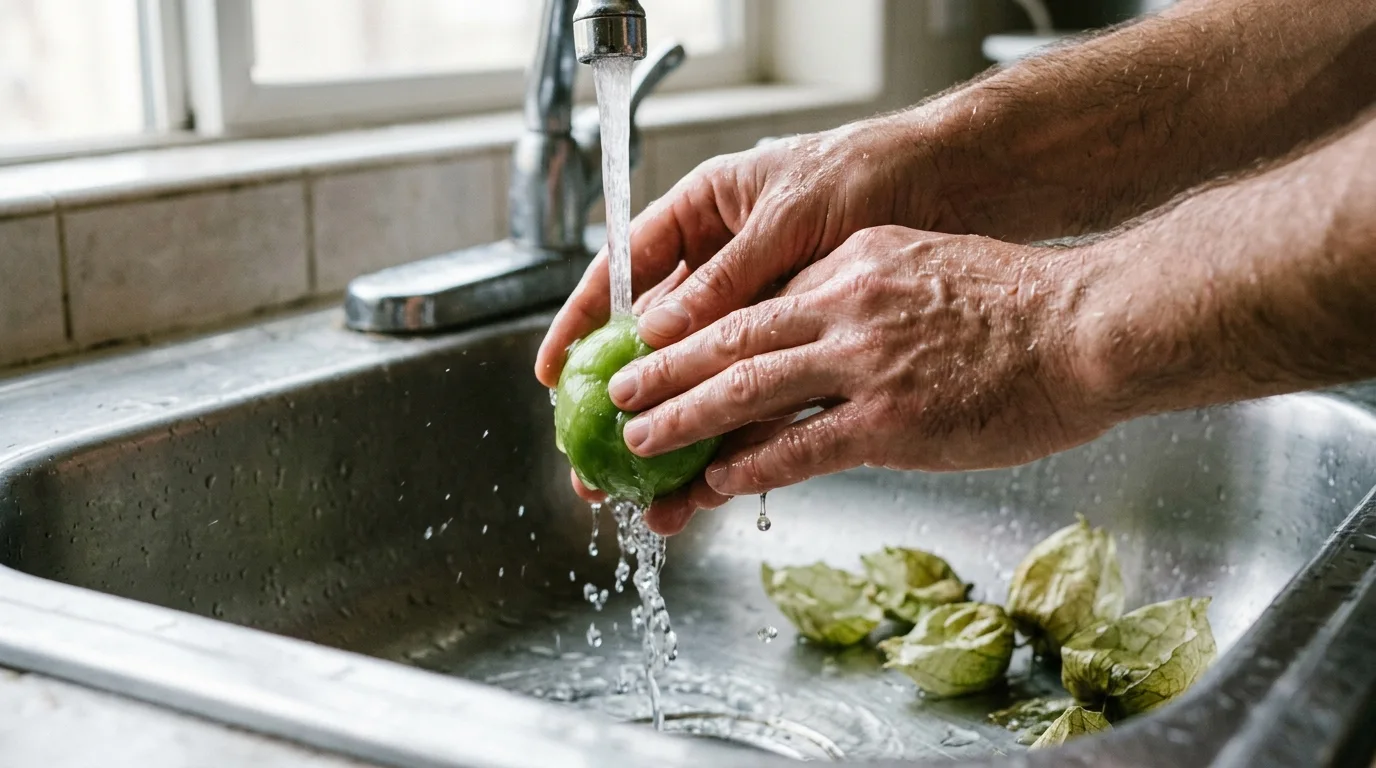
Peel back the husks and you will find a tacky resin coating the skin. Rinse under warm water and rub each one with your fingers until it squeaks. Leaving that film on makes the finished sauce faintly bitter, and it also gets on your hands, your board, and eventually your phone.
3. Decide which method you actually want
For a bright fresh salsa to spoon on tacos, go raw. For a mellow smooth sauce for enchiladas, boil the tomatillos and chilies in water for about 8 minutes until they turn olive green. For the deepest version, roast. This one decision matters more than any ingredient you add later.
4. Roast under the broiler for the best flavor
Put 1 and a half pounds of tomatillos, 2 serranos or 2 jalapeños, and half a white onion cut into thick wedges on a foil lined sheet. Broil about six inches from the element for 6 to 8 minutes until blistered and blackened in spots, then flip and go another 4 to 5. Some char is what you want, but a fully burnt skin turns bitter, so pull them at spotted rather than blackened all over.
5. Leave the garlic in its skin
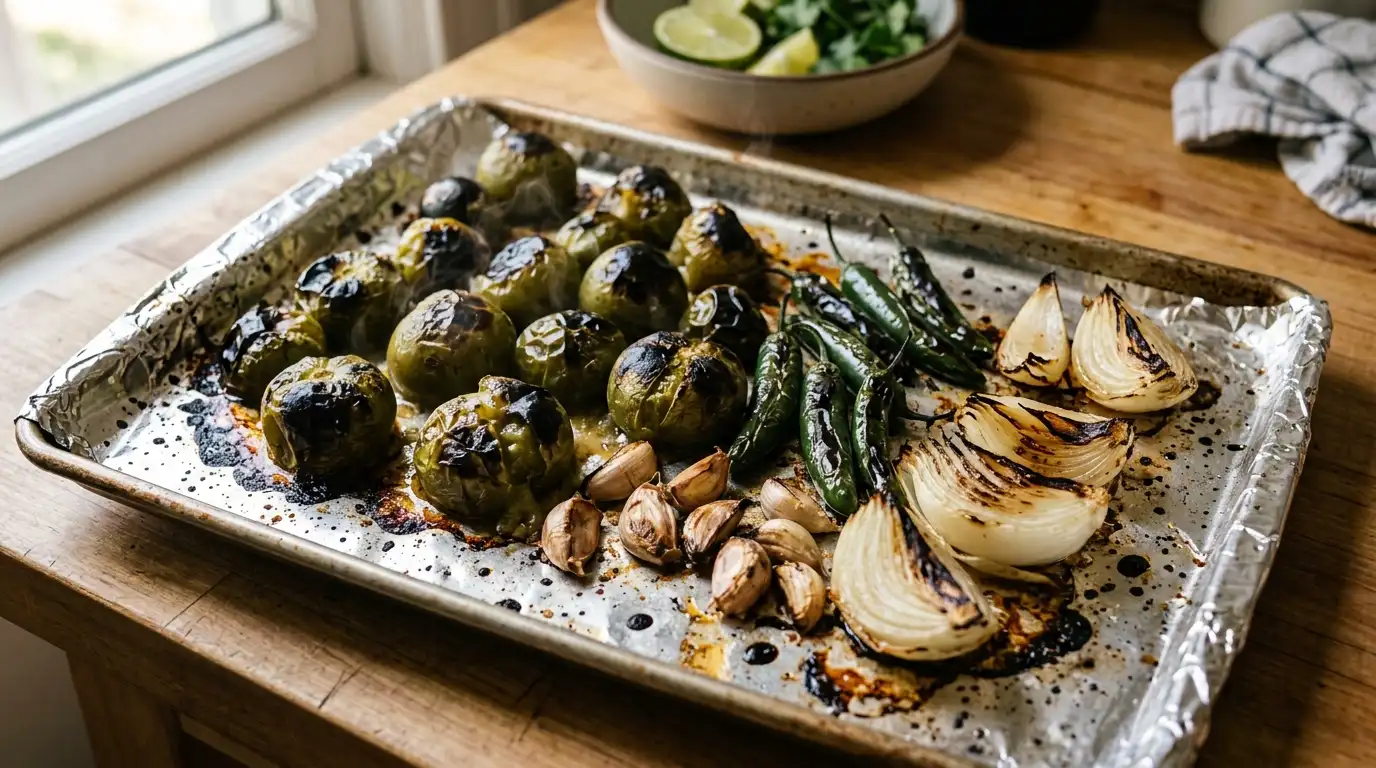
Add 3 unpeeled garlic cloves to the same tray. The skin protects them from scorching under direct heat, and garlic burns far faster than tomatillos do. Squeeze the softened cloves out before blending and discard the papery shells.
6. Control the heat with the veins, not the count
Serranos run hotter than jalapeños and both vary wildly from one pepper to the next. Most of the heat sits in the white pith and seeds rather than the flesh, so scrape those out for a milder sauce and leave them in for a sharper one. Taste a sliver of raw chile before you commit, since that tells you more than any recipe can.
7. Blend the cooked things first, add the fresh things last
Put the roasted tomatillos, chilies, onion, and squeezed garlic in the blender along with any juices from the tray, and pulse them together. Then add three quarters of a cup of cilantro leaves and a small handful of raw white onion and pulse just a few more times. Roasting cilantro kills it, so it goes in raw at the end for lift.
8. Pulse it, do not purée it
Long blending whips air into the sauce, which turns it pale, foamy, and slightly bitter. You are aiming for a loose textured sauce with some body, not a smooth green milkshake. Six or seven short pulses is usually enough, and a molcajete or a food processor both give a better texture than a high powered blender if you have one.
9. Vent the blender if anything is hot
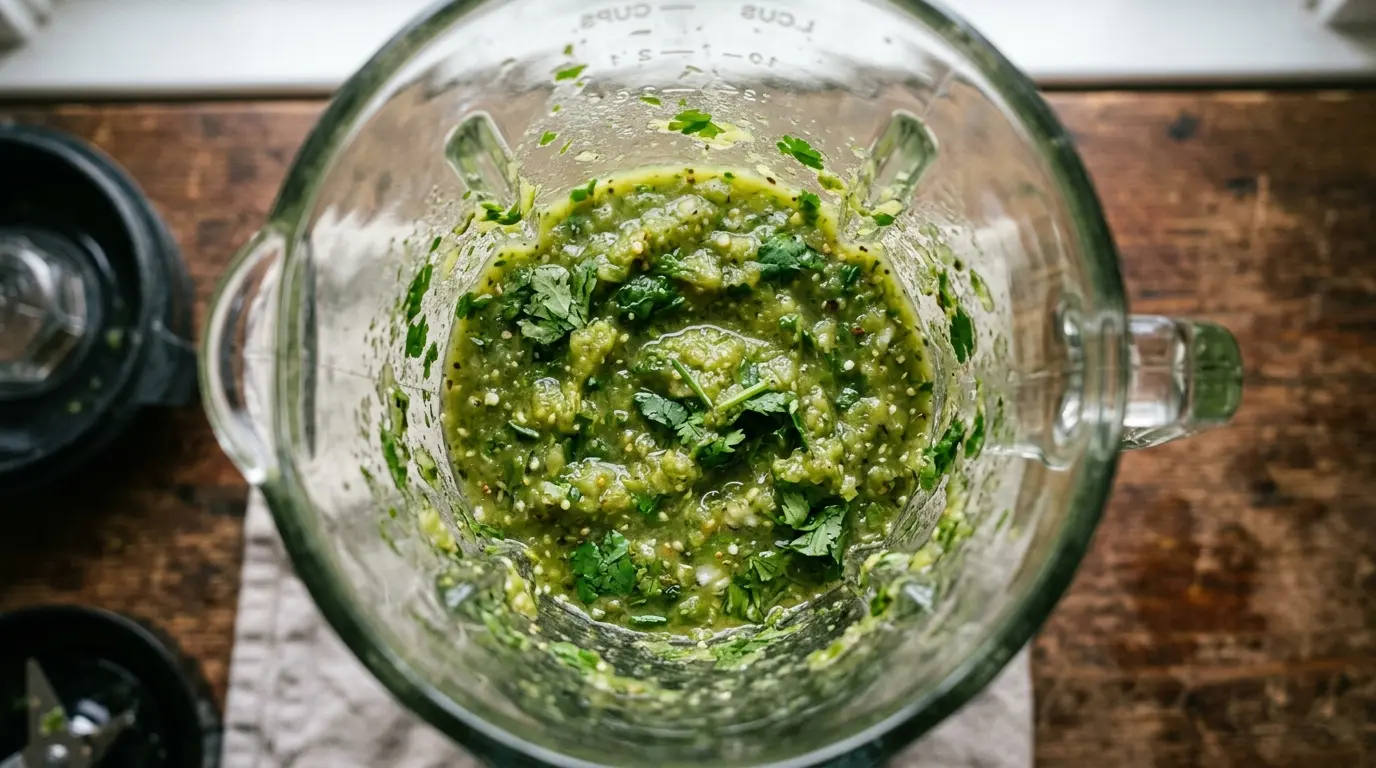
Hot liquid builds steam pressure in a sealed jar and it will blow the lid off, which I have seen happen and which coats a kitchen ceiling remarkably well. Let the roasted vegetables cool for ten minutes, fill the blender no more than halfway, remove the center cap, and hold a folded towel over the opening.
10. Fry the sauce, which is the step you are probably skipping
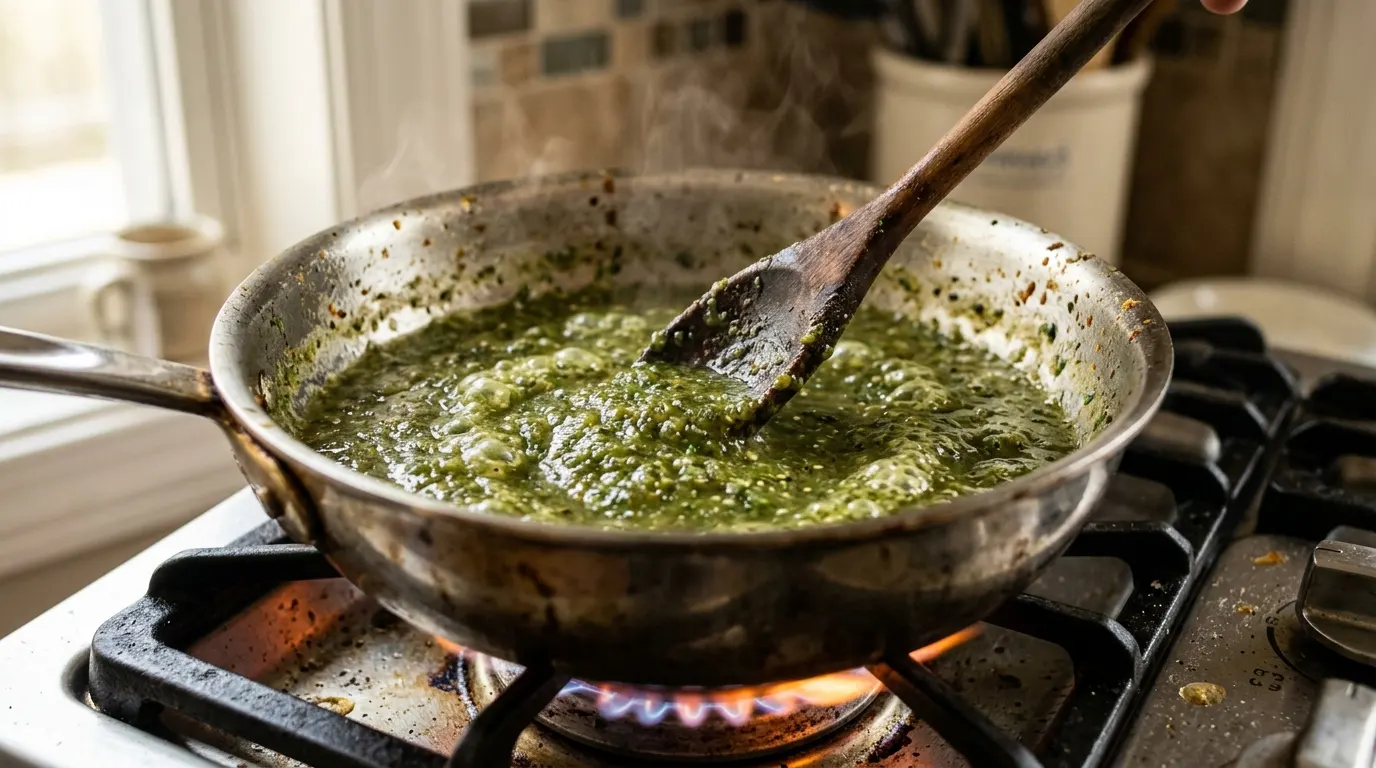
Heat 2 tablespoons of neutral oil or lard in a saucepan over medium high until it shimmers, then pour the blended sauce in all at once and stand back, because it spatters hard for the first few seconds. Simmer 5 to 8 minutes, stirring, until it darkens slightly and thickens. This is what separates a blender sauce from a real one.
11. Salt more than you expect, then taste for balance
Start with 1 teaspoon of kosher salt and work up. Tomatillos are acidic and watery, and they absorb salt in a way that means an underseasoned batch tastes flat and sour rather than obviously unsalted. If it still tastes sharp after enough salt, a quarter teaspoon of sugar rounds it off without making it sweet.
12. Thin it, or make it creamy
Add water a tablespoon at a time to loosen it for drizzling, since it thickens as it cools. For the creamy avocado version, blend in half a ripe avocado at the very end, which gives you that pale green sauce taquerias squeeze over everything. That version does not keep as well, so make it the day you want it.
Which version to make and what to do with it
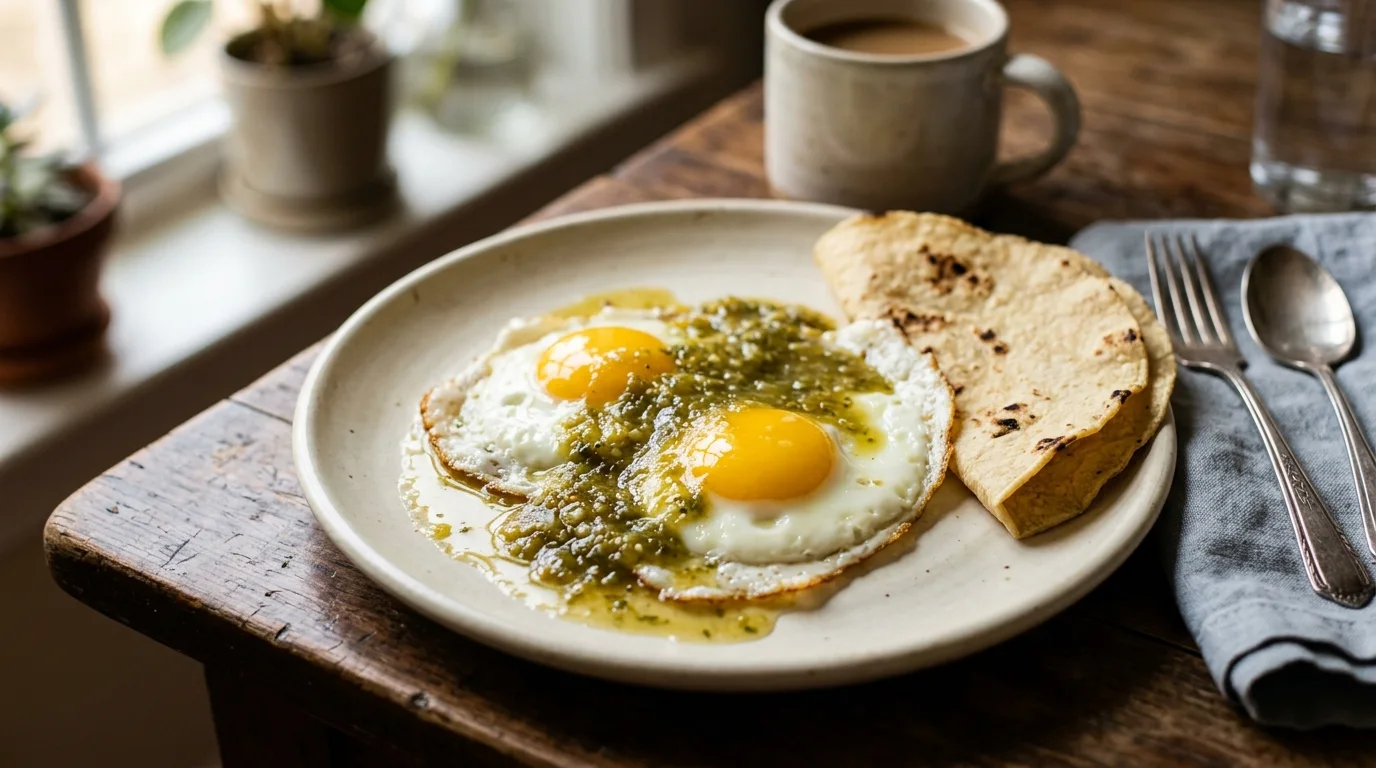
Match the method to the job. The roasted and fried version is what I would make for chilaquiles verdes, enchiladas, or as the base for a pork chile verde, since it has enough backbone to stand up to long cooking and rich meat. The boiled version is the right one if you want something smooth and mild to pour over something delicate or serve to people who are cautious about heat, and it holds its bright green color better than roasted does. Raw salsa is best made an hour before you eat it and used the same day, on grilled fish, on eggs, or spooned over carnitas where you want sharpness cutting through fat. On storage, the cooked versions keep about a week in a jar in the fridge and the flavor actually improves on day two as everything settles. They freeze well for three months, and I usually freeze in a muffin tray then bag the pucks so I can pull out exactly one portion. One honest note on quantity. This makes roughly two and a half cups, which sounds like a lot until you start putting it on eggs in the morning. I have never once had leftovers by day five.
Frequently asked questions
Why is my tomatillo sauce bitter? Usually underripe tomatillos, the sticky husk residue left unwashed, or burnt garlic and chile skins. Over blending also introduces bitterness by whipping in air, so pulse rather than puréeing.
Do you have to cook tomatillos before blending? No, raw tomatillo sauce is a real and traditional style, though it tastes noticeably sharper and grassier. Boiling gives a mellow smooth sauce and roasting gives the deepest flavor, so the choice depends on what you are serving it with.
Can I use canned tomatillos? Yes, and they work reasonably well when fresh ones are out of season. Drain them, skip the roasting step since they are already cooked, and go a little heavier on the fresh cilantro and onion to make up for the lost brightness.
How long does tomatillo sauce last? About a week refrigerated for the cooked versions, and the flavor improves after the first day. The avocado version keeps only two days, and any of them freeze for around three months.
Why did my salsa verde turn pale and foamy? The blender ran too long. Extended blending aerates the sauce, lightening the color and dulling the flavor. Short pulses keep it darker and better textured, and frying it afterward brings the color back.
Final thoughts
The reason I keep making this is that it turns cheap things into good things. Eggs become breakfast worth sitting down for, leftover chicken becomes dinner, and a bag of tortilla chips becomes a meal I am not embarrassed about.
So roast the tomatillos properly, and then actually fry the sauce, even though it seems like an unnecessary extra pan. Come back and tell me whether you noticed the difference, because that step is the one nobody believes until they do it once.