There is a version of camping where somebody spends the golden hour chopping onions on a wobbly table while everyone else gets hungry and slightly irritable. I was that person for a few years.
Then I flipped it entirely.
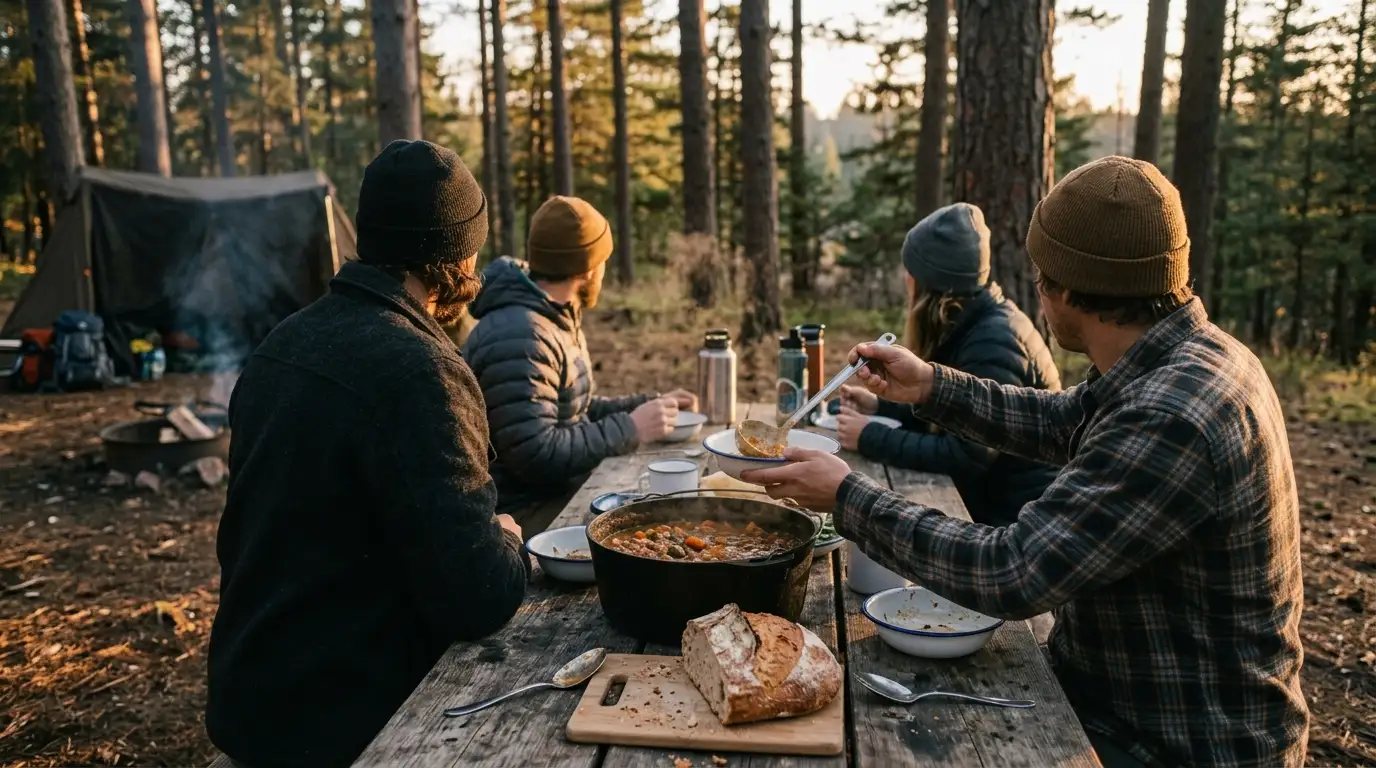
Now almost everything gets cooked at home in the days before, frozen flat, and packed in reverse order so the first meal is on top. The cooking at camp is reheating, and dinner happens while it is still light. Here is exactly how, meal by meal, with the times that matter.
The system underneath all of this
Cook it, cool it fast, freeze it flat. Those three steps decide whether make ahead food is safe and whether it thaws in time to be useful. Cooling matters most and gets skipped most, since putting a warm container straight into the freezer raises the temperature of everything around it. Spread hot food in a shallow container or set it in a sink of cold water until it stops steaming, then chill it in the fridge before freezing.
Freezing flat in bags is the other half. A flat frozen bag stacks like a book, packs into a cooler with no wasted space, and thaws considerably faster than a block in a tub. And frozen meals work as your ice for the first day or two, which is genuinely the best trick in camp cooking. I noticed the first trip I did this that our cooler was still properly cold on day three, and I had packed less actual ice than usual.
1. Chili, frozen flat in bags
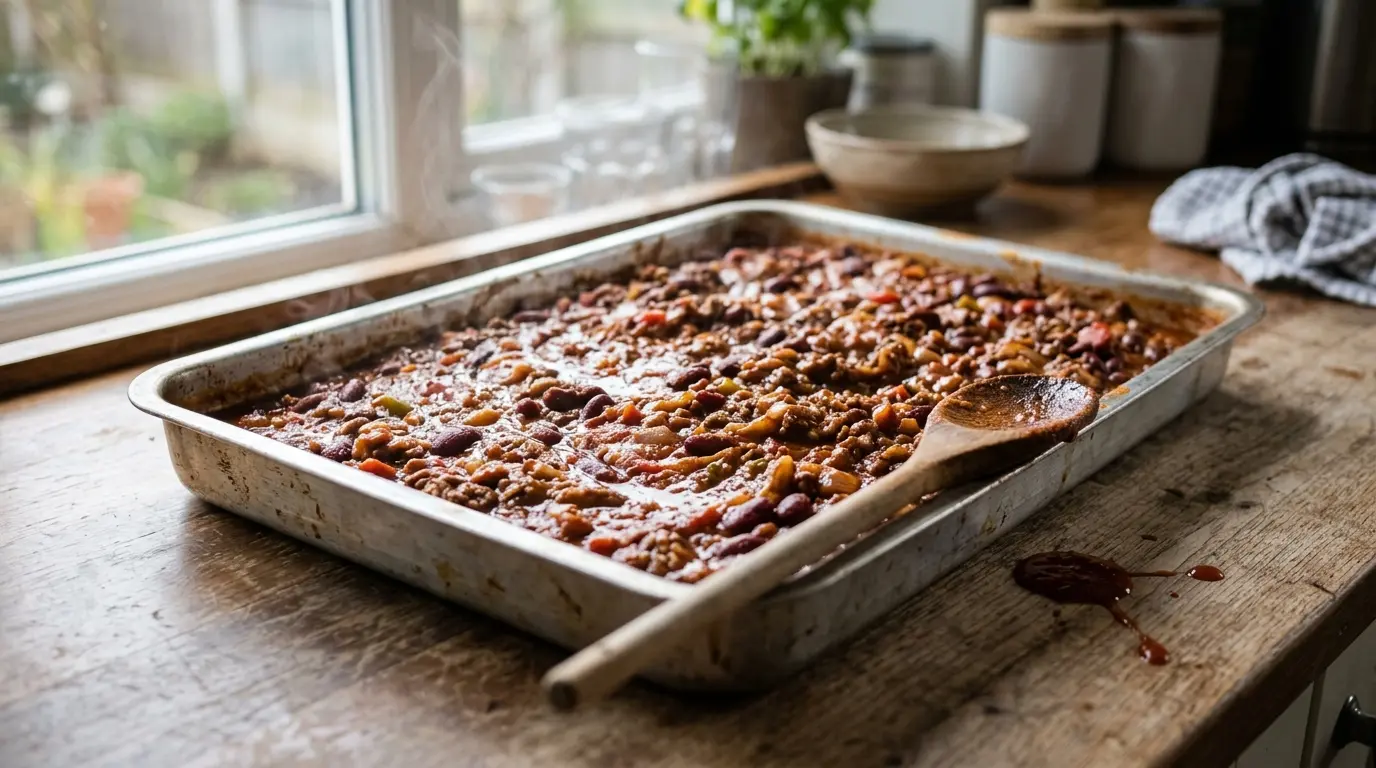
Make a double batch at home, cool it, and freeze in flat portioned bags. At camp it goes straight into a pot over low coals from frozen and takes about 20 to 25 minutes to heat through, stirring occasionally. This is my most reliable make ahead meal and it improves after freezing.
2. Breakfast burritos, individually wrapped
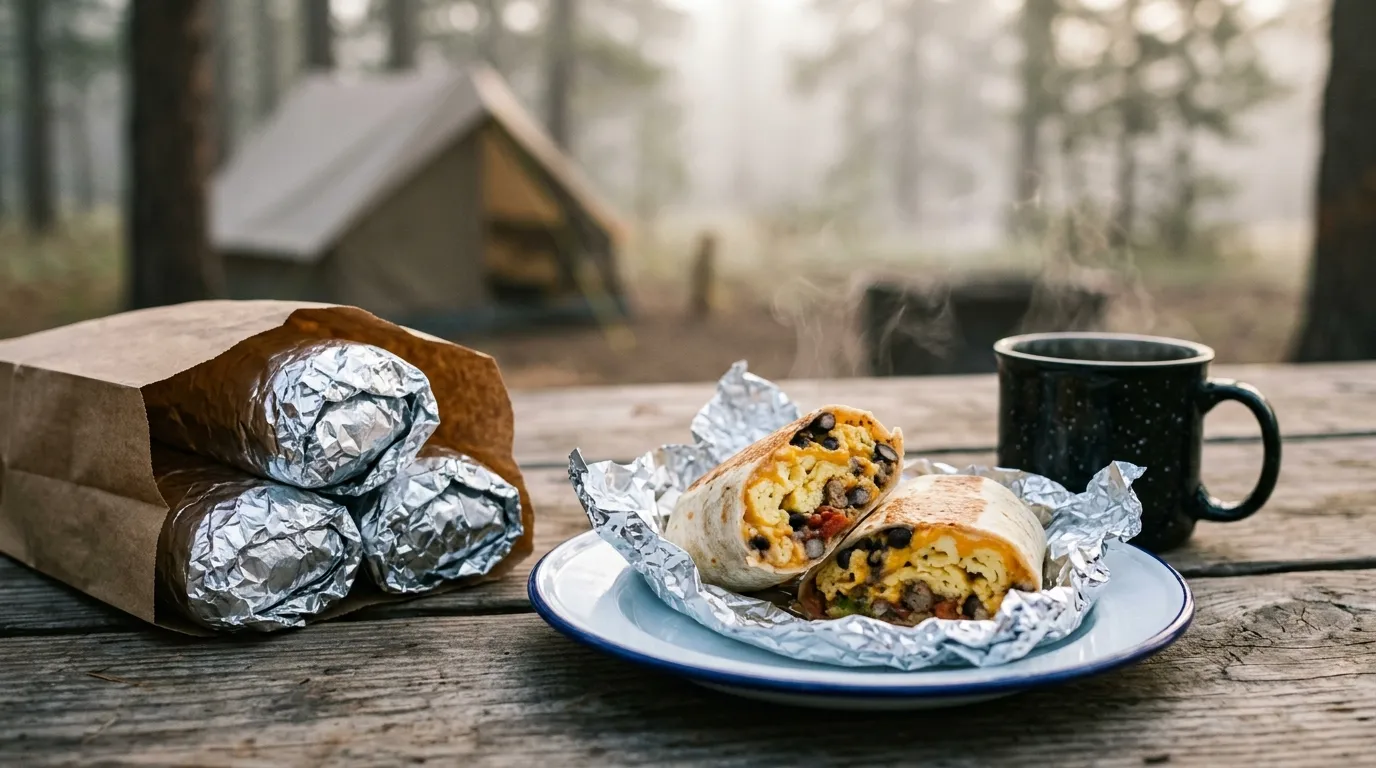
Scrambled egg, beans, cheese, and sausage rolled in tortillas, wrapped individually in foil, then bagged and frozen solid. Reheat on the coals for about 15 minutes, turning halfway, once thawed. Slightly undercook the eggs before freezing, since they finish cooking during reheating and otherwise go rubbery.
3. Pasta sauce with the pasta cooked fresh
Freeze the sauce, not the pasta. Cooked pasta turns to mush after freezing and reheating, whereas dry pasta takes ten minutes in boiling water at camp and costs almost nothing in effort. Bolognese, arrabbiata, and a simple tomato and vegetable sauce all freeze beautifully.
4. Marinated meat frozen in the marinade
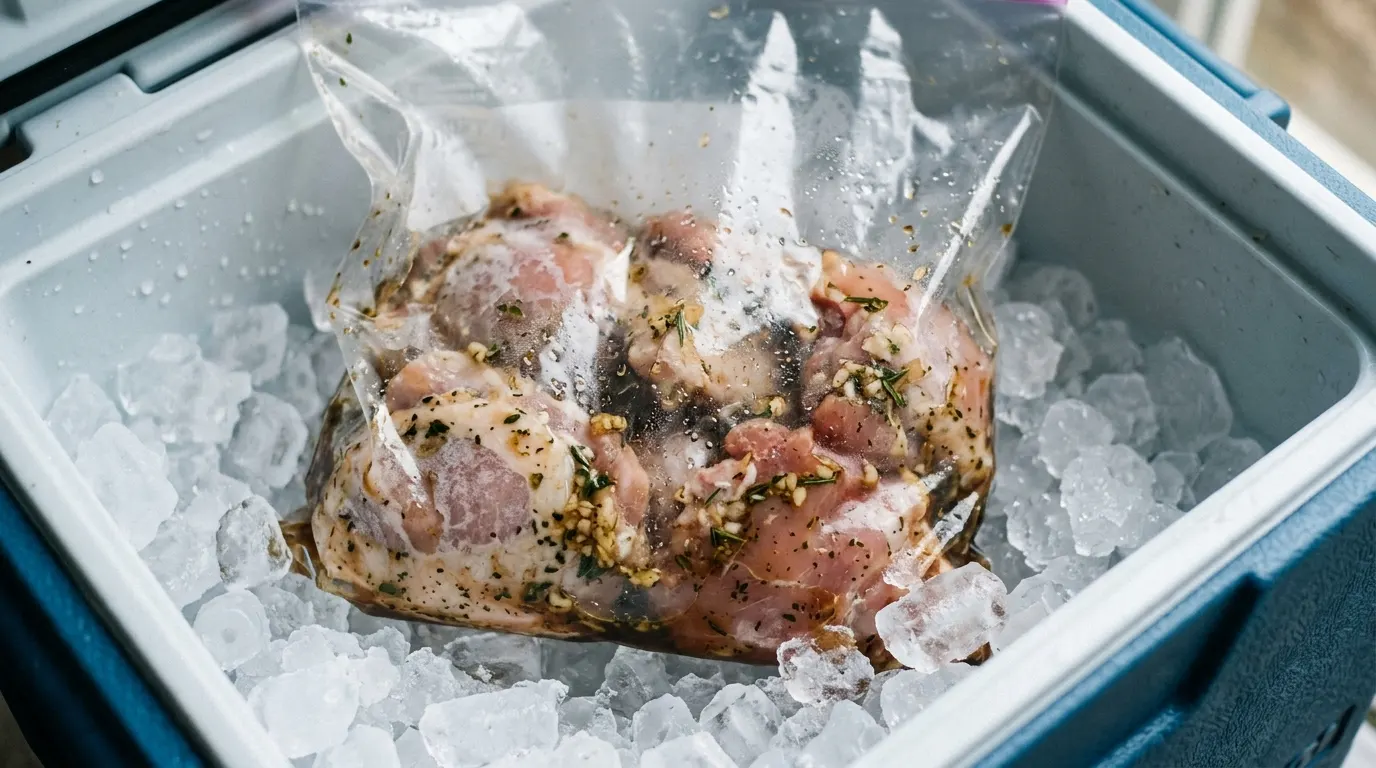
Chicken thighs, pork, or beef sealed in a bag with the marinade and frozen flat. The meat marinates as it thaws, so it is both prepped and preserved by one step. It should be fully thawed before it goes on the fire, so move it from the cooler’s cold zone the night before.
5. Soup or stew in a wide mouth jar or bag
Any thick soup freezes well and reheats without attention, which is what you want at the end of a long day. Leave an inch of headspace in any rigid container since liquid expands as it freezes, and I would use bags over glass at a campsite for obvious reasons.
6. Curry, which is better on day two anyway
A coconut based or tomato based curry cooked at home and frozen flat. Curries genuinely improve after a couple of days as the spices settle, so this is one where make ahead is not a compromise. Serve with rice or pre cooked naan warmed on the grate.
7. Pancake and waffle dry mix in jars
Flour, sugar, baking powder, and salt measured out at home into a jar or bag. At camp you add liquid and an egg. It is not frozen and it does not need to be, and it removes the one step most likely to go wrong, which is forgetting the baking powder entirely.
8. Overnight oats made the morning you leave
Jars of oats, milk, and fruit made up before you drive. They keep two or three days in a cold cooler and need no cooking at all. Have these ready for the morning after your latest night, because that is the day when nobody wants to light a stove.
9. Chopped vegetable packs for foil dinners
Everything sliced and portioned into bags so foil packets are assembly only. Vegetables do not freeze well for this purpose since they go soft, so these stay fresh in the cooler and get used in the first two days. Harder vegetables like carrots and potatoes hold up longest.
10. Cooked and shredded chicken
Two pounds cooked, shredded, and frozen flat in bags. It becomes tacos, quesadillas, wraps, or a topping for rice across several meals. Buying and cooking in bulk once is far less work than cooking protein separately for three different dinners.
11. Frozen smoothie packs for hot mornings
Fruit portioned into bags, frozen, and blended with milk at camp if you have power, or simply eaten as a thawed fruit cup if not. They also act as ice packs in the cooler. Good for a hot trip where nobody wants a heavy breakfast.
12. Cookie dough balls, frozen and ready to bake
Rolled and frozen dough that goes into a Dutch oven or a foil tray on low coals. It takes about 15 minutes and it is disproportionately popular for the effort involved. Freezing them individually means you bake as many as you want and the rest stay solid.
How to pack and reheat safely
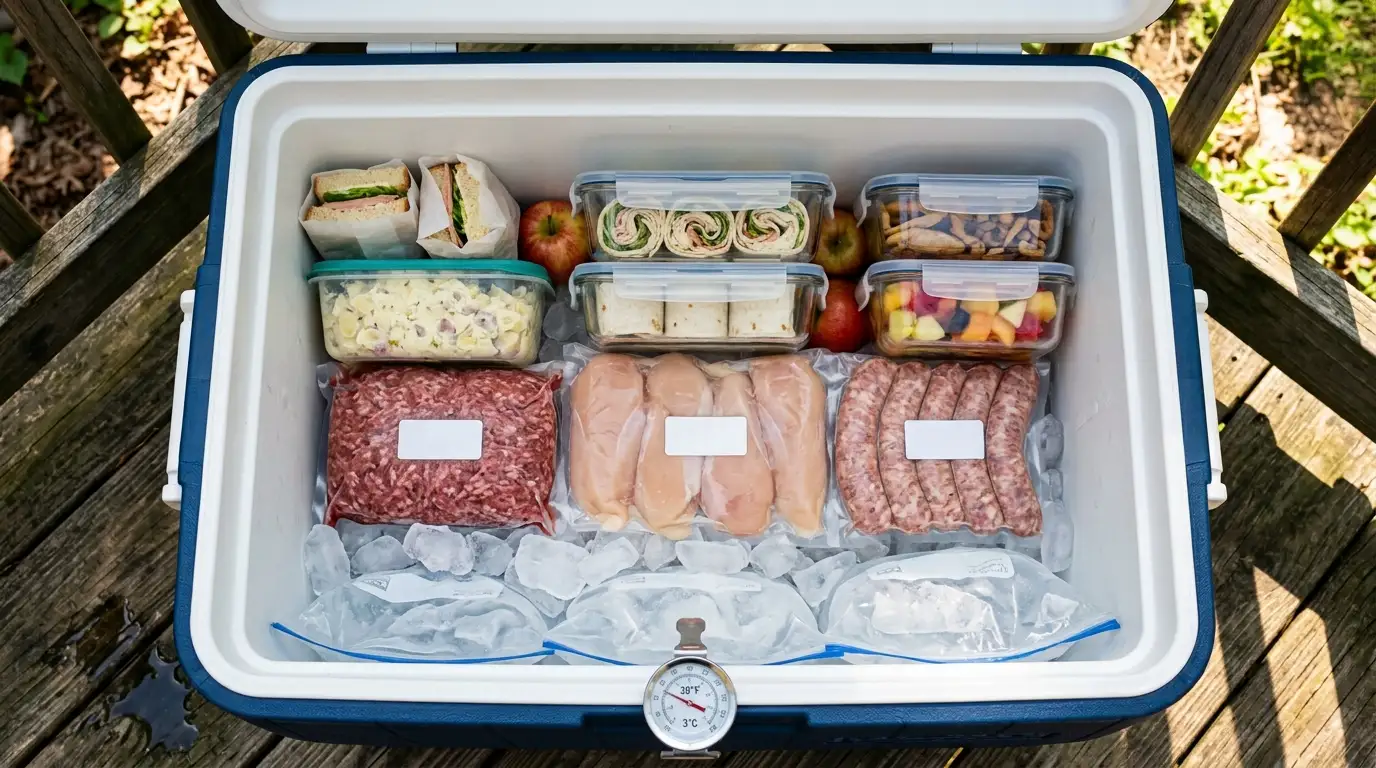
Pack the cooler in reverse order of eating, so the meal for the last night is at the bottom and the first night is on top. Every dig through a cooler lets warm air in and disturbs the ice, so knowing where things are matters. Keep raw items sealed and beneath anything ready to eat, put a thermometer inside, and aim to stay at or below 40 degrees Fahrenheit for anything perishable. Use a separate cooler for drinks, since that lid opens constantly and every opening costs you cold. On thawing, move a meal from the coldest part of the cooler to the top the night before you want it, and never thaw food by leaving it out on a table in the sun. If something is still frozen at dinner time, reheat it from frozen over low heat with the lid on rather than rushing it over high heat, which scorches the bottom while the middle is still ice. On reheating temperatures, get everything to 165 degrees Fahrenheit throughout, which for a frozen bagged meal means stirring and checking the middle rather than the edges. And the honest rules that are worth following outdoors, where you have less margin than at home. Anything perishable that has been above 40 degrees for more than two hours goes in the bin, or one hour if it is above 90 degrees outside. Do not refreeze anything that has fully thawed. And store all food and scented rubbish properly overnight, which in bear country means a locker, canister, or hang, and everywhere else means inside a sealed container in the car rather than on the picnic table.
Frequently asked questions
How far in advance can I make camping meals? Most cooked meals freeze safely for two to three months, so you can prep well ahead. For quality rather than safety, cooking within a couple of weeks of the trip keeps flavour and texture at their best.
What camping meals freeze the best? Chili, curry, stew, pasta sauce, cooked shredded meat, and breakfast burritos all freeze and reheat well. Avoid freezing cooked pasta, potatoes in liquid, and most fresh vegetables intended to stay crisp.
How do I keep frozen meals cold in a cooler? Frozen meals act as ice for the first day or two, so pack them flat and stacked at the bottom with block ice. Keep a thermometer inside, use a separate drinks cooler, and open the food cooler as rarely as possible.
How long does it take frozen camping food to thaw? A flat frozen bag usually thaws in a cold cooler in about 24 hours, while a thicker container can take two days. Move meals from the coldest zone to the top the night before you plan to eat them.
Is it safe to reheat frozen meals over a campfire? Yes, as long as you heat food through to 165 degrees Fahrenheit and stir so the middle is not still cold. Use low coals with a lid rather than high direct flame, which burns the outside before the centre thaws.
Final thoughts
The best thing about cooking ahead is not the food, honestly. It is that you arrive at a campsite with the hard part already done, and the evening belongs to you instead of to a chopping board and a head torch.
So pick two meals from this list, freeze them flat this week, and pack them in the order you will eat them. Come back and tell me how it went, because the chili is the one I would start with and it has never let me down yet.