The first proper hike I did, I wore a cotton t shirt, thick leggings, and running shoes. Two hours in I was soaked through with sweat, then freezing at the summit, and I had a blister the size of a coin on my right heel.
I assumed I was just unfit.
Some of that was true. But most of it was the clothes, and specifically one fabric choice that was working against me the whole day. Once I understood the layering logic, hiking stopped feeling like an endurance test in the wrong outfit.
The rule that fixes most hiking discomfort
Cotton is the problem. It absorbs sweat, holds it against your skin, takes forever to dry, and once it is wet it actively pulls heat away from your body. That is why you overheat climbing and then freeze the moment you stop moving. Every experienced hiker you meet will say the same thing, and the phrase they use is that cotton kills, which sounds dramatic until you are cold and wet on an exposed ridge.
Swap to merino wool or a synthetic like polyester or nylon and the whole experience changes. Both move moisture away from your skin and keep insulating even when damp. I noticed the difference on the very first hike after switching, and it cost me one base layer top, not a whole new wardrobe. Everything below builds on that one principle.
1. Start with a moisture wicking base layer
A fitted merino or synthetic top against your skin, short or long sleeved depending on the season. Merino resists odour remarkably well, which matters on multi day trips, while synthetics dry faster and cost less. Both beat cotton by a wide margin.
2. Add a mid layer you can take off easily
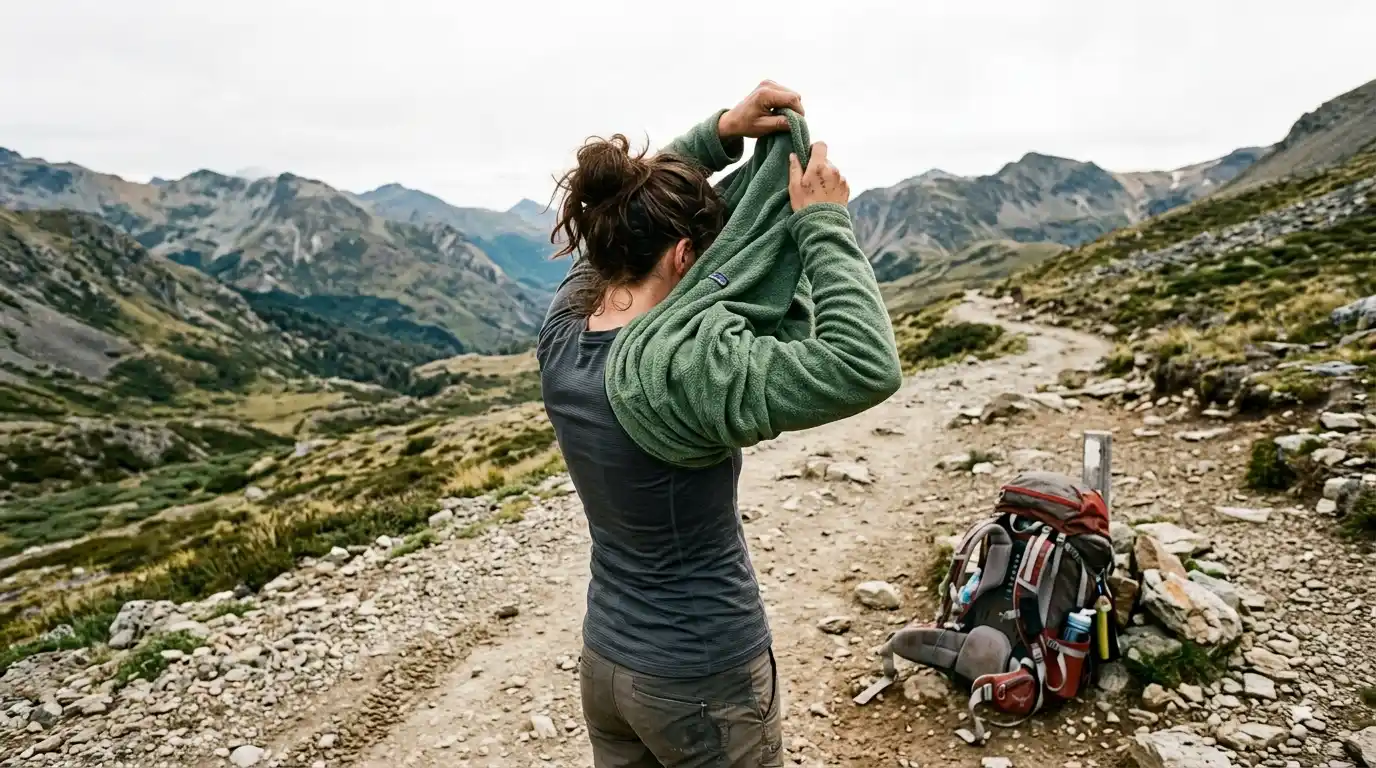
A light fleece, a grid fleece pullover, or a thin insulated jacket. The point is that it comes off without removing your pack, so choose a half zip or full zip rather than something you pull over your head. You will take this on and off several times in a day.
3. Carry a shell even on a clear day
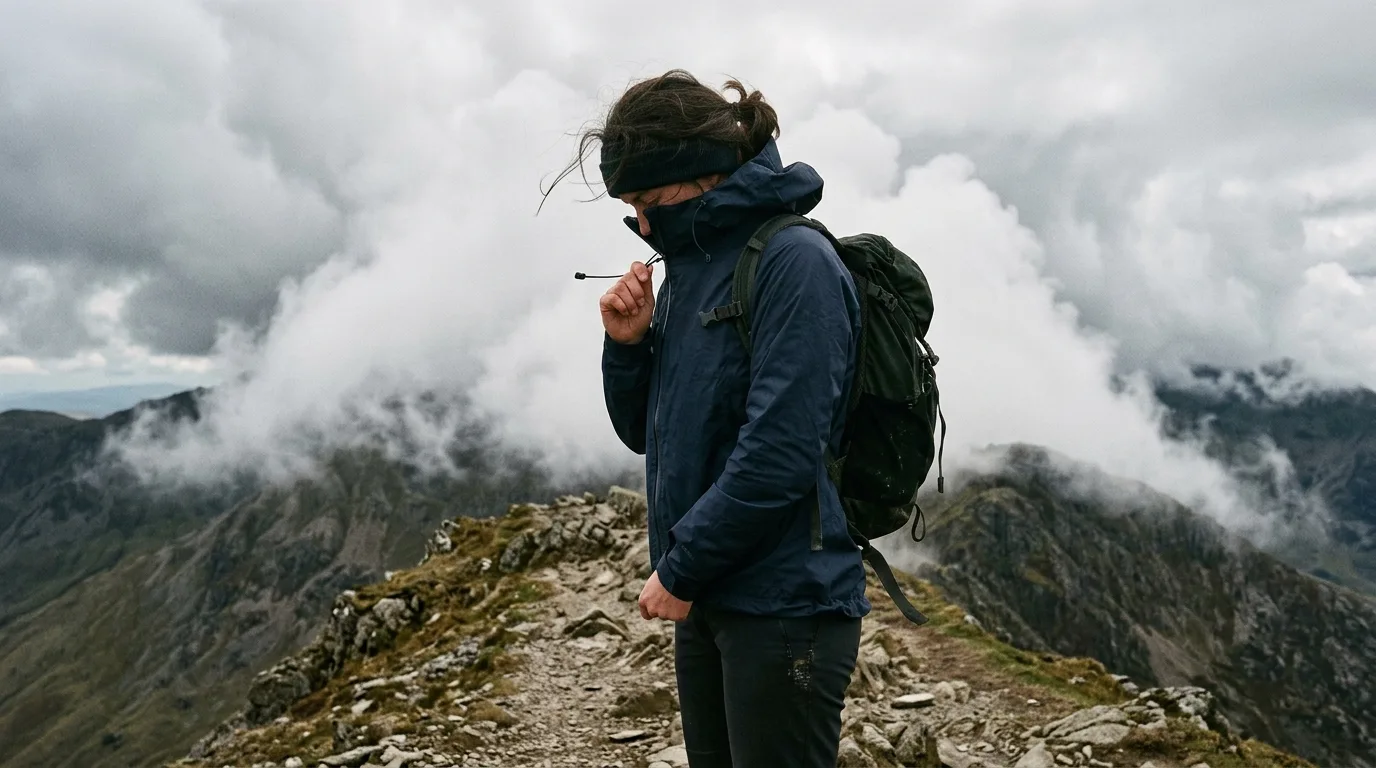
A lightweight waterproof and windproof jacket that packs down small. Mountain weather changes fast and a shell weighs almost nothing in your pack. Look for taped seams and pit zips, since a jacket that keeps rain out but traps all your sweat is only half useful.
4. Choose hiking pants over leggings for rough trails
Nylon hiking pants shed light rain, resist scrapes from rock and brush, and have pockets that actually hold things. Leggings are fine for smooth well maintained trails in mild weather, and plenty of people hike in them happily, but they offer almost no protection from branches, insects, or abrasion.
5. Try convertible or roll up pants for changeable days
Pants that zip off at the knee or roll up and button in place cover a surprising range of conditions in one garment. Cool morning start, hot afternoon exposed section, cool evening descent. The zip off style looks slightly dated to some people and works extremely well anyway.
6. Wear shorts with a longer inseam if chafing is an issue
A five to seven inch inseam protects your inner thighs from rubbing, which is the single most common comfort complaint on longer hikes. Alternatively, wear short shorts over fitted bike shorts. Anti chafe balm on the inner thighs before you start is cheap and works.
7. Get your socks right, because they matter more than boots
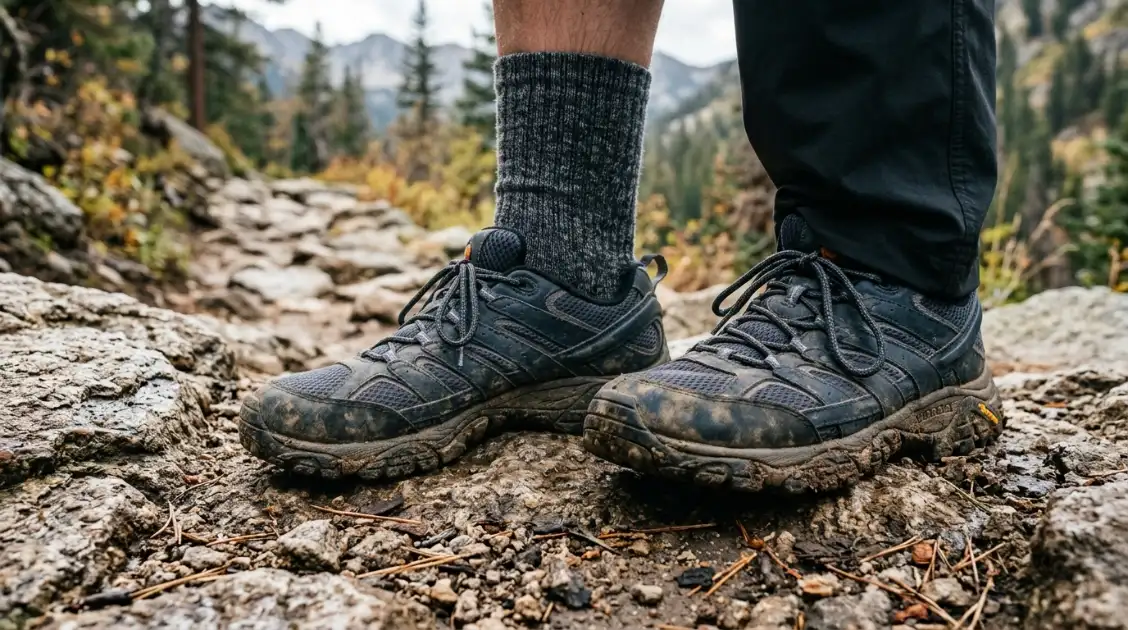
Merino wool hiking socks, cushioned, and never cotton. Cotton socks hold sweat and that is where blisters come from. Some hikers swear by a thin liner sock underneath to reduce friction, and if you are blister prone that is worth the small extra cost.
8. Break in your footwear before the hike, not on it
Trail runners for lighter faster hiking, boots for ankle support and rougher terrain, and either is a legitimate choice. Go about half a size up from your street size to allow for foot swelling and downhill toe slide. Wear them on three or four shorter walks before a big day out.
9. Wear a sports bra you have already tested for hours
A day of hiking is several hours of pack straps sitting over your shoulders and chest, and a bra with seams in the wrong place will make itself known by hour three. Choose one with flat seams and a wide band, in a wicking fabric. Test it on a long walk first.
10. Cover your head and neck properly
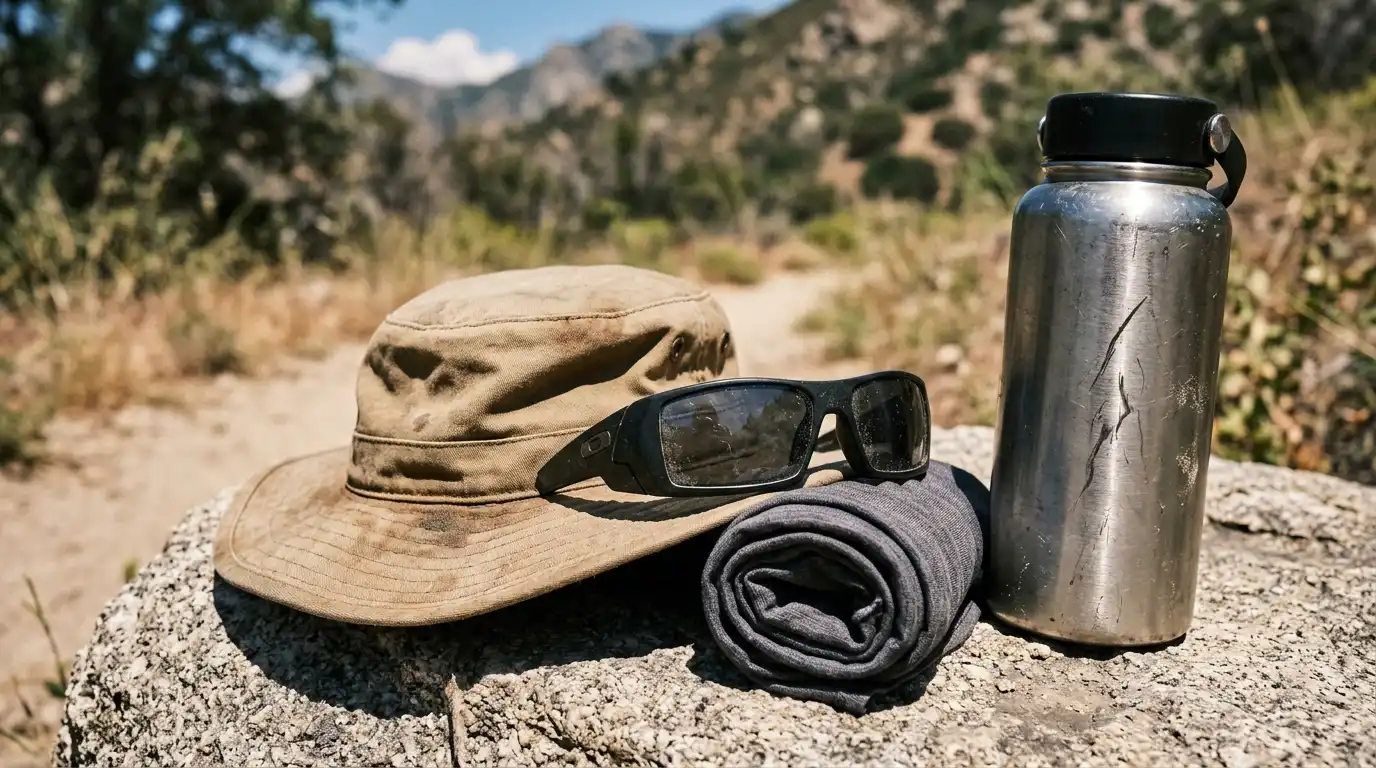
A brimmed hat or a cap for sun, a beanie for cold, and a buff or neck gaiter which is the most versatile small item you can carry. Sunburn on the back of the neck and the tops of the ears is extremely common and easy to prevent.
11. Do not forget sunglasses and sunscreen
UV exposure increases with altitude and reflects off rock, water, and snow. Wraparound style sunglasses with proper UV protection, and sunscreen reapplied every couple of hours on exposed skin. This is the part of hiking preparation people skip most and regret most.
12. Choose colour with visibility in mind
Neutral and earthy hiking outfits photograph beautifully and blend into the landscape, which is exactly the problem if you ever need to be found. Wear at least one bright or high contrast item, or clip something visible to your pack. This is the practical note nobody puts in the outfit inspiration posts.
How to put an outfit together for your actual hike
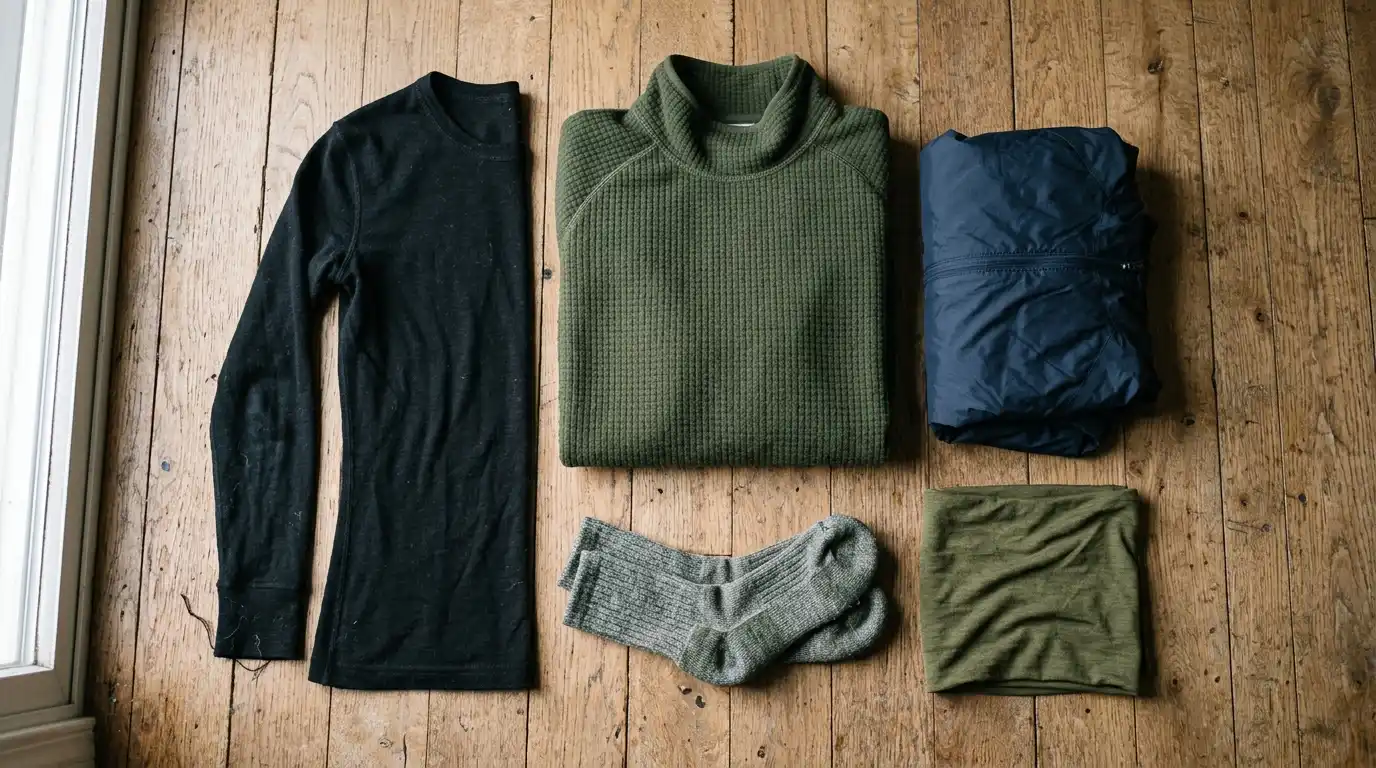
Work from the conditions rather than a formula. For a warm easy day hike on a maintained trail, a synthetic tank or tee, hiking shorts or leggings, wool socks, trail runners, a cap, and a light shell stuffed in your pack will cover you. For a cool day or higher elevation, add a long sleeve base layer and a fleece mid layer, and switch to full length pants. For cold or wet conditions, all of the above plus an insulated jacket, waterproof shell trousers, gloves, and a beanie. The layering principle is that you should feel slightly cold when you start walking, because within ten minutes you will have warmed up, and starting comfortable means overheating by the first climb. On packing, always carry one more warm layer than you expect to need, since the temperature at a summit is often considerably colder than at the trailhead and the wind is stronger. Roughly ten to fifteen degrees Fahrenheit cooler is a reasonable rule for a decent elevation gain, plus wind chill on top. And on shopping, you do not need everything at once. Buy in this order, moisture wicking base layer, proper socks, then footwear, then a shell. Those four cover the majority of comfort and safety, and the rest can wait until you know what kind of hiking you actually enjoy.
Frequently asked questions
What should women wear hiking for the first time? A synthetic or merino top, comfortable athletic pants or leggings, wool socks, and trainers with decent grip if you do not own boots yet. Bring a light waterproof jacket regardless of the forecast and avoid cotton entirely.
Can you hike in leggings? Yes, on well maintained trails in mild weather, and plenty of hikers do. For rocky terrain, dense brush, cold weather, or anywhere with ticks and thorns, nylon hiking pants offer far more protection.
What should I wear hiking in hot weather? Light coloured loose synthetic or merino layers, a brimmed hat, sunglasses, and sunscreen. Long sleeves in a light sun shirt often keep you cooler than bare arms, since they block direct sun while still breathing.
How do I prevent chafing while hiking? Choose shorts with a longer inseam or wear bike shorts underneath, apply anti chafe balm before you start, and avoid cotton anywhere that rubs. Well fitting wool socks and a tested sports bra handle the other common hot spots.
How many layers do I need for a day hike? Three is the standard system, a wicking base layer, an insulating mid layer, and a waterproof windproof shell. In warm weather you may only wear the base layer, but carrying the other two is what keeps a change in weather from becoming a problem.
Final thoughts
Good hiking clothes are not really about looking the part, though the earthy neutral thing does photograph well. They are about being comfortable enough that you actually pay attention to where you are instead of counting down to the car.
So if you take one thing from this, make it the cotton rule, since it is free to follow and it fixes more than any single purchase will. Come back and tell me where you are hiking next, because I am always collecting trail recommendations.