Everyone tells you a tiny house costs $30,000. And it can. But that number assumes you are buying new materials at retail and paying someone else to swing the hammer.
I built mine over one summer and four weekends of the following spring, and the final receipt total was around $4,600. Not luxurious. Not off-grid ready on day one. But dry, warm, wired, and mine.
So here is the honest breakdown, including the two things I cheaped out on and immediately regretted. If you are budgeting right now, read item number nine before you spend anything.
Where the money actually goes
Most people assume lumber is the big cost. It is not. Windows, insulation, and roofing eat your budget faster than framing does, and they are the three things you absolutely cannot fake your way through.
My rough split was foundation and trailer around $1,200 secondhand, framing lumber $900, roofing $450, insulation $380, windows and door $340 salvaged, electrical $290, interior finish $580, and about $460 in fasteners, sealants, and things I forgot. That last category is real and everyone underestimates it.
1. Buy a used utility trailer, not a new one
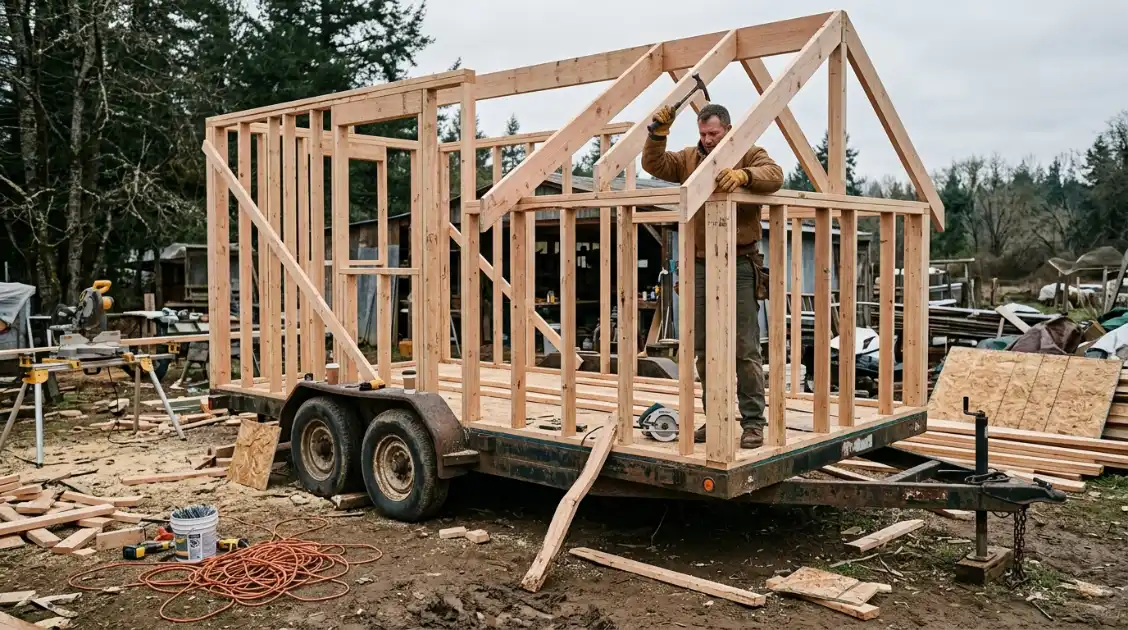
A new tiny house trailer runs $4,000 and up, which kills your budget in one purchase. I found a 16 foot flatbed utility trailer on a local classifieds site for $1,150. Check the axle rating first, since you want at least 7,000 pounds combined, and inspect the frame welds for rust before you hand over cash.
2. Build on skids if you are not moving it
Do not need mobility? Skip the trailer entirely. Pressure treated 6×6 skids on compacted gravel cost me about $280 when I built a second one for my brother, and it freed up nearly a thousand dollars for better windows. This is the single biggest budget decision on the list.
3. Go smaller than you think you need
Every extra foot of length adds framing, sheathing, roofing, insulation, and flooring. My first design was 20 feet and I cut it to 16, which saved roughly $700 total. And honestly, I have never once wished it were longer. The layout matters more than the square footage.
4. Source windows from demolition sites
Call local contractors doing renovations and ask what they are throwing out. I got four double-pane vinyl windows for $80 total from a house being gutted. Bring a tape measure and design your walls around what you find rather than deciding on sizes first, which is backwards but saves hundreds.
5. Use 2×4 framing, not 2×6
Unless you live somewhere genuinely brutal, 2×4 walls with good insulation are plenty. The lumber costs about 35 percent less, the walls are lighter, and you gain interior space. I ran 2×6 on the roof only, since that carries the snow load.
6. Rockwool over spray foam, every time
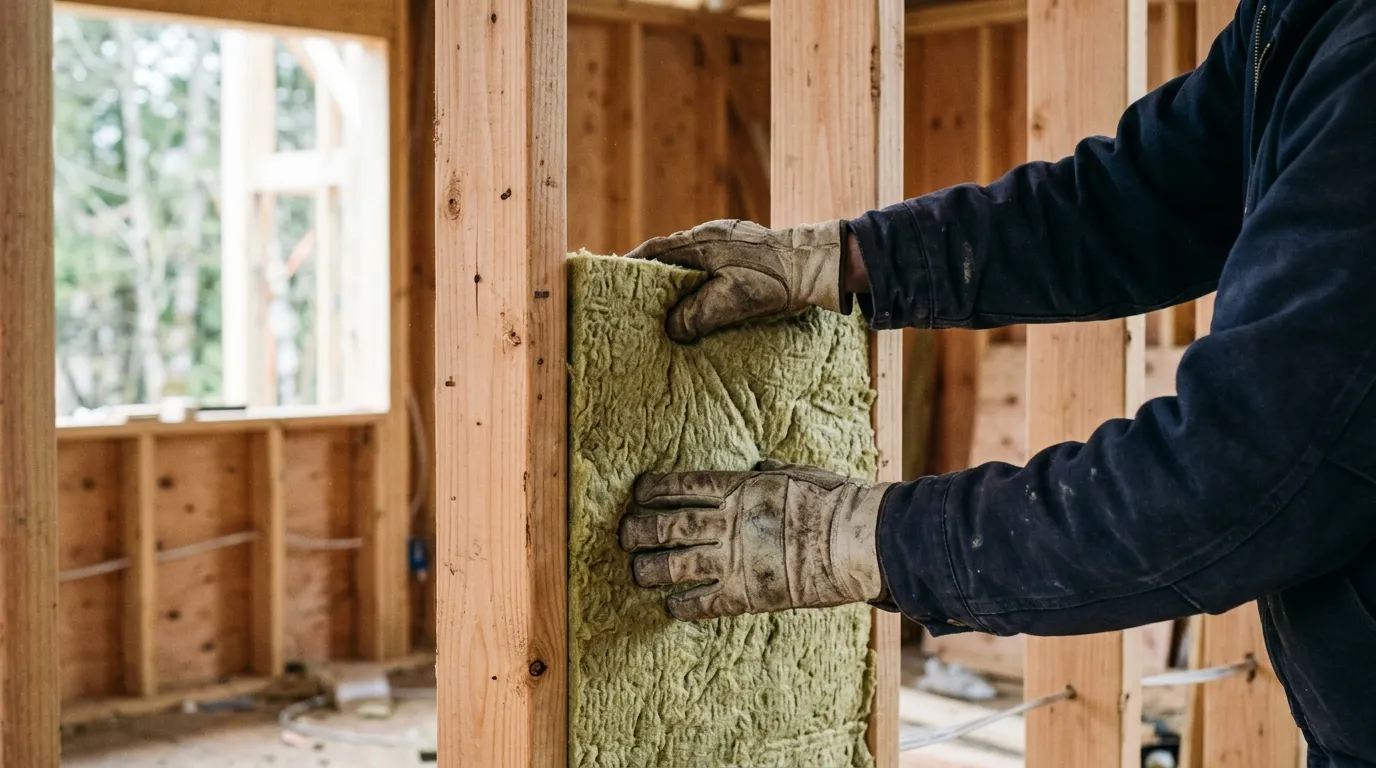
Spray foam quotes came in around $1,800 for my shell. Rockwool batts cost me $380 and I installed them myself in a weekend. They handle moisture better than fibreglass, they do not sag, and they cut with a bread knife. This is the easiest big saving on the whole build.
7. Metal roofing beats shingles on a small footprint
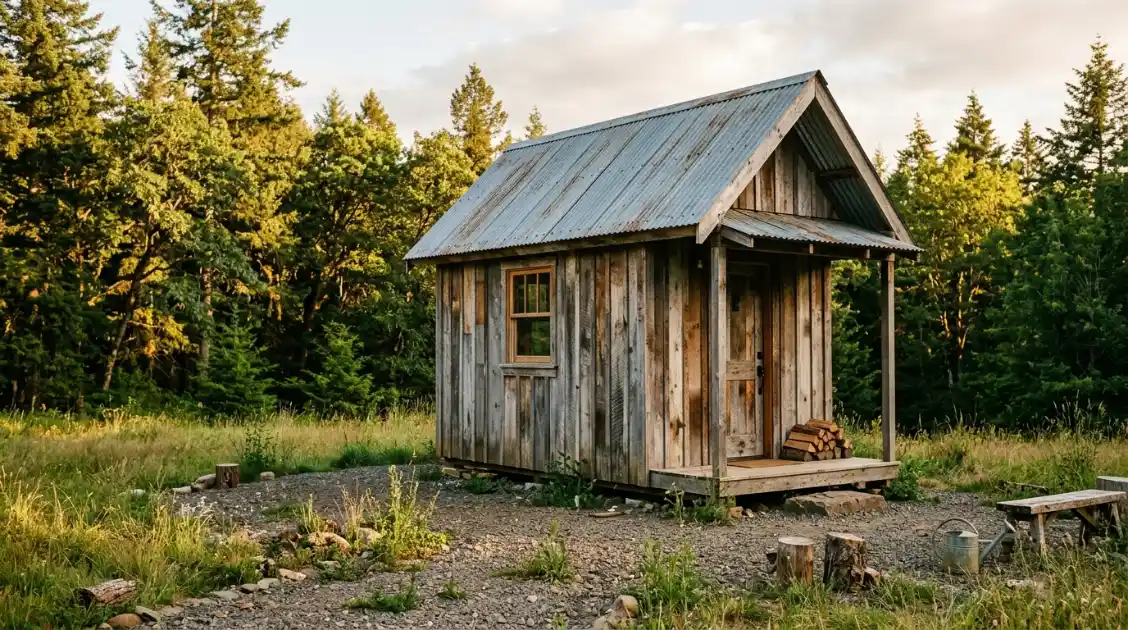
A 16 foot roof needs very little material, and corrugated metal panels ran me $450 including screws and closure strips. They install in a single day with a drill, they last decades, and they weigh far less than asphalt, which matters if you are on a trailer.
8. Reclaimed interior wood is free if you ask
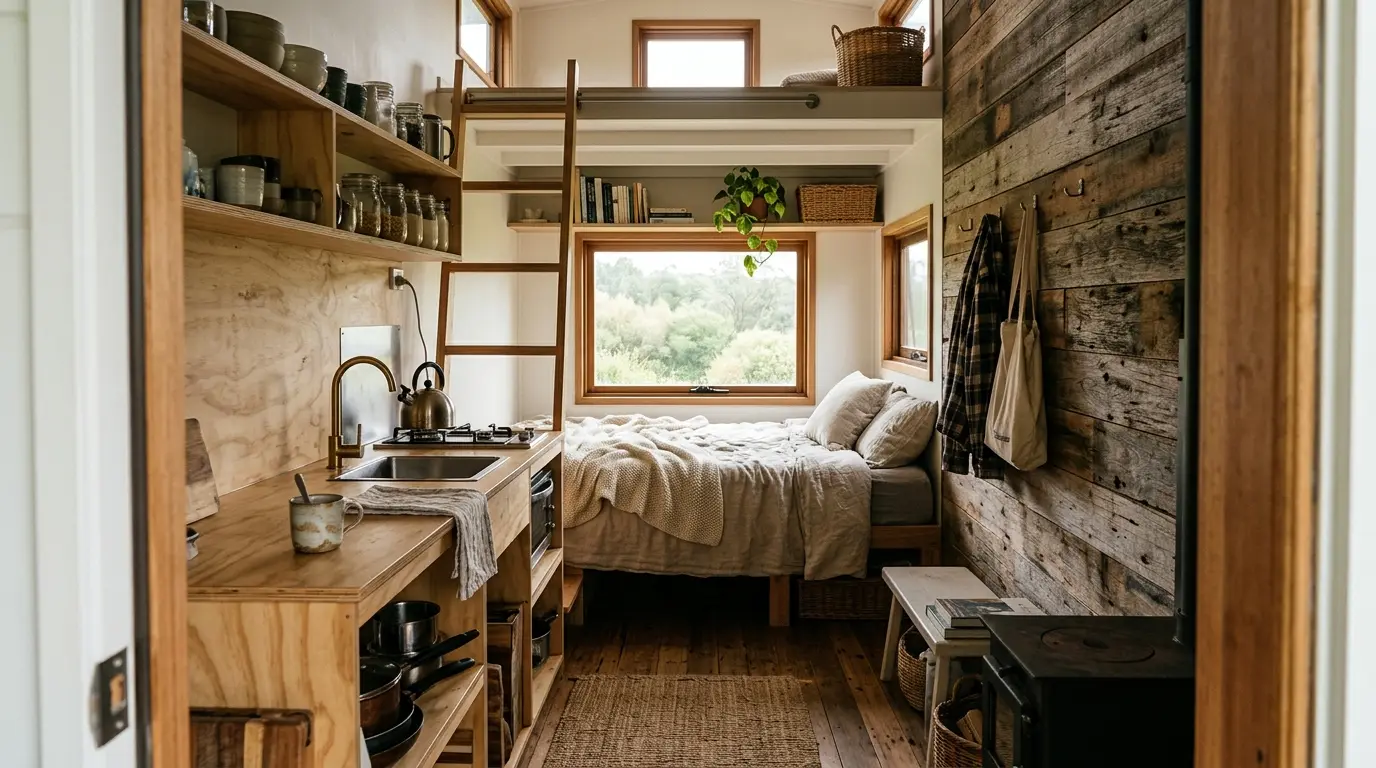
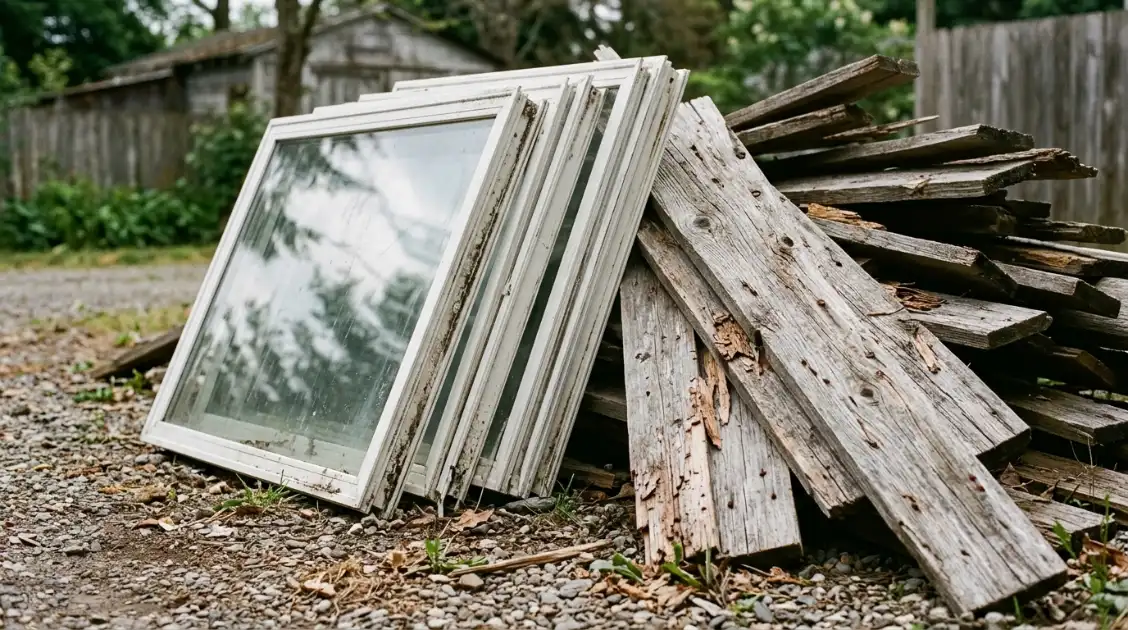
Pallets are the obvious one, though sorting through them is genuinely tedious. Better source: barn removals and old fence sections. I got enough cedar fencing from a neighbour’s teardown to do an entire accent wall and my kitchen shelving, for the cost of a case of beer.
9. Do not cheap out on the moisture barrier
Here is my expensive lesson. I used cheap plastic sheeting instead of proper house wrap to save about $90. Two winters later I had condensation inside the wall cavity and had to pull a whole section apart. Buy real house wrap and tape the seams properly. It is the least glamorous $150 you will ever spend and it protects everything else.
10. Wire it simply and get it inspected
I ran a single 30 amp RV style inlet, one circuit for outlets, one for lights. Total materials came to $290. Whatever you do, have a licensed electrician look at it before you close the walls, which cost me $120 for an hour of his time and was worth every cent for peace of mind.
11. Composting toilet instead of plumbing
Plumbing is where budgets go to die. A basic composting toilet setup, either bought used or built from a bucket system, runs $60 to $200 and needs no water hookup, no black tank, no permits in most areas. I use a jug and a small sink drain to a grey water bucket. Not fancy, completely functional.
12. Buy tools used and sell them after
You need a circular saw, a drill, a nail gun or hammer, and a level. I bought everything secondhand for about $220 and sold most of it afterwards for $170, so the tools effectively cost me $50. Check pawn shops, since they price power tools far below what marketplace sellers ask.
How to sequence the build so you do not waste money
Order matters more than people expect. Get the trailer or foundation first, then frame, then get the roof on as fast as you physically can, because rain on bare framing is how you end up replacing lumber you already paid for. I lost about $130 to a wet weekend before I learned that.
After the shell is dry, slow down. Live with the empty space for a week if you can, and mark on the subfloor with chalk where you think the bed, the counter, and the door swing will go. I changed my kitchen from the back wall to the side wall during that week and it made the whole place feel twice as big. Finish work is also where you can pause, since a dried-in shell can sit safely for months while you save up for the next stage. That flexibility is what actually makes a $5,000 build possible for most people.
Frequently asked questions
Can you really build a tiny house for under $5000? Yes, but only with a used trailer or a skid foundation, salvaged windows, and your own labour. If you buy a new trailer or hire out any major stage, you will land closer to $12,000 to $15,000 instead.
How long does a DIY tiny house take to build? Working weekends only, expect three to five months for a first-time builder. Mine took about eleven weekends of real work spread across a summer, and the finish work dragged on much longer than the shell did.
Do I need a permit for a tiny house? It depends heavily on your area and whether it is on wheels. Houses on a trailer are usually treated as RVs and avoid building permits, while anything on a permanent foundation almost always needs one. Call your local planning office before you buy materials.
What is the cheapest way to insulate a tiny house? Rockwool batts give the best value for the money, at roughly $380 for a 16 foot build. Fibreglass is slightly cheaper but sags over time and handles moisture badly, which causes problems you will pay for later.
Is a tiny house cheaper than renting? Over a few years, almost always yes. The build cost is front loaded and painful, but once it is done your monthly housing cost drops to land rent or nothing, which is the entire appeal for most people who do this.
Final thoughts
Building one of these will teach you more about houses than any amount of reading. You will make mistakes, some of them costly, and you will still end up with something you built with your own hands for less than a used car costs.
If you are seriously considering it, start by pricing used trailers in your area this week and see what turns up. That one number shapes your entire budget, and knowing it makes the rest of the plan far more real than any spreadsheet will.