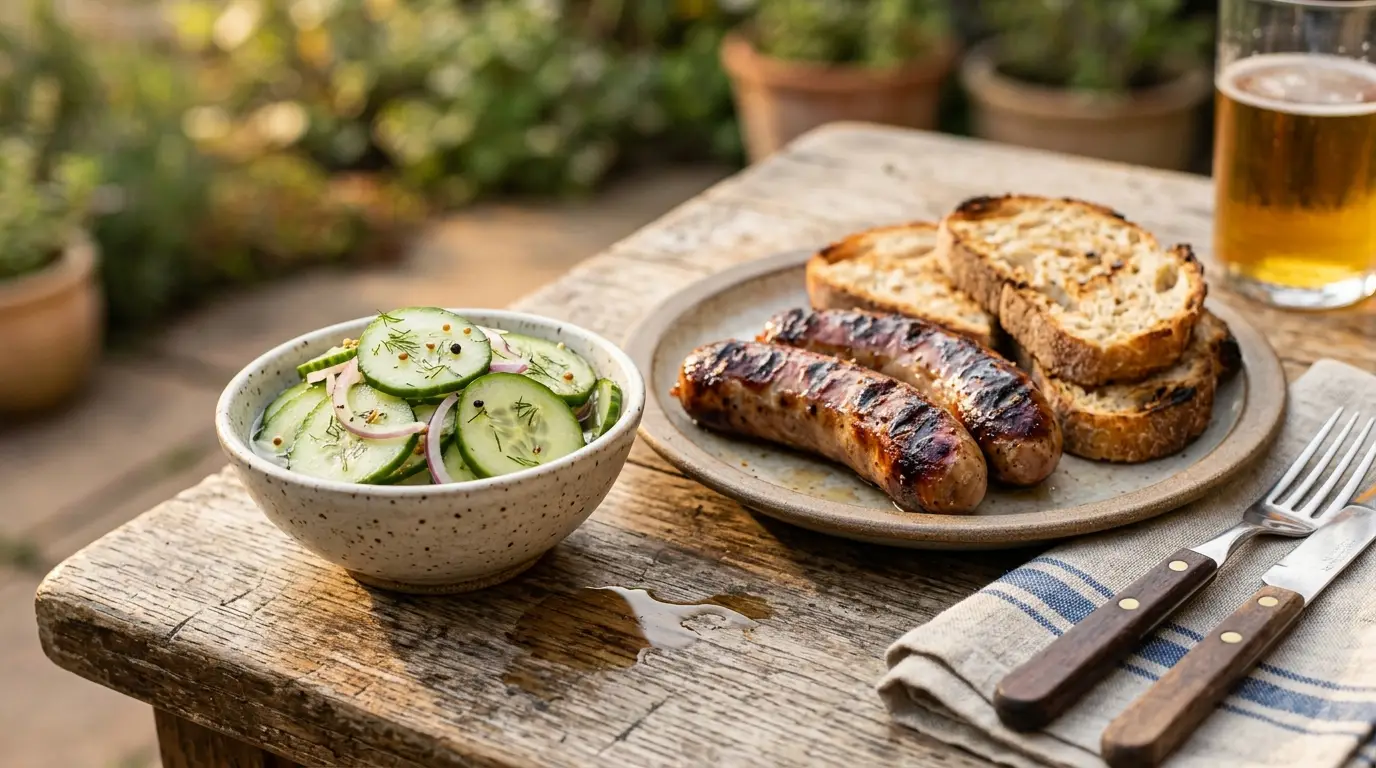
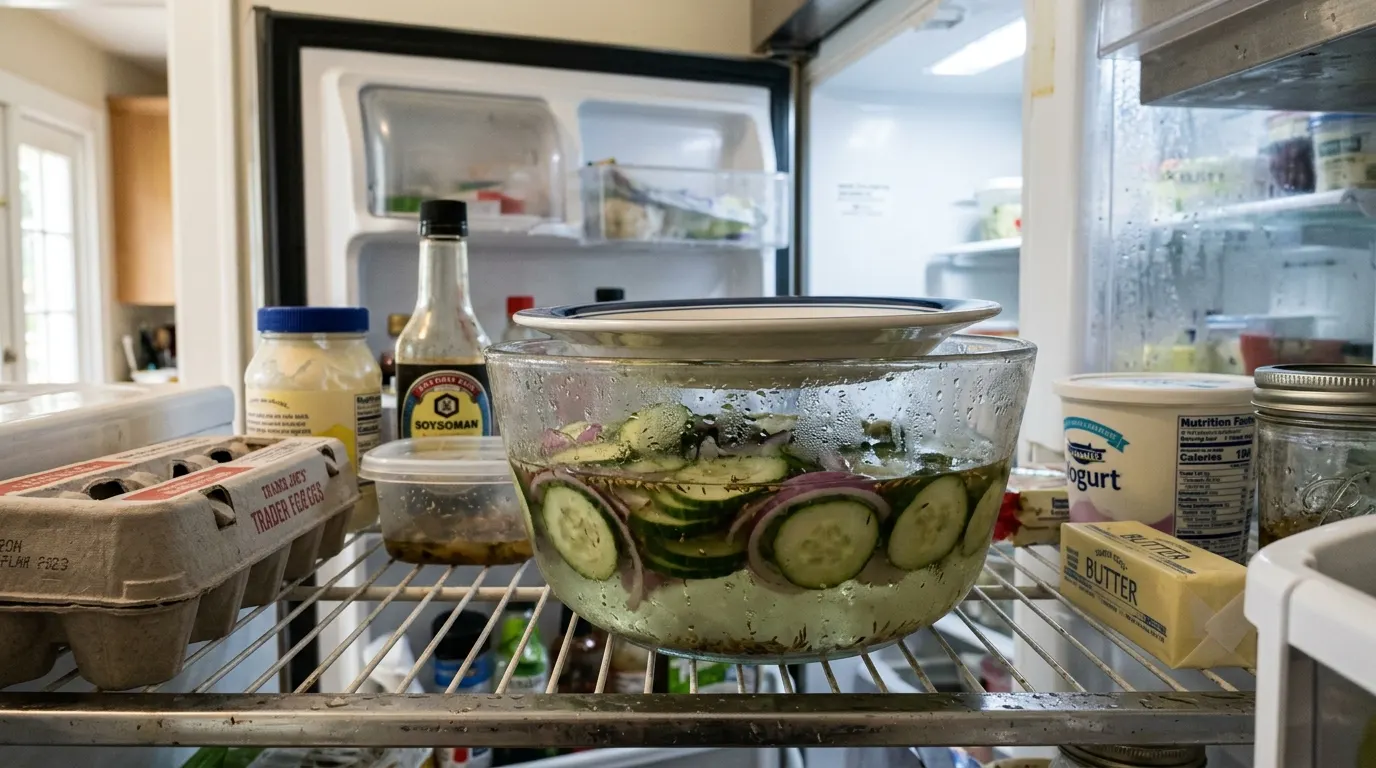
There was always a bowl of this in my grandmother’s fridge between June and September. Glass bowl, a plate sitting on top instead of a lid, and it went next to whatever was on the table without anyone discussing it.
I assumed it was three ingredients and no technique.
Then I made it myself and got a bowl of limp cucumber floating in cloudy sweet water, which is not the same dish at all. It turns out there are two small steps in there that nobody writes down because everybody’s grandmother just did them.
What separates a good bowl from a sad one
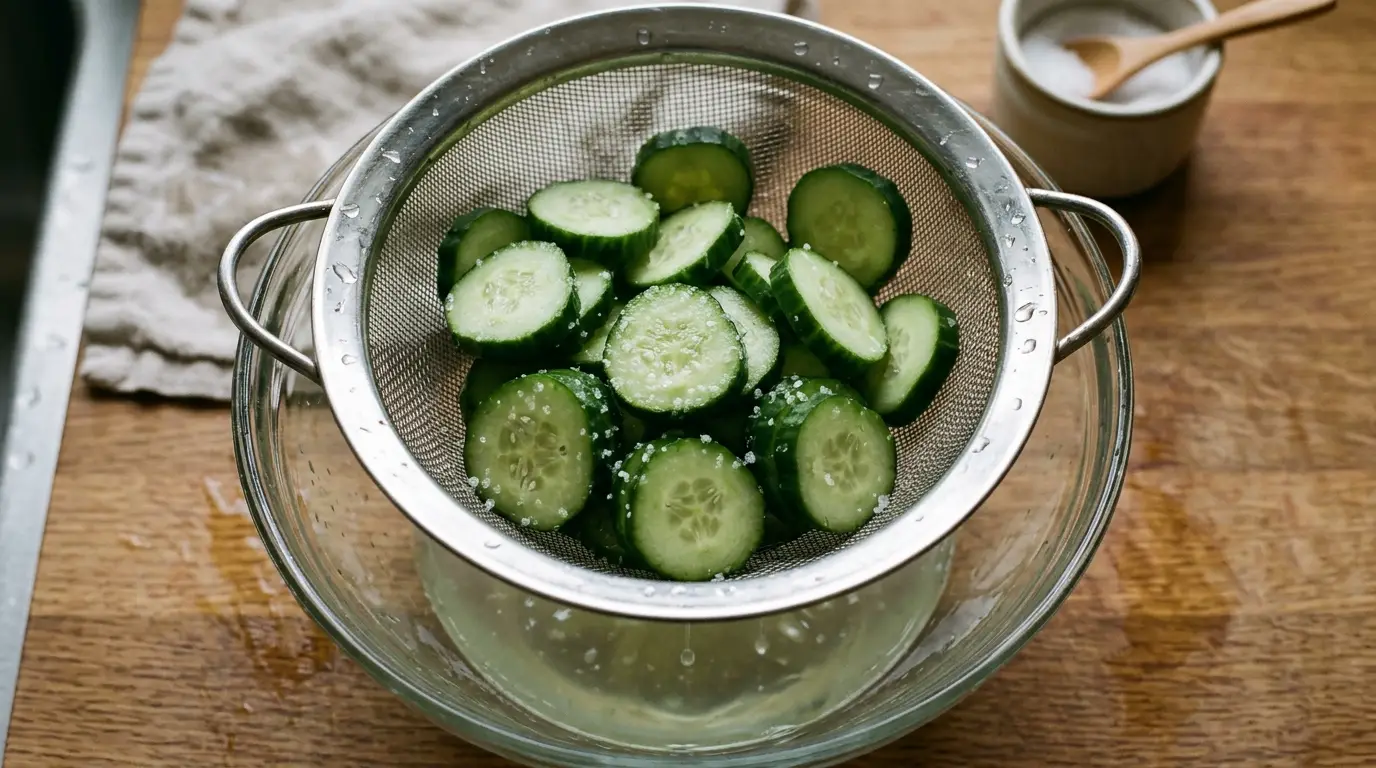
The first thing is water. Cucumbers are mostly water, and once you pour brine over them they start releasing it, which dilutes your vinegar and turns the whole bowl weak and watery by the second hour. Salting and draining them first solves this completely and takes twenty minutes of doing nothing.
The second is the onion. Raw onion sliced and dumped straight in will dominate the bowl and give you that harsh sulphur bite that lingers for the rest of the afternoon. A short cold water soak takes that edge off without removing the flavor, and I did not know about it until my thirties. My grandmother knew. She just never mentioned it.
1. Use the right cucumber
English or Persian cucumbers are the best choice, since they have thin unwaxed skin and small underdeveloped seeds. Standard waxed slicing cucumbers from the produce section have tough skin and a watery seedy core, so if that is what you have, peel them in stripes and scrape the seeds out with a spoon.
2. Slice thin and slice evenly
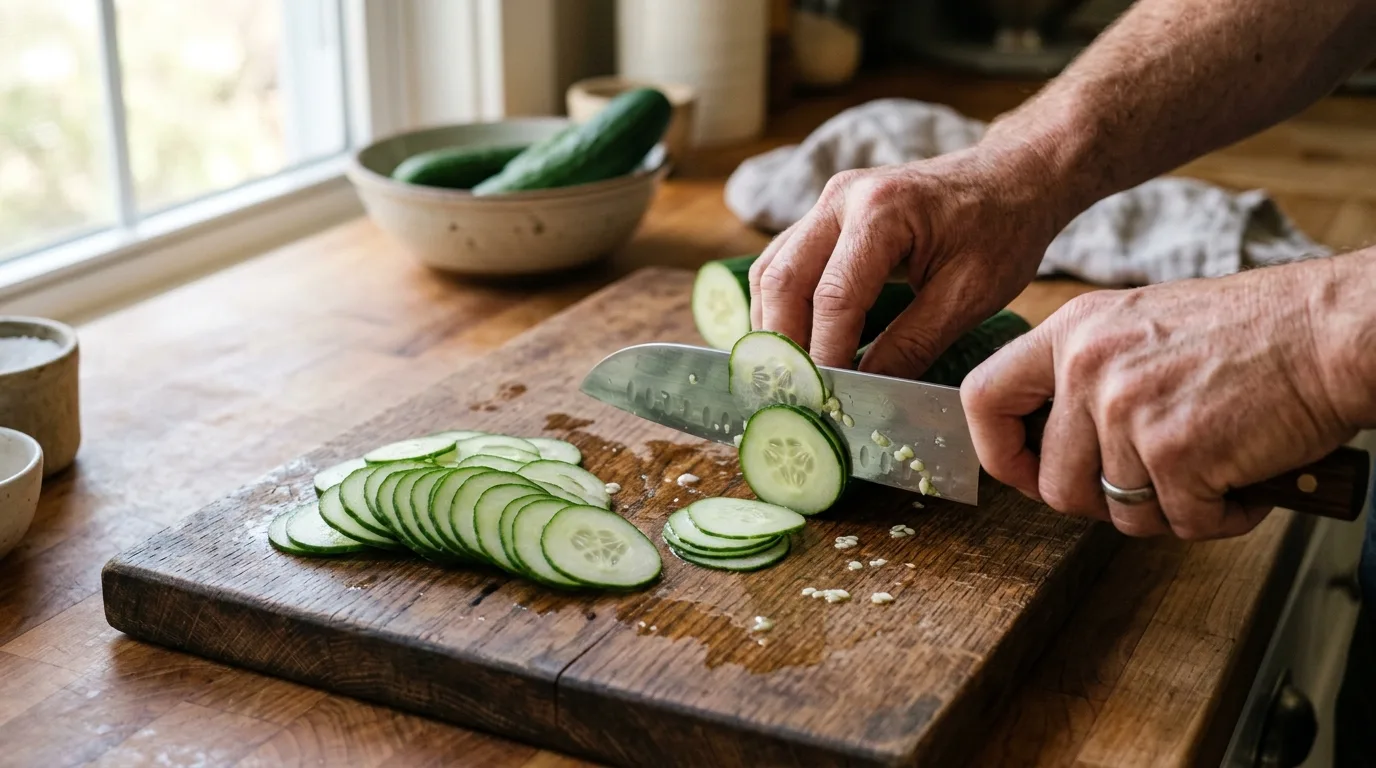
Aim for about an eighth of an inch, thin enough to go translucent at the edges but thick enough to keep a snap. A mandoline gets you there in ninety seconds and gives you even thickness, which matters because thick and thin slices in the same bowl pickle at different speeds. Use the guard, please.
3. Salt them and let them drain
Toss the slices with 1 teaspoon of kosher salt in a colander set over a bowl and leave for 20 minutes. Then pat them dry with a towel, or give them a gentle press. This is the crisp step and it is the one most recipes skip, and honestly it is the whole difference.
4. Pick a sweet or a red onion
Sweet onions like Vidalia or Walla Walla are the traditional choice and they are mild enough to eat in quantity. Red onion works and looks prettier, turning faintly pink in the vinegar within an hour. Yellow cooking onion is too aggressive raw, so save that for something you are actually cooking.
5. Slice the onion thinner than you think
Paper thin half moons, thinner than the cucumber. Onion carries much more flavor per bite, so a thick slice will take over. Half a large onion for three cucumbers is roughly the right ratio, and going heavier than that turns this into an onion salad with cucumber in it.
6. Soak the onion in cold water for 10 minutes
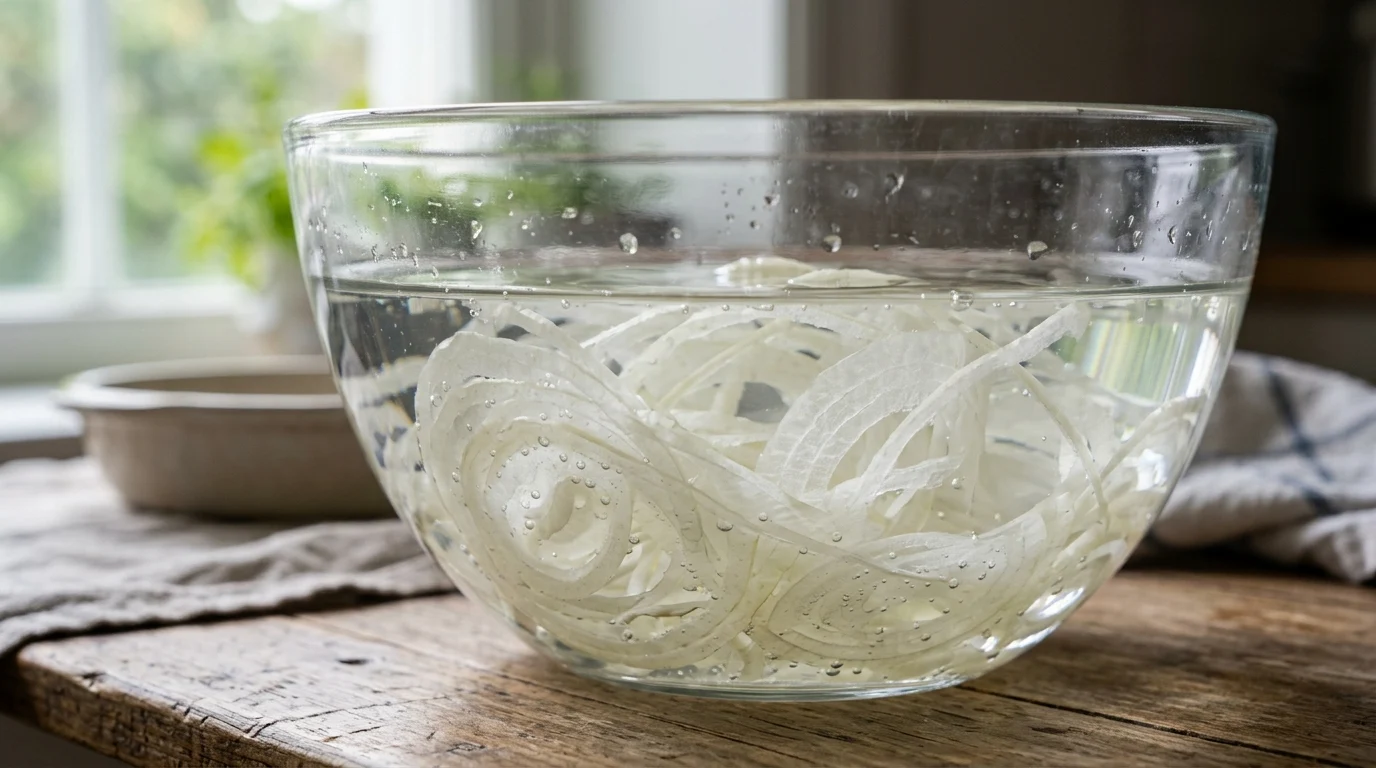
Drop the sliced onion into a bowl of cold water, leave it 10 minutes, then drain well. It pulls out the harsh sulphur compounds that cause the lingering bite while leaving the sweetness behind. This is the second thing nobody writes down and it changes the finished bowl noticeably.
7. Mix the base brine
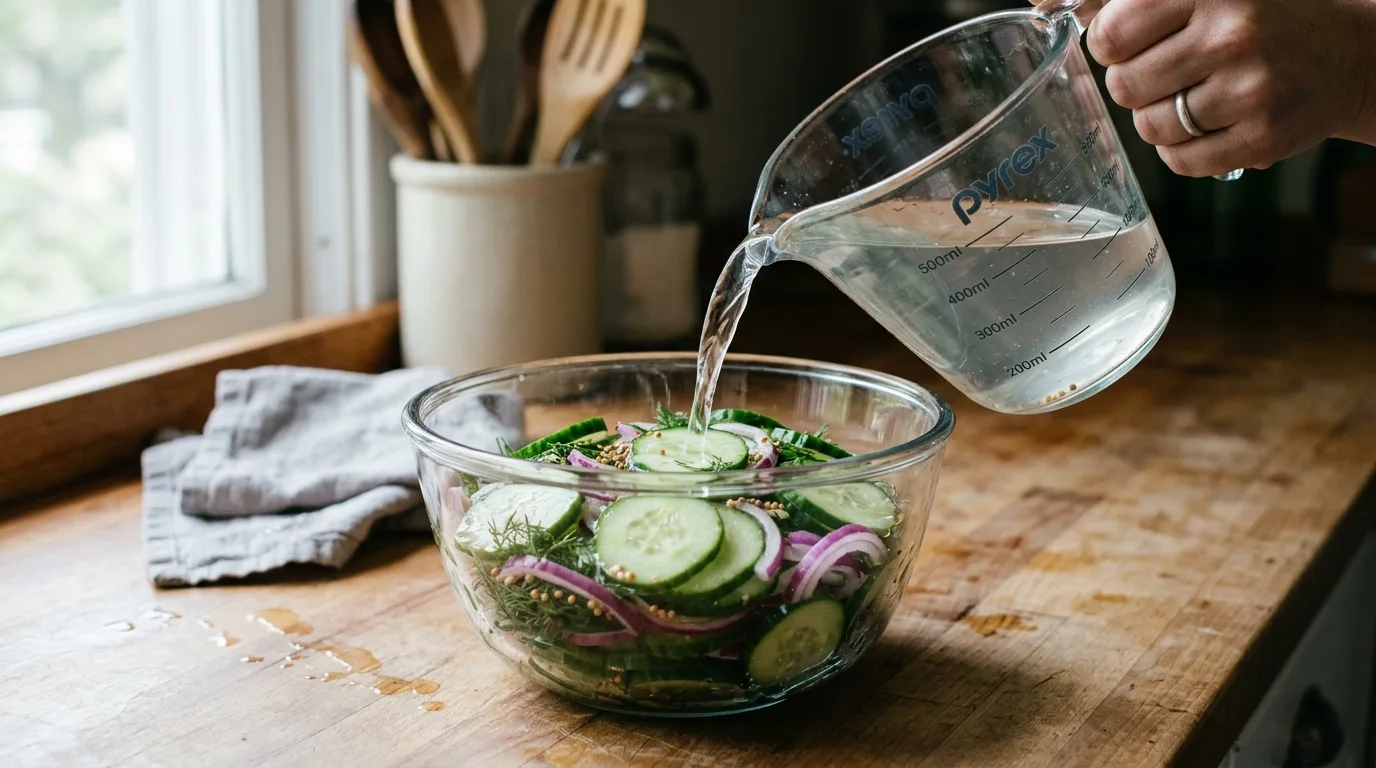
For three medium cucumbers and half a large onion, combine 1 cup white vinegar, half a cup of cold water, a quarter cup of sugar, 1 teaspoon of kosher salt, and plenty of freshly cracked black pepper. Whisk until the sugar dissolves, which happens in cold liquid if you are patient for about a minute.
8. Adjust the sweetness to your own memory of it
Every family made this at a different sugar level. A quarter cup is a middle ground, a third of a cup gives you the sweeter Midwestern style, and 2 tablespoons keeps it sharp and mostly savory. Mix the brine and taste it on a spoon before it goes anywhere near the vegetables, because fixing it later is much harder.
9. Add the seasonings that actually earn their place
Fresh dill is the classic and you want a good handful, roughly 3 tablespoons chopped. A quarter teaspoon of celery seed adds a savory background note that people cannot identify but definitely notice missing. A pinch of chili flakes is not traditional and I put it in anyway.
10. Combine and keep everything submerged
Layer the drained cucumber and onion in a bowl or a jar and pour the brine over. Press everything down so the liquid covers it, and if the top layer keeps floating, lay a small plate directly on the surface. Slices sitting above the brine do not pickle and they go slimy first.
11. Rest for at least an hour, better at four
You can eat it after 30 minutes and it will be fine. At one hour it is good. At four hours the cucumbers have taken on the brine properly and the onion has mellowed into it, which is when this dish is genuinely at its best. Make it in the morning for dinner and you will taste the difference.
12. Make the creamy version if that is the one you grew up with
Plenty of families make this with sour cream, which is the German and Amish style. Drain most of the vinegar off after the first hour, then stir in three quarters of a cup of sour cream and an extra tablespoon of chopped dill. It is a different dish, richer and less sharp, and it only keeps about two days rather than four.
How to serve it and how long it really lasts
This belongs next to anything cooked over fire or fried, which is presumably why it exists. Grilled chicken, brats, ribs, fried fish, burgers, or a plate of cold cuts and bread on a hot evening when nobody wants to turn the oven on. It also does the job that a pickle does on a rich plate, cutting through fat and resetting your palate, so a small bowl goes further than you would expect. On timing, this keeps for about four days in the fridge, though it is not equally good across all four. Day one and two are the peak. By day three the cucumbers have given up more water and softened noticeably, and by day four you have something closer to a relish, which is still perfectly nice on a sandwich but no longer crisp. So make a smaller batch more often rather than a giant bowl on Sunday. And one useful thing to know, the brine is worth keeping after the vegetables are gone. Strain it, use it once for a quick batch of pickled red onions or thin sliced radishes within the week, or shake it into a vinaigrette with a bit of olive oil and mustard. Throwing out that liquid always feels wrong to me.
Frequently asked questions
How long do cucumbers and onions in vinegar last in the fridge? About four days in a covered container, though they are crispest on the first two. The creamy sour cream version keeps a shorter time, roughly two days, since dairy shortens the window.
What kind of vinegar is best for this? Plain distilled white vinegar gives the clean sharp flavor most people associate with the dish. Apple cider vinegar is a softer, slightly fruity alternative that works well, and rice vinegar makes a milder version if you find white vinegar too harsh.
Do I have to peel the cucumbers? No, and the skin helps the slices hold their shape. If you are using waxed supermarket cucumbers with thick skin, peel them in stripes so you get some structure without the toughness.
Why did my cucumbers and onions go watery? The cucumbers released their moisture into the brine and diluted it. Salting the slices for 20 minutes and patting them dry before adding the brine prevents this almost entirely.
Can I make this ahead for a party? Yes, and four hours ahead is actually the ideal window. Make it the morning of rather than the day before, since overnight resting leaves the cucumbers softer than most people want.
Final thoughts
There is not much to this dish and that is exactly why it survives. A cucumber, half an onion, vinegar, sugar, salt, and twenty minutes of patience while things drain. It costs almost nothing and it makes a heavy summer plate feel lighter.
So if you have cucumbers piling up right now, slice a few thin and get a bowl going before lunch. If your family made the sour cream version, come tell me, because I am still slightly convinced that the vinegar camp and the sour cream camp cannot both be right.