Camping food splits into two camps and neither is much fun. There is the sad camp, where every meal is a packet of something and a lukewarm coffee. And there is the ambitious camp, where somebody attempts a three pan dinner in the dark and everyone eats at ten.
I have been in both.
What changed things was doing the fiddly work at home, so that cooking at the campsite became assembly rather than actual cooking. That one shift is the reason these twelve work, and it is what most camping recipe lists leave out entirely.
Prep at home, assemble at camp
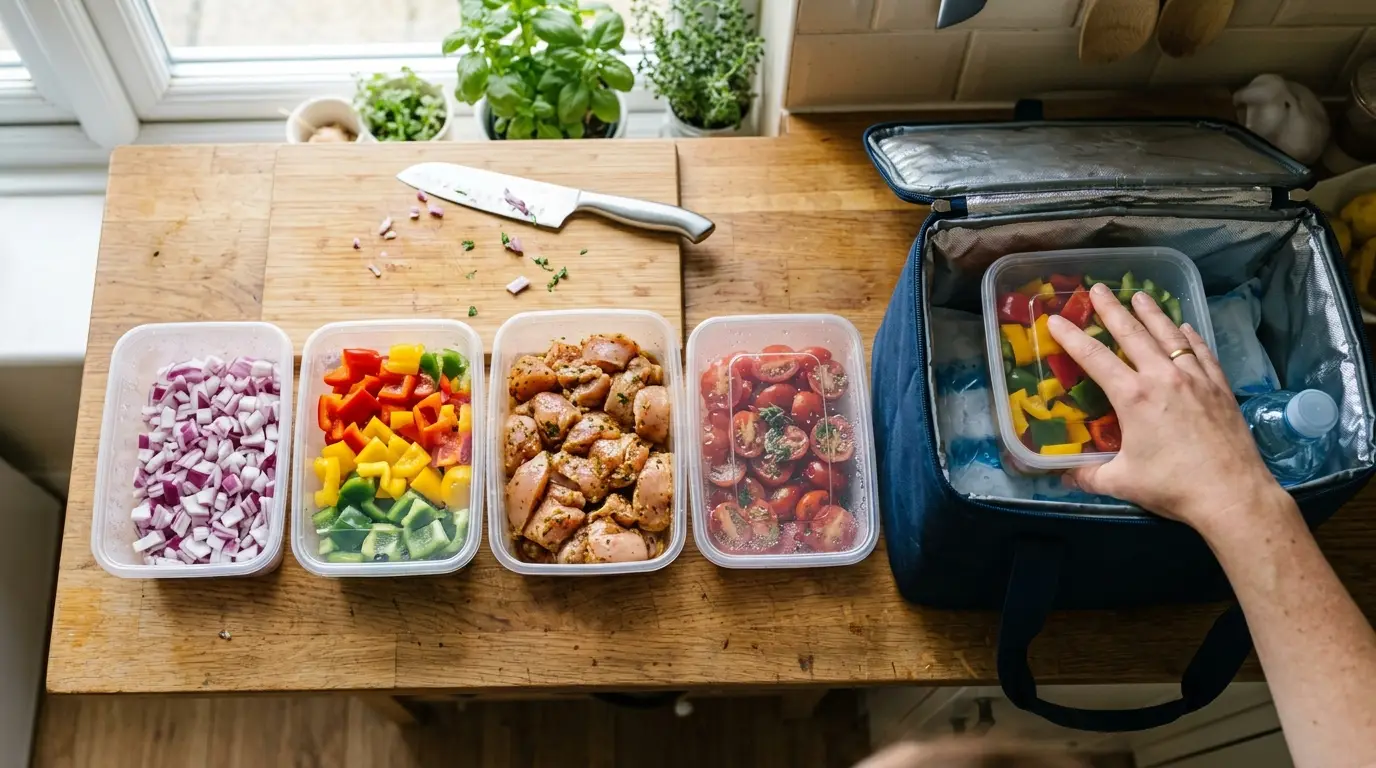
The single biggest improvement to camp food is doing your chopping, mixing, and marinating in your own kitchen the day before. Diced onion in a container, marinated chicken in a bag, pancake dry mix pre measured in a jar. It weighs the same, it takes up less space, and it means you are not chopping vegetables on a picnic table with a blunt knife and a head torch.
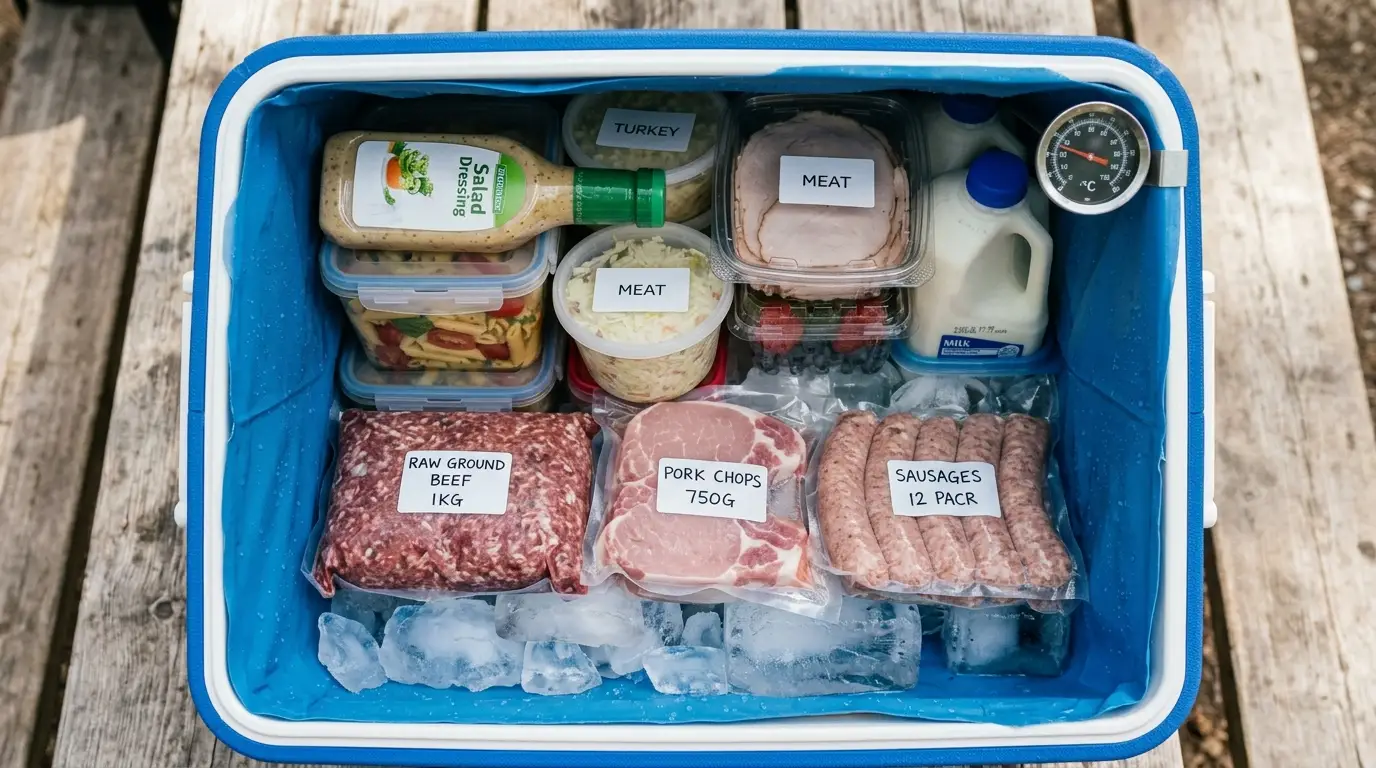
The other half is cooler management, which people treat casually and should not. Your cooler needs to stay at or below 40 degrees Fahrenheit for anything perishable, and a fridge thermometer costs almost nothing and takes the guesswork out. Pack it in layers with the coldest and heaviest at the bottom, raw meat sealed and always beneath ready to eat food so nothing drips down, and drinks in a separate cooler entirely, because that lid gets opened forty times a day and every opening costs you cold air. I noticed the trip I split the drinks out that our food cooler still had solid ice on day three, which had never happened before.
1. Foil packet dinners
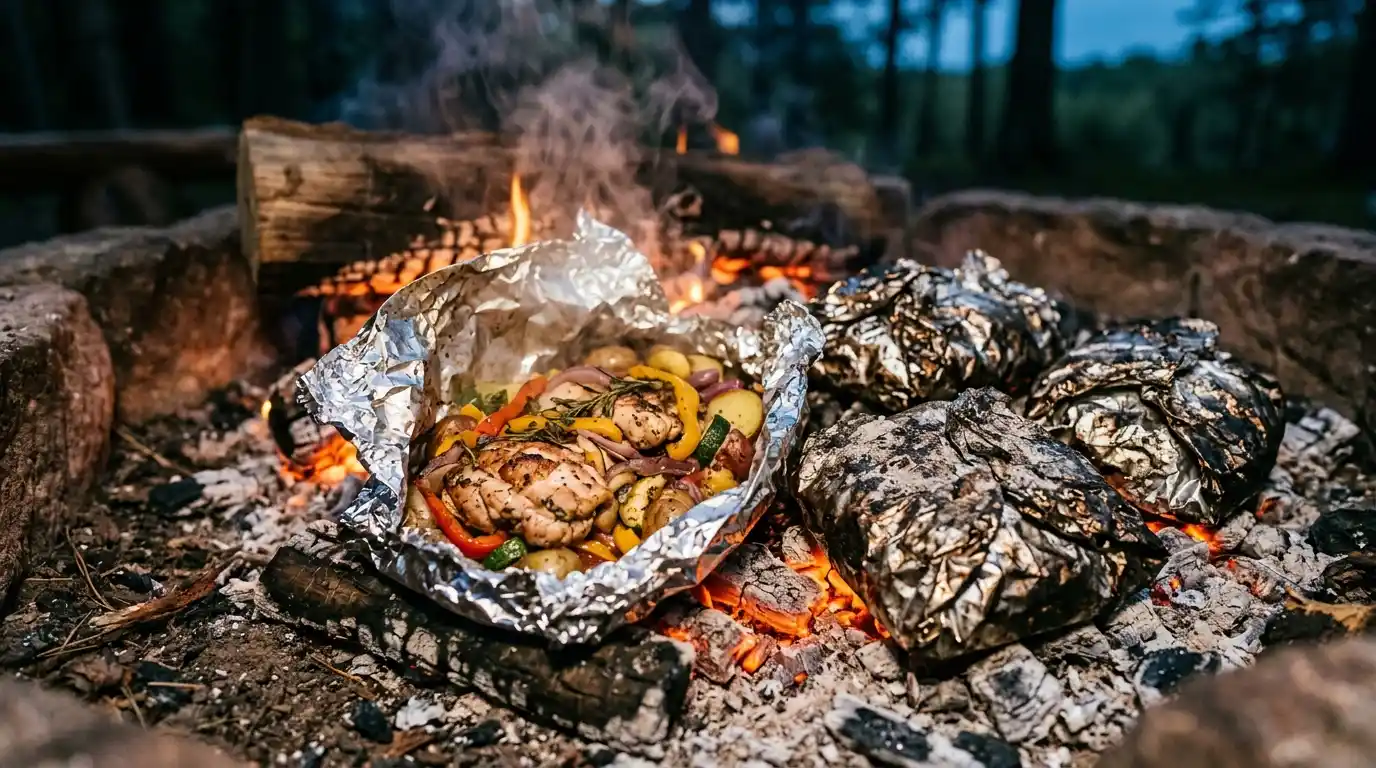
Protein, chopped vegetables, a knob of butter, and seasoning sealed in a double layer of heavy duty foil and cooked on coals for 20 to 25 minutes. Everyone builds their own, which handles picky eaters and different diets in one go. Double the foil, always, since a single layer tears on the grill and dinner ends up in the fire.
2. One pan sausage and potato hash
Par boil and cube the potatoes at home so they only need browning at camp. Then it is sausage, potato, onion, and peppers in one skillet for about fifteen minutes. This is my most cooked camp dinner because it works for breakfast the next morning with an egg on top.
3. Walking tacos
Seasoned ground beef cooked at home and reheated at camp, spooned straight into individual bags of corn chips with cheese and salsa. There is almost nothing to wash up, which at a campsite with one water tap is worth a lot. Kids in particular treat this like a novelty.
4. Campfire quesadillas
Tortillas, cheese, and any leftover protein pressed in a dry cast iron skillet or a pie iron over the fire. Two minutes a side. The pie iron is the one piece of single purpose camping gear I actually think is worth the space.
5. Skewers with everything pre threaded
Thread your chicken, halloumi, or vegetables onto skewers at home and stack them in a container. At camp they go straight over the fire with no prep. Soak wooden skewers in water for 30 minutes first or use metal ones, since dry wood burns through and dumps dinner into the coals.
6. Overnight oats for a no cook breakfast
Oats, milk or a plant alternative, and whatever fruit and nuts you like, made up in jars before you leave. They keep two or three days cold and they mean the first morning does not require a stove at all. This is the meal to have ready on the morning after a late night.
7. Pancakes from a jar of pre mixed dry ingredients
Flour, sugar, baking powder, and salt measured into a jar at home. At camp you add water or milk and an egg, shake, and pour. Pre mixing removes the fiddly part and stops you forgetting the baking powder, which I have done and which produces something quite sad.
8. Breakfast burritos made ahead and frozen
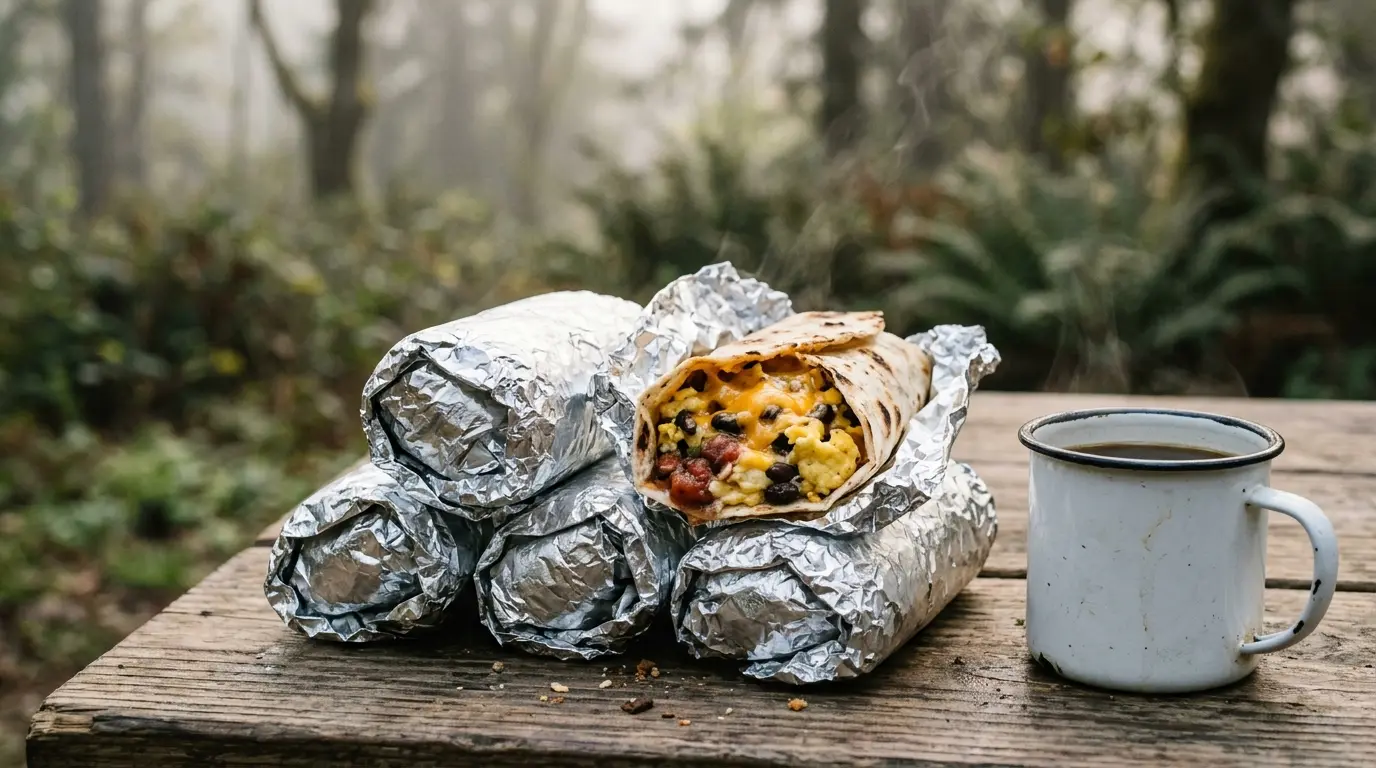
Scrambled egg, cheese, beans, and sausage rolled in tortillas, wrapped in foil, and frozen solid before you leave. They act as ice packs in the cooler on day one and then heat on the coals when thawed. Genuinely the best make ahead camping food there is.
9. Dutch oven chili or stew
Everything chopped and bagged at home, then it all goes in the pot and sits over low coals for an hour while you do something else. Dutch oven cooking suits camping because it is forgiving and unattended. Put coals on the lid as well as underneath for even heat.
10. A proper snack and lunch board
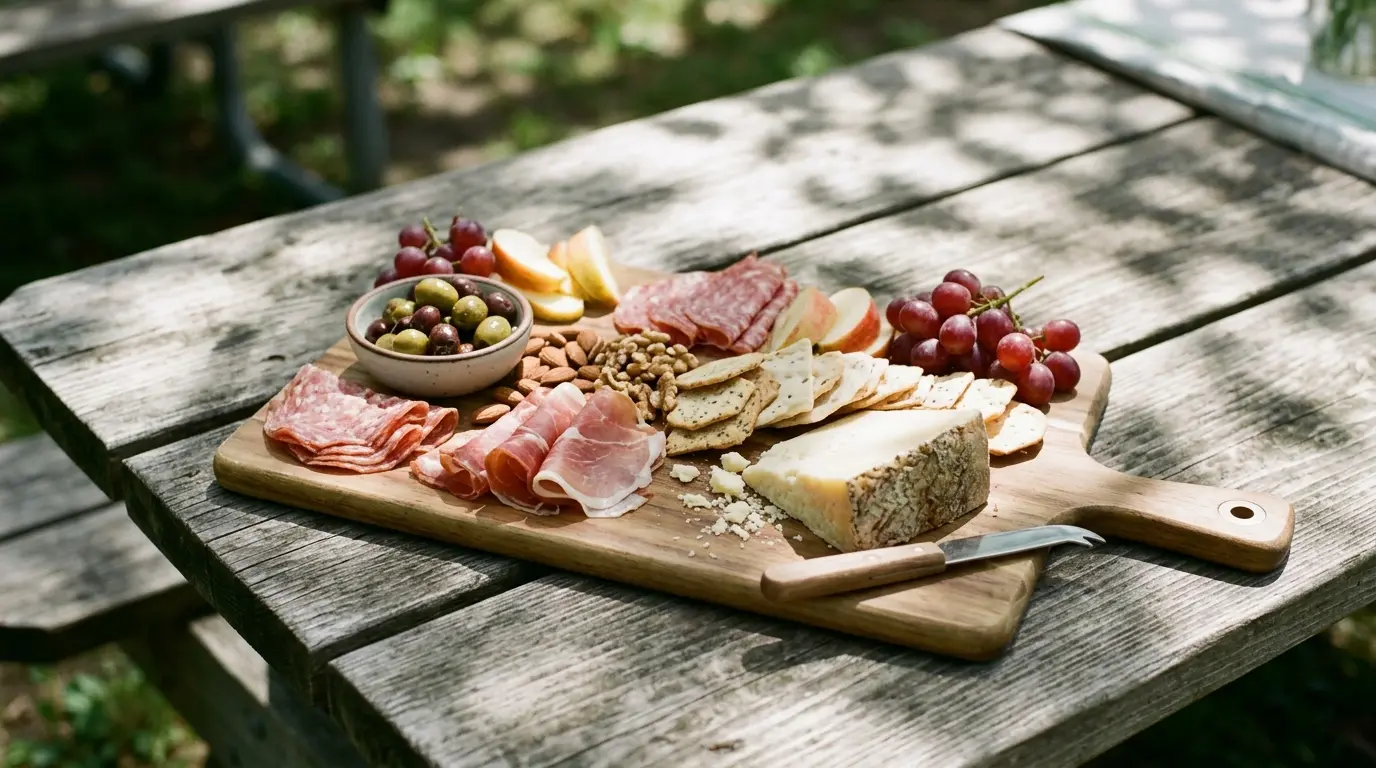
Cured meat, hard cheese, crackers, olives, nuts, and fruit laid out on a board. Hard cheeses and cured meats handle a few hours out of the cooler far better than soft ones do, so build around those. Lunch at a campsite is best when it needs no fire at all.
11. Grilled corn and vegetables as a side
Corn in the husk straight onto the coals for about 15 minutes, or halved peppers and courgette brushed with oil on the grill. Sides get forgotten in camp cooking and they are what makes a meal feel like a meal rather than a plate of protein.
12. Banana boats for dessert
Split a banana lengthways in the skin, push in chocolate and marshmallow, wrap in foil, and sit it in the coals for about 8 minutes. It is easier than assembling s’mores for a group and it requires no supervision. Eat straight from the skin with a spoon.
How to plan the food for a whole trip
Write your meals out by day before you shop, then work backwards to a single list. Plan the fresh and perishable meals for the first day or two and the shelf stable ones for later in the trip, since your cooler gets warmer as ice melts regardless of how well you pack it. Assume one hot meal a day plus assembled lunches, because cooking three hot meals outside is more work than most people want on holiday. On packing, freeze what you can, including water bottles which double as ice and then become drinking water, and use block ice rather than cubes at the bottom because it lasts considerably longer. Keep a cooler thermometer in there and check it once a day. On food safety, the rules matter more outdoors than at home because you have less margin. Perishables should stay at 40 degrees or below, raw meat stays sealed and at the bottom, use a separate board and utensils for raw meat, cook poultry to 165 degrees Fahrenheit and ground meat to 160, and anything perishable left out for more than two hours, or one hour if it is above 90 degrees, gets thrown away rather than gambled on. And the practical bit people forget, bring more water than you think, plan how you will wash up before you arrive, and never leave food or scented rubbish out overnight, since in bear country that is a serious safety issue and everywhere else it is an invitation to every animal in the area.
Frequently asked questions
What food is easiest to take camping? Foil packet dinners, walking tacos, and make ahead breakfast burritos need the least equipment and washing up. Anything you can prep fully at home and simply heat at camp will always be easier than cooking from scratch outside.
How do I keep food cold while camping? Pack a cooler with block ice at the bottom, layer raw meat sealed and beneath ready to eat food, and use a separate cooler for drinks. Keep a thermometer inside and aim to stay at or below 40 degrees Fahrenheit.
What can I eat camping without a fire? Overnight oats, a snack board of cured meat and hard cheese, sandwiches and wraps, and anything prepared at home and eaten cold. A no cook day is worth planning deliberately rather than falling into.
How long does food last in a cooler? With block ice, a well packed cooler that stays closed can hold safe temperatures for two to four days. Perishables should be eaten in the first day or two, and anything that has been above 40 degrees for more than two hours should be discarded.
What should I not bring camping? Anything that needs several pans, soft cheeses and delicate produce that will not survive a cooler, and meals requiring precise timing after dark. Also avoid strongly scented food storage in bear country, where all food and rubbish must be stored properly overnight.
Final thoughts
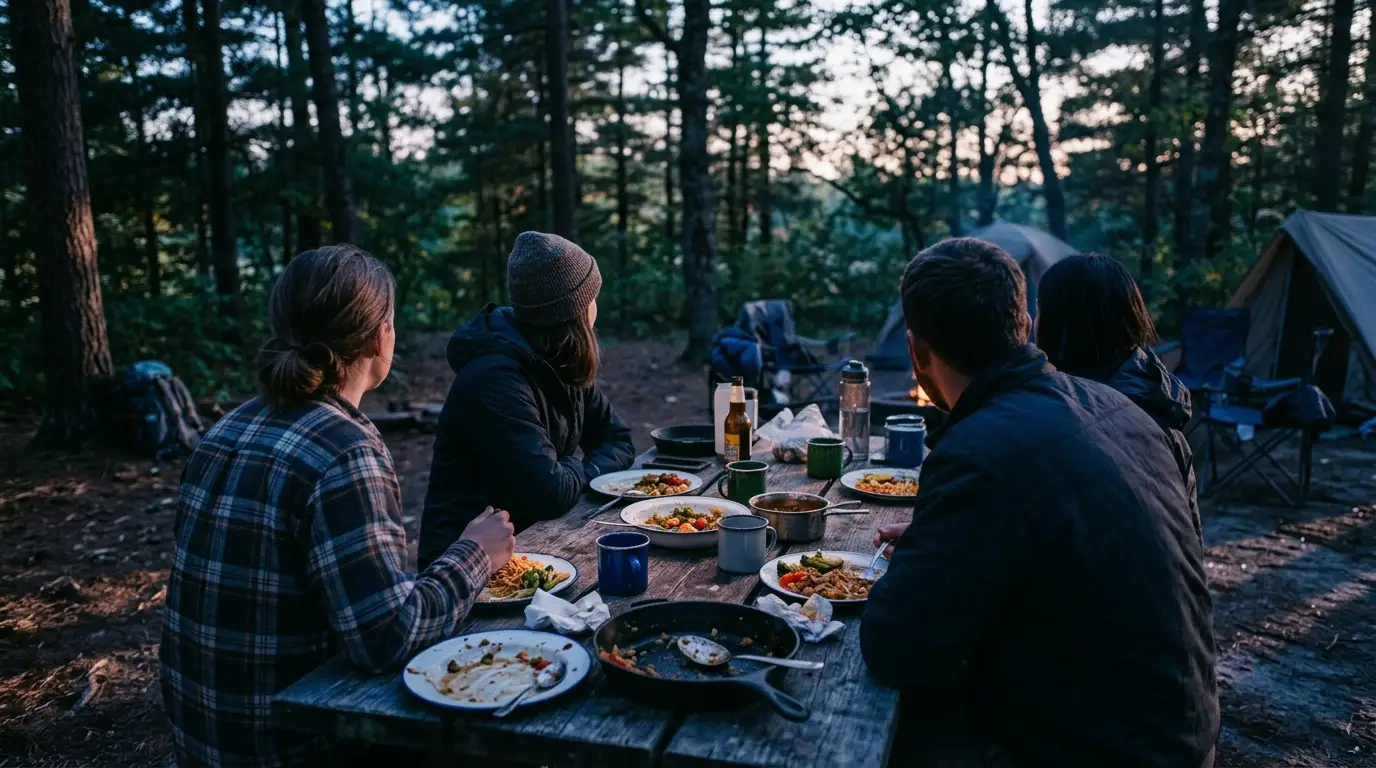
The best camping meals I remember were not the impressive ones. They were the ones ready quickly enough that we ate while it was still light, sitting around with everyone still in a good mood rather than hungry and irritable at nine.
So do your chopping at home this time, split your drinks into a second cooler, and pick two of these for the trip. Come back and tell me how the breakfast burritos went, because those are the ones I recommend first and nobody has ever regretted them.