Our first camper trip lasted about four hours before everything we owned was on the floor.
Every turn, every bump, another cabinet swinging open to fling a can of soup across the aisle. By the time we parked I was sitting in a pile of our own belongings, laughing because the alternative was crying. That night I learned the truth about camper life: the space isn’t really the problem. The lack of a system is.
So I figured it out, mile by messy mile.
The thing about a camper is that every inch has to earn its place, and everything has to survive being driven down a highway. Once I started organizing with both of those in mind, the whole rig stopped fighting me. Here’s what changed everything.
Go up, not out
The single biggest shift was learning to think vertically. Floor space is precious and there’s almost none of it, but walls and the backs of doors are sitting there empty.
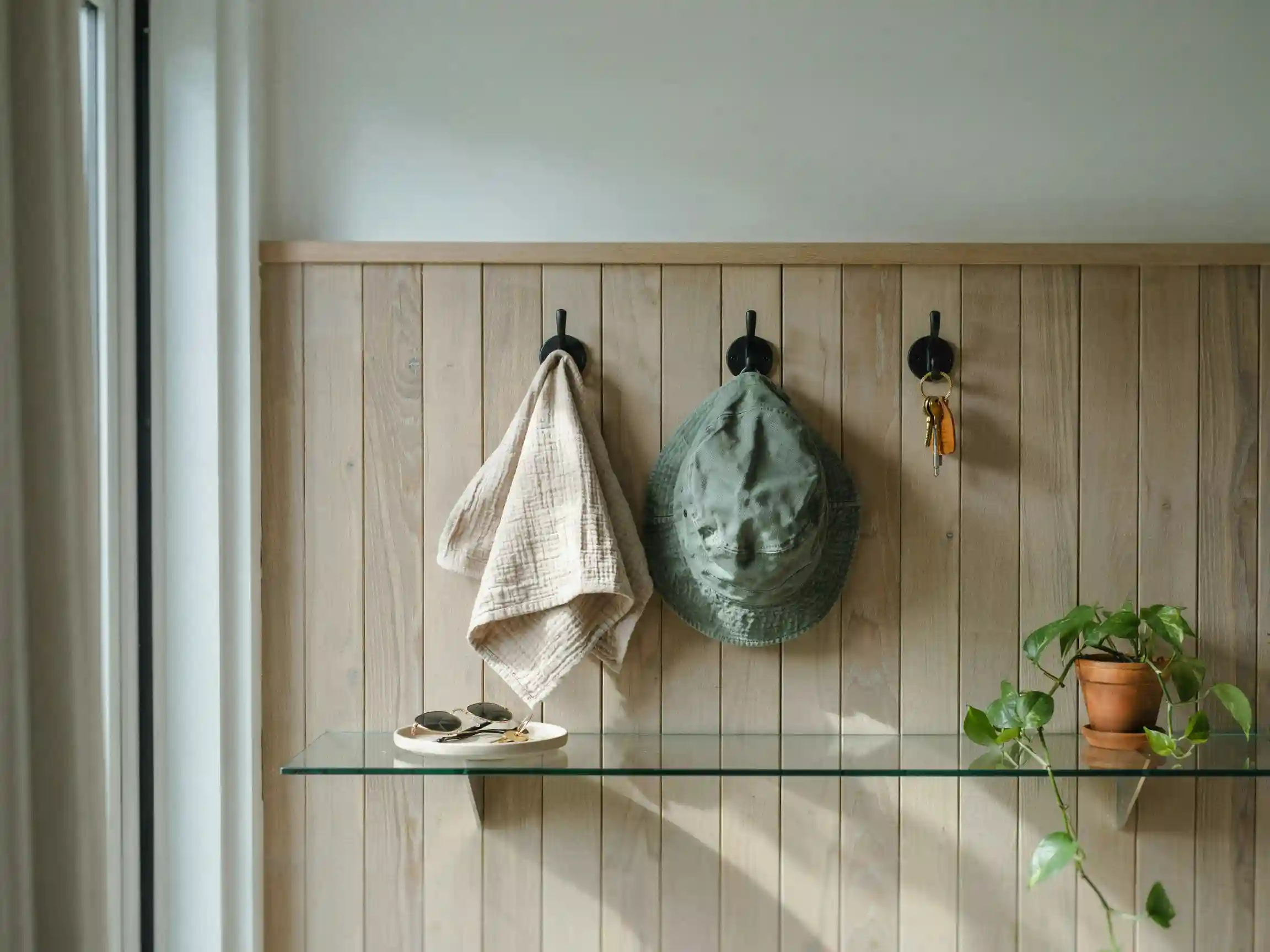
Command hooks became my obsession, honestly. Towels, hats, keys, mugs, all hung up and off the counters. Adhesive organizers and small wall-mounted racks hold the little stuff. The more I got onto walls and out of the way, the bigger the camper felt, and it’s the same square footage. Wild what your eye does with a clear surface.
Bins and baskets save your sanity
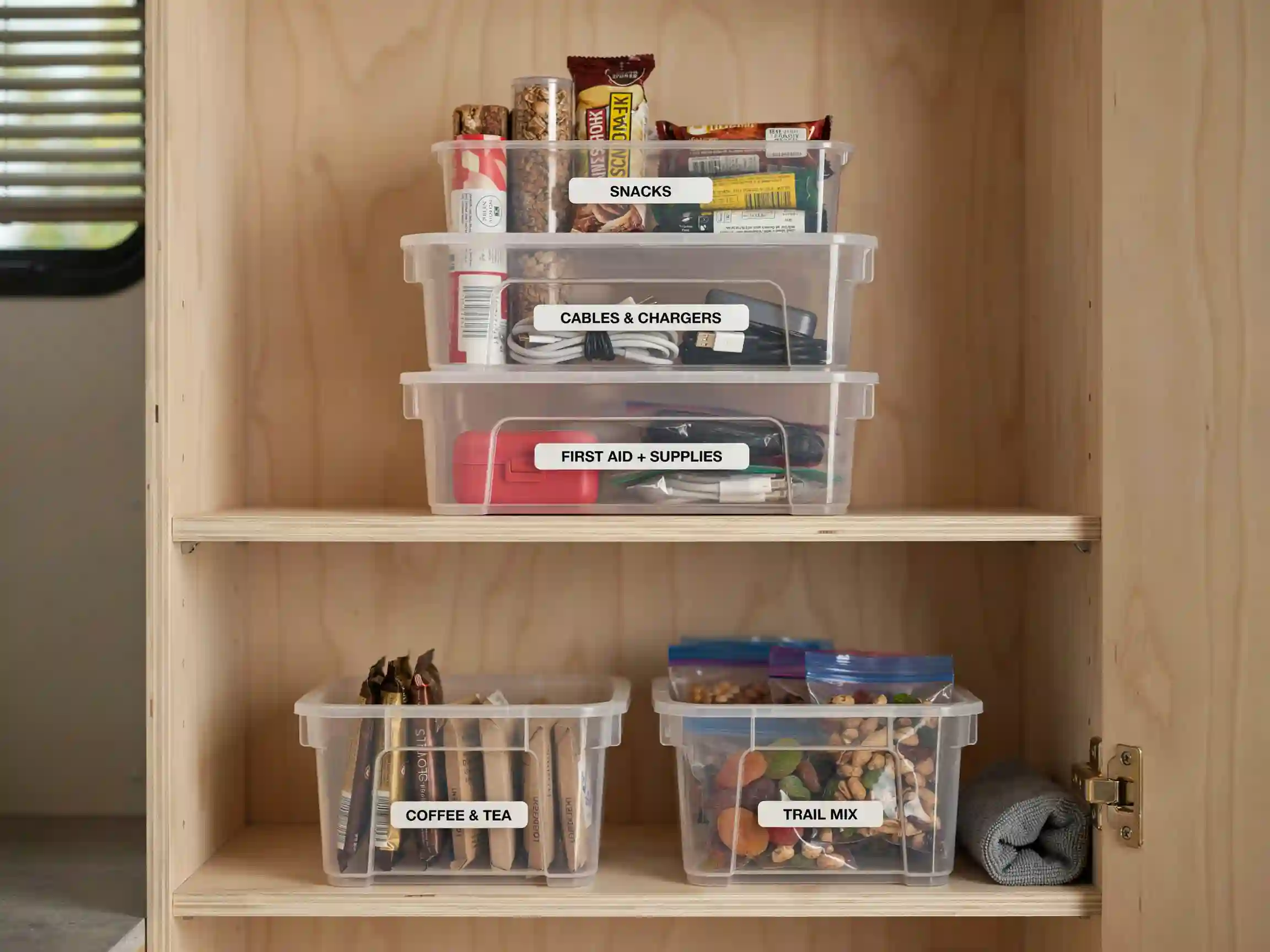
If there’s one purchase I’d make again instantly, it’s a stack of bins. Loose items rolling around in a moving vehicle is the enemy, so corral everything. One bin for snacks, one for cables and chargers, one for first-aid, and so on.
Label them. I resisted at first and regretted it, because digging through four identical bins at a dark campsite is its own special misery. Clear bins or simple labels mean you grab what you need and put it right back. That second part is what actually keeps a camper tidy.
Tame the tiny kitchen
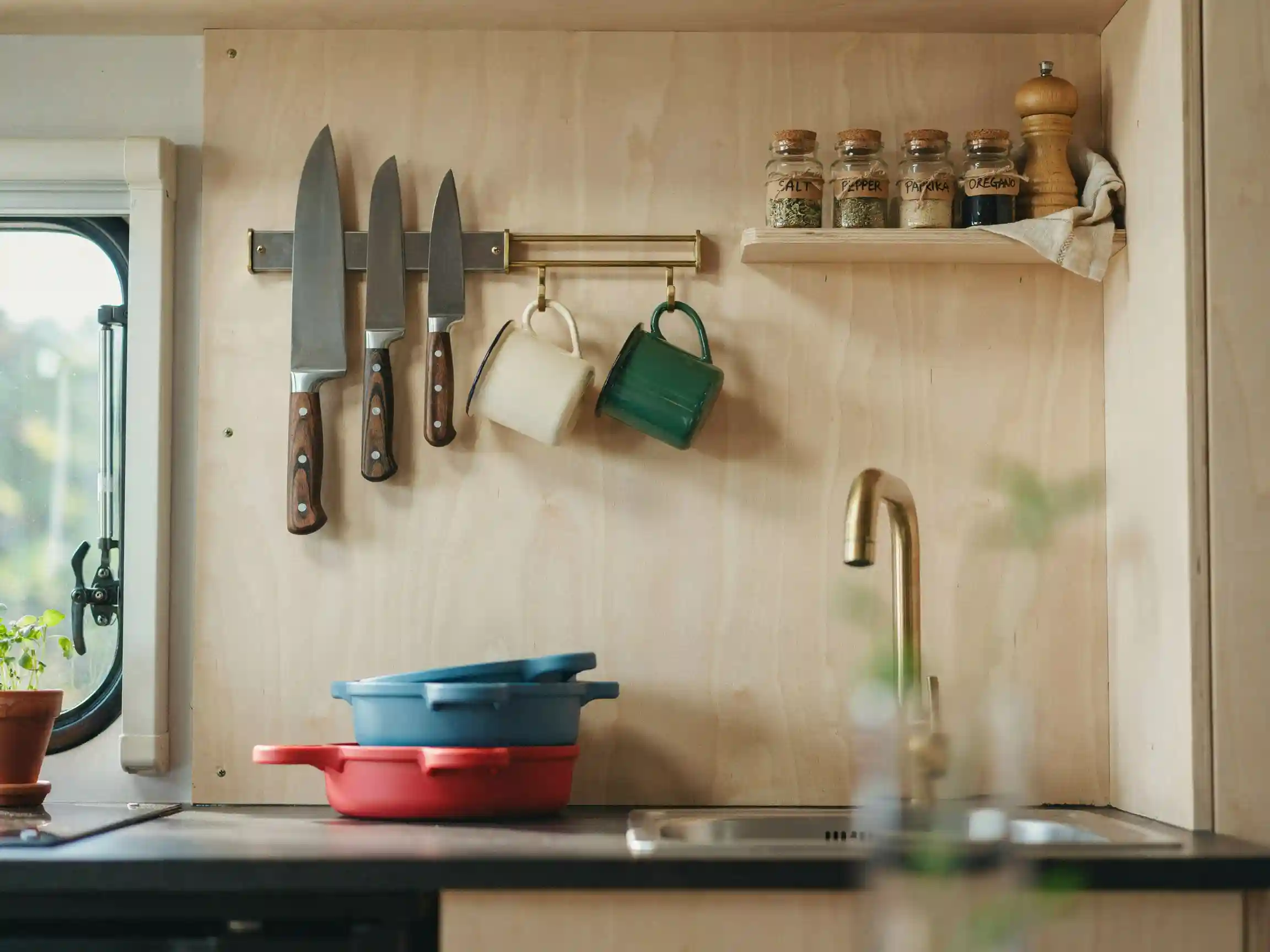
The kitchen is where small-space living gets real. Collapsible and nesting gear was a game-changer, the folding colander, stacking bowls, all of it flattening down to almost nothing. A magnetic strip on the wall holds knives, and little magnetic tins keep spices off the counter.
Tension rods are secretly genius too. Wedge one across a cabinet to stop plates sliding around, or under the sink to hang spray bottles. Drawer dividers keep the utensil drawer from becoming a jumbled clatter every time you brake.
Secure it for the road (the part nobody mentions)
Here’s the lesson my first trip beat into me. Organized is not the same as travel-ready. Everything has to be locked down before you move.
Museum putty or a bit of velcro keeps decor and small items from becoming projectiles. Non-slip drawer liner inside cabinets and drawers stops the slide-and-clatter. And a quick walk-through before you pull off, checking latches and cabinet locks, takes thirty seconds and saves you a soup-on-the-floor situation. Trust me on that one.
Use the doors and the hidden gaps
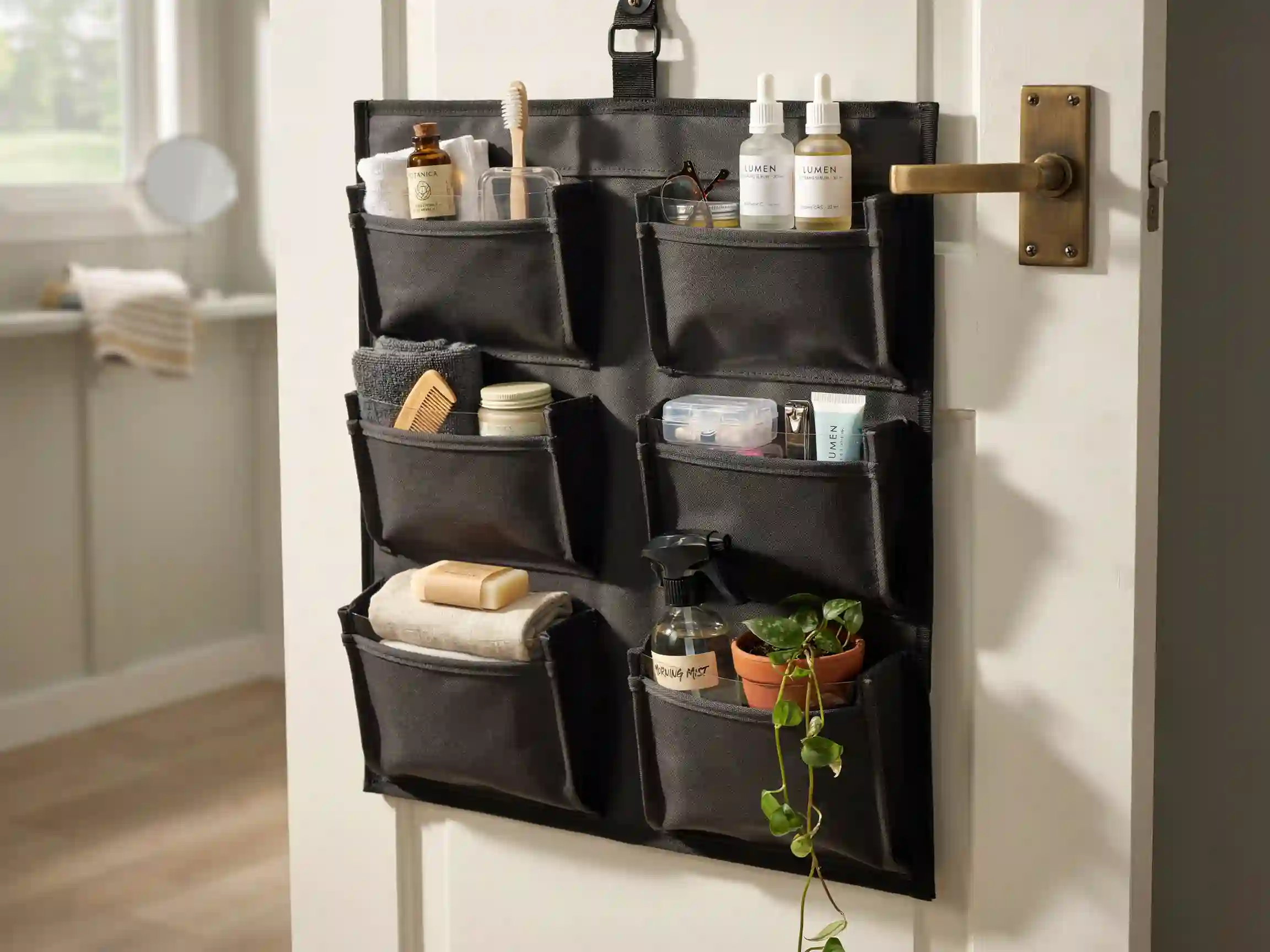
The backs of doors are free real estate, so I hung an over-the-door shoe organizer on the bathroom door and now it holds toiletries, cleaning supplies, all the small bottles that used to tip over. Inside cabinet doors, small adhesive baskets hold foil, bags, and odds and ends.
Then there are the dead gaps you stop noticing, the slim space beside the fridge, the narrow gap by the bed. A skinny rolling cart or a slim basket turns that wasted inch into actual storage.
Don’t forget under the bed
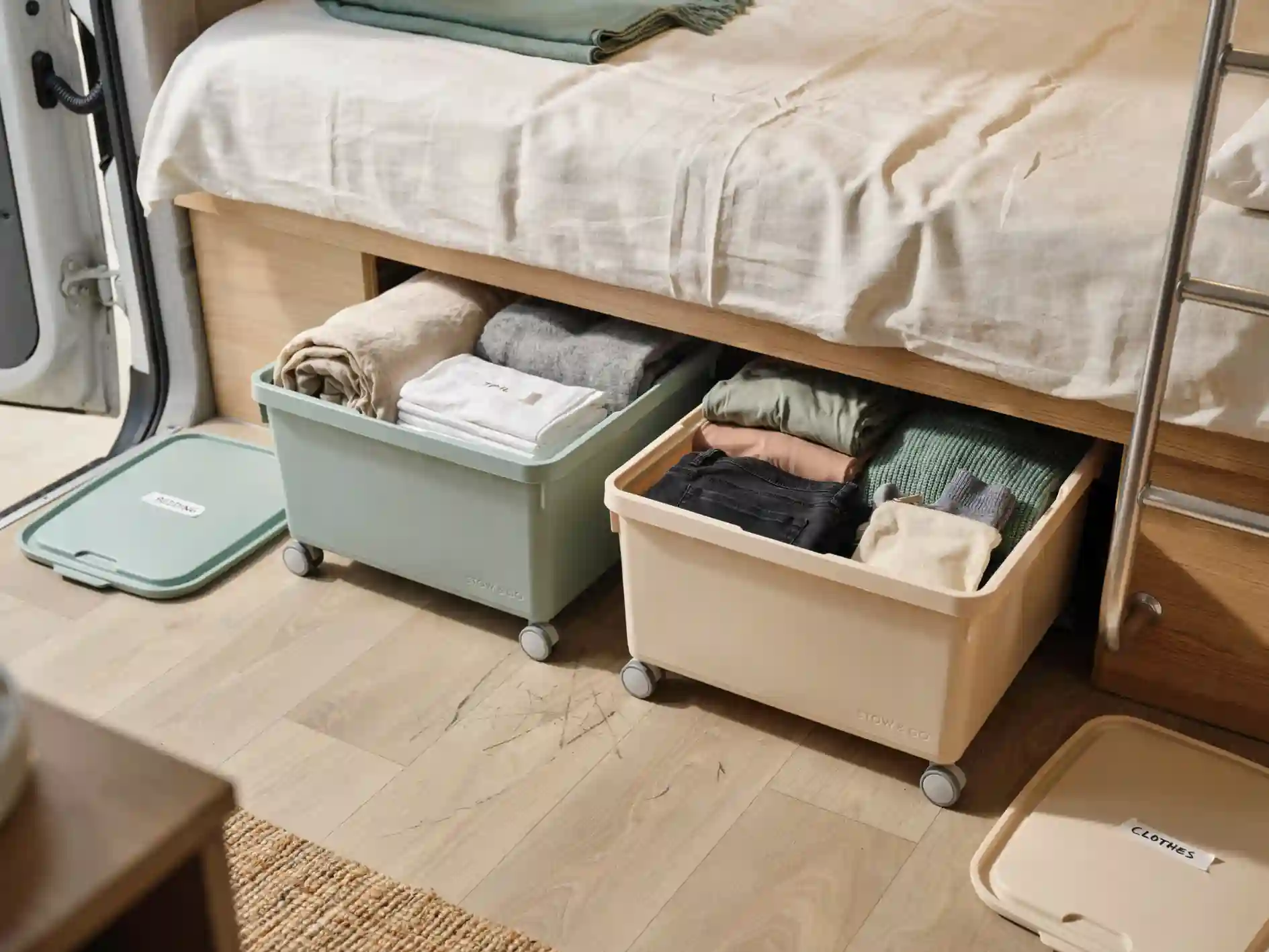
The space under the bed is the camper’s secret basement. Flat bins or vacuum bags slide right under and swallow your off-season clothes, extra bedding, and bulky gear you don’t need every day. If your bed lifts on a hinge, even better, but even a few low bins make a huge dent in the clutter.
The bathroom, small as it is
The camper bathroom is comically tiny, so it lives or dies on smart storage. A small tension shelf, a few suction caddies, and that over-door organizer hold everything. Hooks for towels keep them off the floor. Keep only the essentials in here and refill from your stash rather than crowding every surface.
Bring less, genuinely
This is the one I fought hardest and learned the most from. A camper punishes you for overpacking. Before a trip now, I’m ruthless: do I actually use this, or am I bringing it “just in case”? Multi-use items earn their spot, the rest stays home. Less stuff means less to organize, less to secure, and a space that doesn’t feel like it’s closing in on you.
Small habits that keep it that way
Organizing once isn’t the trick. Staying organized is. So we have little rules now. Everything goes back to its bin the moment we’re done with it. A two-minute tidy before bed resets the whole space. And we do a quick reset every time we break camp. Tiny habits, but they’re the difference between a calm trip and that soup-on-the-floor chaos I started with.
Frequently Asked Questions
How do you organize a small camper? Use vertical space with hooks and wall organizers, contain everything in labeled bins, add collapsible kitchen gear, and use under-bed and over-door storage. Then secure it all for travel so nothing shifts on the road.
What’s the best way to store things in a camper while driving? Keep loose items in bins, line cabinets and drawers with non-slip liner, and use museum putty or velcro for small items and decor. Always check that latches and cabinet locks are shut before you drive.
How do I make a camper feel bigger? Clear your surfaces, store things vertically and out of sight, and keep only what you use. A decluttered, uncluttered space instantly feels larger, even though the square footage hasn’t changed.
What are the best organizers for a camper kitchen? Collapsible and nesting cookware, a magnetic knife strip, magnetic spice tins, tension rods, and drawer dividers. They save space and keep everything from sliding around while you travel.
How do I keep a camper organized long-term? Build small habits: return items to their bin right away, do a quick tidy each night, and reset the space every time you break camp. Staying organized is about routines, not a one-time cleanup.
Final Thoughts
Camper organization really comes down to two ideas: make every inch work, and lock it all down before you move. Get those right and a tiny space stops feeling cramped and starts feeling cozy and clever instead.
Start with a few bins and some command hooks, and build from there. Your future self, the one not picking cans of soup off the floor at a campsite, will thank you.