Banana bread is the recipe everybody thinks they already know. Three bananas, some flour, done, and it usually comes out fine. Fine is the problem.
Mine was fine for about a decade.
It was also slightly dense in the middle, a little bland, and it went dry by day two, and I kept assuming that was just what homemade banana bread was. Then I changed three things and it became the loaf people ask me to bring, so here is the whole thing including where I was going wrong.
The two problems worth solving first
Gumminess is the big one, and it is almost always underbaking rather than a bad recipe. Banana bread is dense and wet, so a toothpick can come out clean while the center is still two hundred grams of not quite set batter. If you have ever cut into a loaf that looked perfect and found a damp band across the middle, that is what happened.
The second problem is flavor, and that comes down to the bananas. Underripe bananas taste like sweetened starch, and no amount of vanilla covers it. I noticed the batch I made with completely black bananas tasted twice as strongly of banana as the one made with merely spotty ones, which sounds obvious written down and took me an embarrassingly long time to actually test.
1. Wait for genuinely black bananas
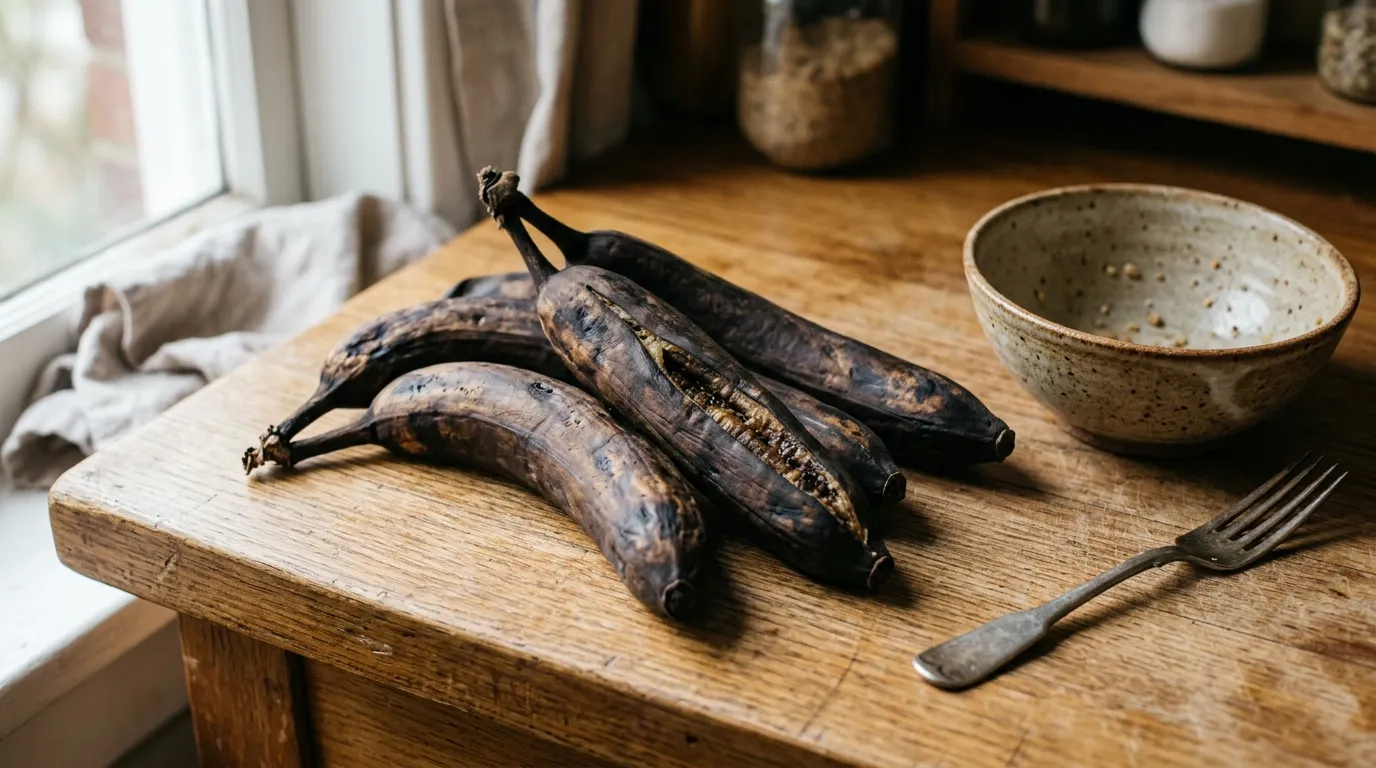
Not yellow with a few freckles. You want peels that are mostly black and a fruit soft enough to mash with a fork against the bowl. That is when the starches have converted to sugar, and it is the single biggest flavor decision in the whole recipe.
2. Use the oven shortcut if you cannot wait
Bake unpeeled bananas on a lined tray at 300 degrees Fahrenheit for 15 to 20 minutes until the skins go black and shiny, then cool them completely before using. The texture is right and the sweetness improves, though I find the flavor is a shade flatter than fruit that ripened on its own. Still much better than baking with yellow ones.
3. Measure the bananas by volume, not by count
Bananas vary enormously in size, so three of one bunch is not three of another. You want 1 and a half cups of mashed banana, roughly 360 grams, which is usually three large or four medium. Too much banana is what makes a loaf heavy and wet, so measure rather than guessing.
4. Brown the butter
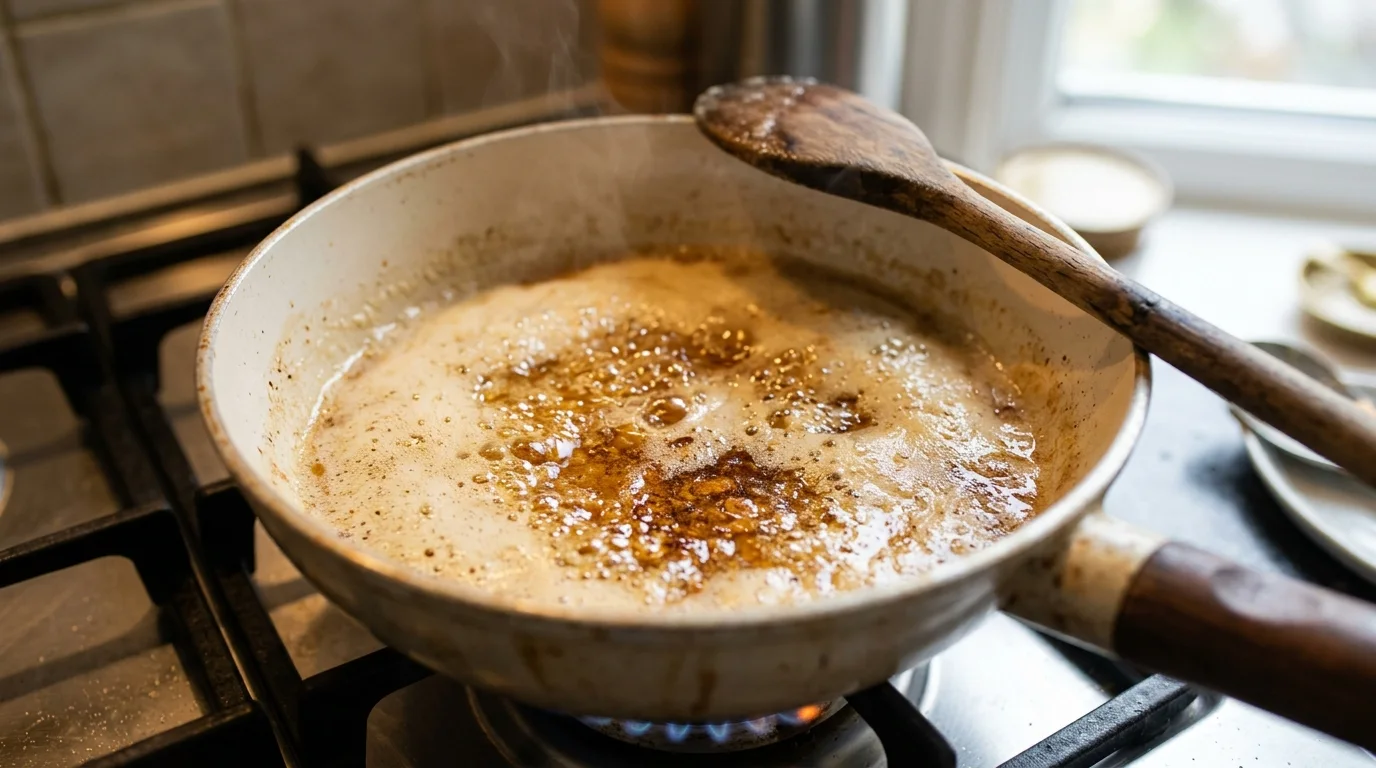
Melt half a cup of butter in a light colored pan over medium heat, swirling, until it smells nutty and the milk solids at the bottom turn golden brown, about five minutes. Pour it out immediately, solids and all, or it burns in the residual heat. This is a five minute step that adds a caramel depth you cannot get any other way.
5. Go mostly brown sugar
Three quarters of a cup of packed light brown sugar plus a quarter cup of granulated. Brown sugar carries molasses, which adds both moisture and a darker flavor that suits banana. An all white sugar loaf tastes noticeably thinner and dries out faster.
6. Put sour cream in, even a little
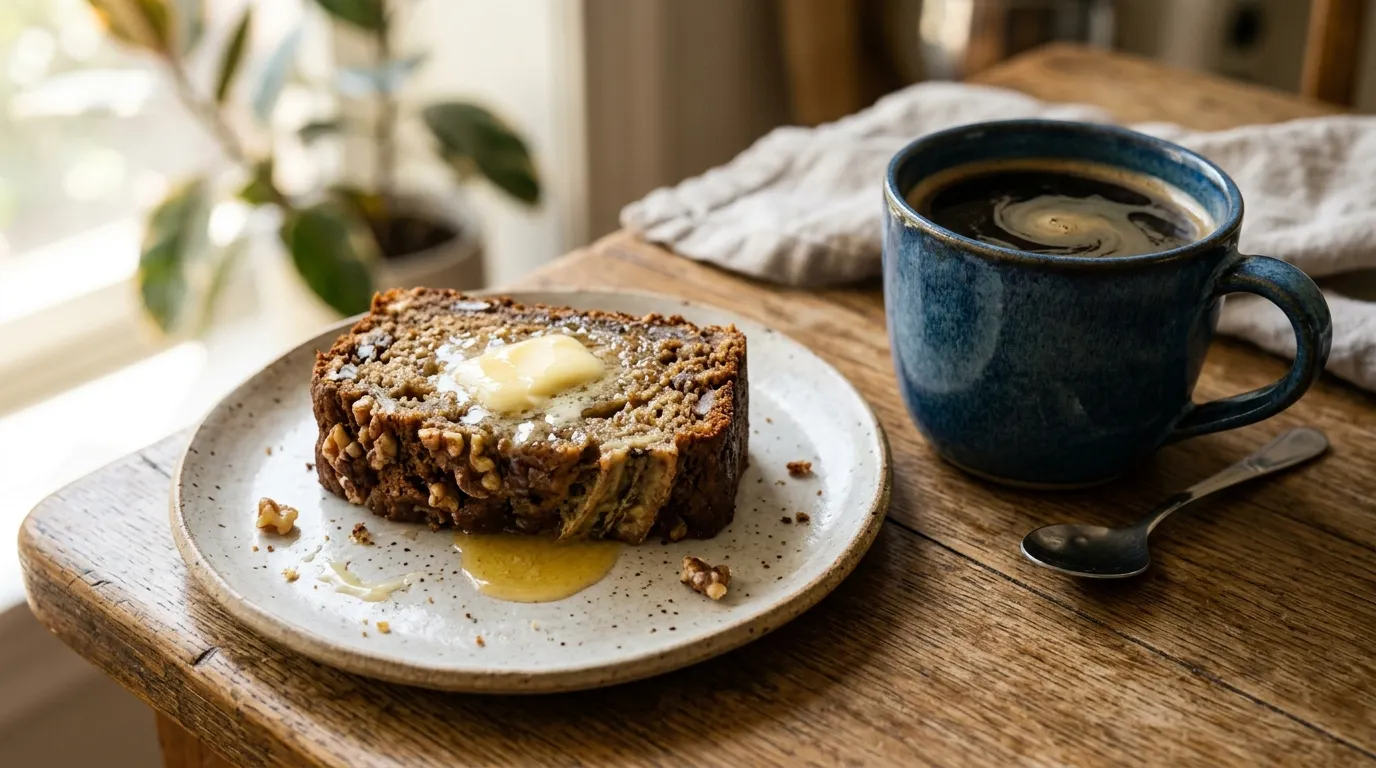
A quarter cup of sour cream or full fat Greek yogurt does two jobs, adding fat for a tender crumb and acid to react with the baking soda. This is the ingredient people leave out because it seems fussy, and it is the reason some loaves stay moist on day three while others do not.
7. Whisk the wet ingredients thoroughly, then stop
In a large bowl combine the cooled browned butter, both sugars, 2 large eggs at room temperature, the mashed banana, the sour cream, and 2 teaspoons vanilla. Whisk until completely smooth. This is the only stage where vigorous mixing is safe, so get it fully combined now.
8. Fold the flour in until barely combined
Add 1 and three quarter cups flour, 1 teaspoon baking soda, three quarters of a teaspoon of salt, and half a teaspoon of cinnamon if you like it. Fold with a spatula until you can no longer see dry flour, then put the spatula down. Streaks of flour are worse than a few lumps, but overmixing develops gluten and gives you a tough rubbery loaf with tunnels through it.
9. Toss any add ins in flour first
Chocolate chips, walnuts, or pecans, about three quarters of a cup. Toss them in a tablespoon of the measured flour before folding them in so they stay suspended instead of sinking to the bottom. Toast nuts for eight minutes at 350 first, because raw walnuts in a wet batter go soft and slightly bitter.
10. Know how your pan changes the time
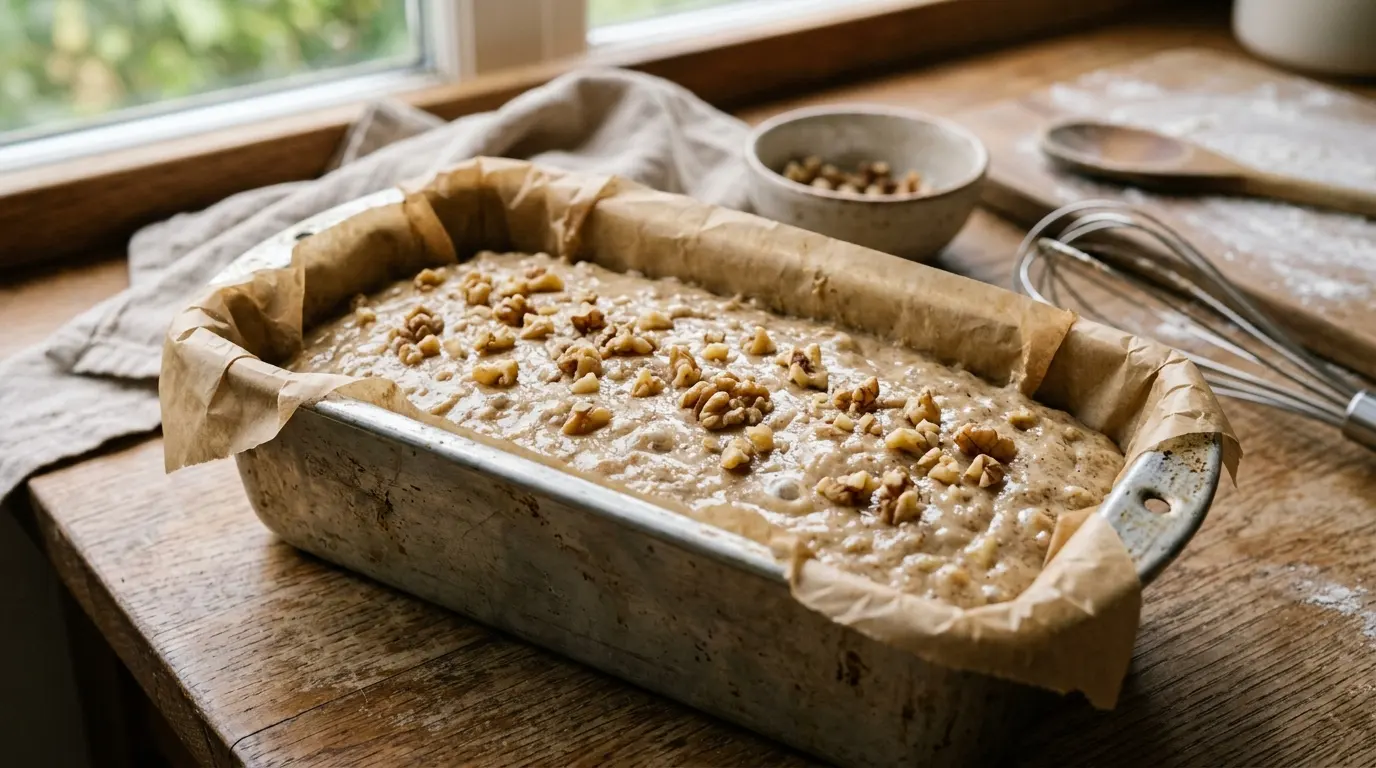
A 9 by 5 inch pan gives a wider flatter loaf that bakes in about 55 minutes. An 8 and a half by 4 and a half gives a taller dramatic loaf that needs closer to 65 or 70. Grease and line with a parchment sling, since banana bread sticks more than most quick breads.
11. Bake at 350 and tent it when it colors
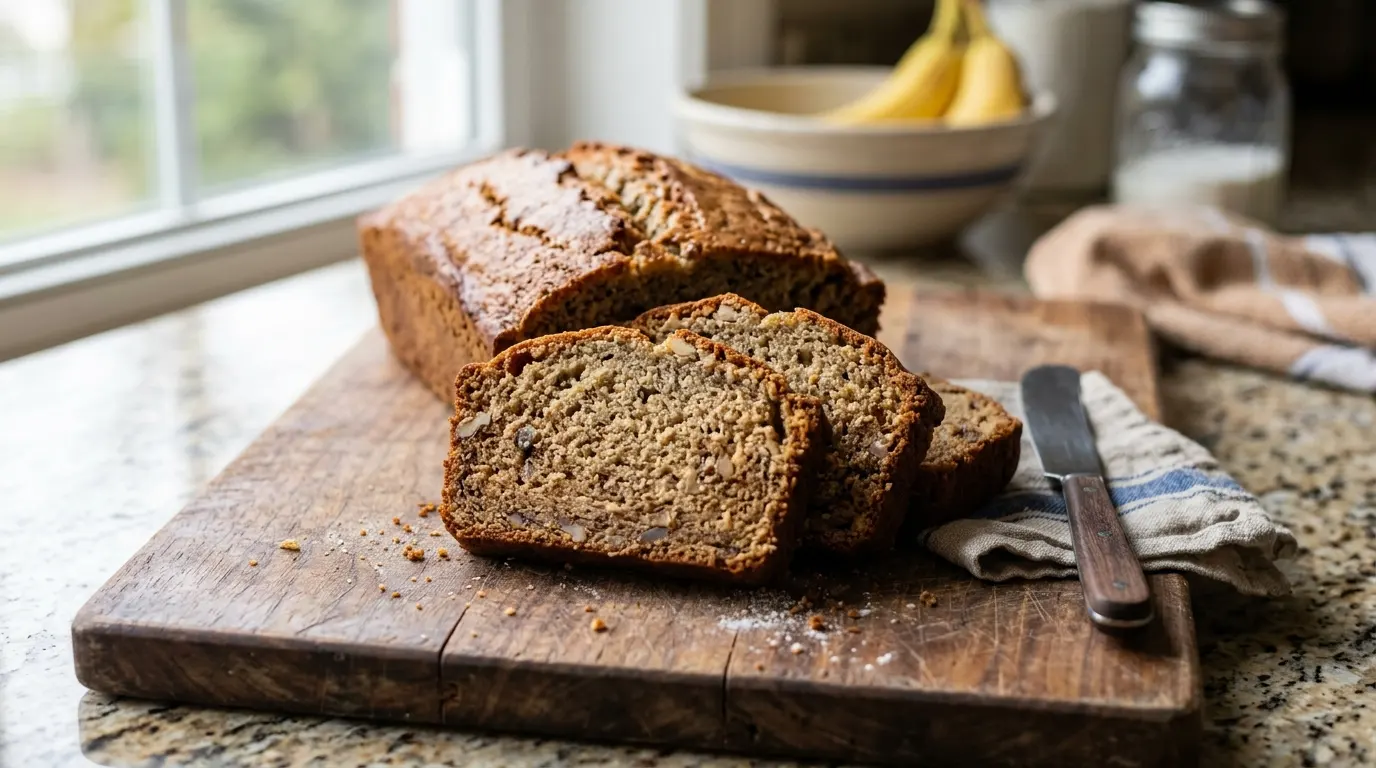
Around the 35 minute mark the top will be deeply browned while the middle is still raw. Lay a piece of foil loosely over the top and keep going. Without this the crust darkens past pleasant while you are waiting for the center, which was my situation for years.
12. Check the internal temperature, not the toothpick
This is the fix. Push an instant read thermometer into the center and look for 200 to 205 degrees Fahrenheit. A toothpick can come out clean from a pocket of melted banana while the crumb around it is still batter, which is exactly how the gummy band forms. Since I started temping, I have not had a single underbaked loaf.
How to store it, freeze it, and fix what went wrong
Let the loaf sit in the pan for 10 minutes, then lift it out and cool on a rack for at least an hour before slicing. Cutting into hot banana bread compresses the crumb and makes it gummy even when it is perfectly baked, which is a frustrating way to ruin a good loaf at the finish line. Once cool, wrap it in foil or beeswax wrap rather than plastic, since plastic traps steam and softens the crust, and keep it at room temperature for three to four days. Do not refrigerate it, because the fridge stales bread noticeably faster than the counter does. For longer storage, slice the whole loaf first, then freeze the slices in a bag with a bit of parchment between them, and you can take out one at a time and toast it straight from frozen. It keeps three months that way. On troubleshooting, a sunken middle usually means underbaking or too much banana, a tough chewy texture means the flour was overmixed, and a dry loaf means it went too long or the flour was scooped rather than spooned into the cup, which can add a surprising amount. If you have a kitchen scale, 220 grams of flour removes that whole variable.
Frequently asked questions
Why is my banana bread gummy in the middle? It is almost always underbaked. Banana bread is dense and wet enough that a toothpick can read clean while the center is still batter, so check for an internal temperature of 200 to 205 degrees Fahrenheit instead.
Can I use frozen bananas for banana bread? Yes, and they work well since freezing breaks down the fruit. Thaw them fully, then drain off some of the liquid that pools, because that extra water will make the loaf wet and heavy if it all goes in.
How ripe should bananas be for banana bread? Mostly black skins and flesh soft enough to mash with a fork. Yellow bananas with a few spots are not there yet and will give you a loaf that tastes starchy rather than strongly of banana.
Why did my banana bread sink in the middle? Usually underbaking, too much mashed banana, or opening the oven door during the first forty minutes. Measure the banana at a cup and a half and resist checking until at least the thirty five minute mark.
Can I make this into muffins? Yes. Fill the cups about three quarters full and bake at 350 degrees for 18 to 22 minutes, checking for the same internal temperature. The recipe makes roughly twelve standard muffins.
Final thoughts
The thing that changed this loaf for me was not a secret ingredient. It was buying a cheap instant read thermometer and waiting an extra week for the bananas to go properly black, and honestly the thermometer improved about six other things I bake as well.
So let the bananas get ugly, brown the butter, and stop folding sooner than feels right. If you try it with the browned butter, come back and tell me whether you noticed the difference, because that is the step people are most skeptical about and most surprised by.