
Five in the morning, alarm screaming, twelve hours on my feet stretching out ahead of me, and the absolute last thing my half-asleep brain can handle is a complicated hairstyle.
If you work in healthcare, you know this exact morning.
You need your hair up, out of your face, and secure enough that it survives a whole shift, all the leaning and rushing and mask loops tugging at your ears. It has to be comfortable, because nobody has time for a tension headache by hour four. And ideally it takes about ninety seconds, because that’s all you’ve got. After years of trial and error on my own head, these are the styles that actually deliver.
What makes a hairstyle work for healthcare
Before the styles, here’s the checklist I judge everything against. It has to keep hair completely off your face, because you’ll be looking down and leaning in all day. It has to stay put through twelve-plus hours without constant fixing. It can’t pull so tight it gives you a headache, a real risk with the same style every single day. And it needs to play nice with masks and scrub caps. Anything that ticks those boxes is a winner.
The classic low bun
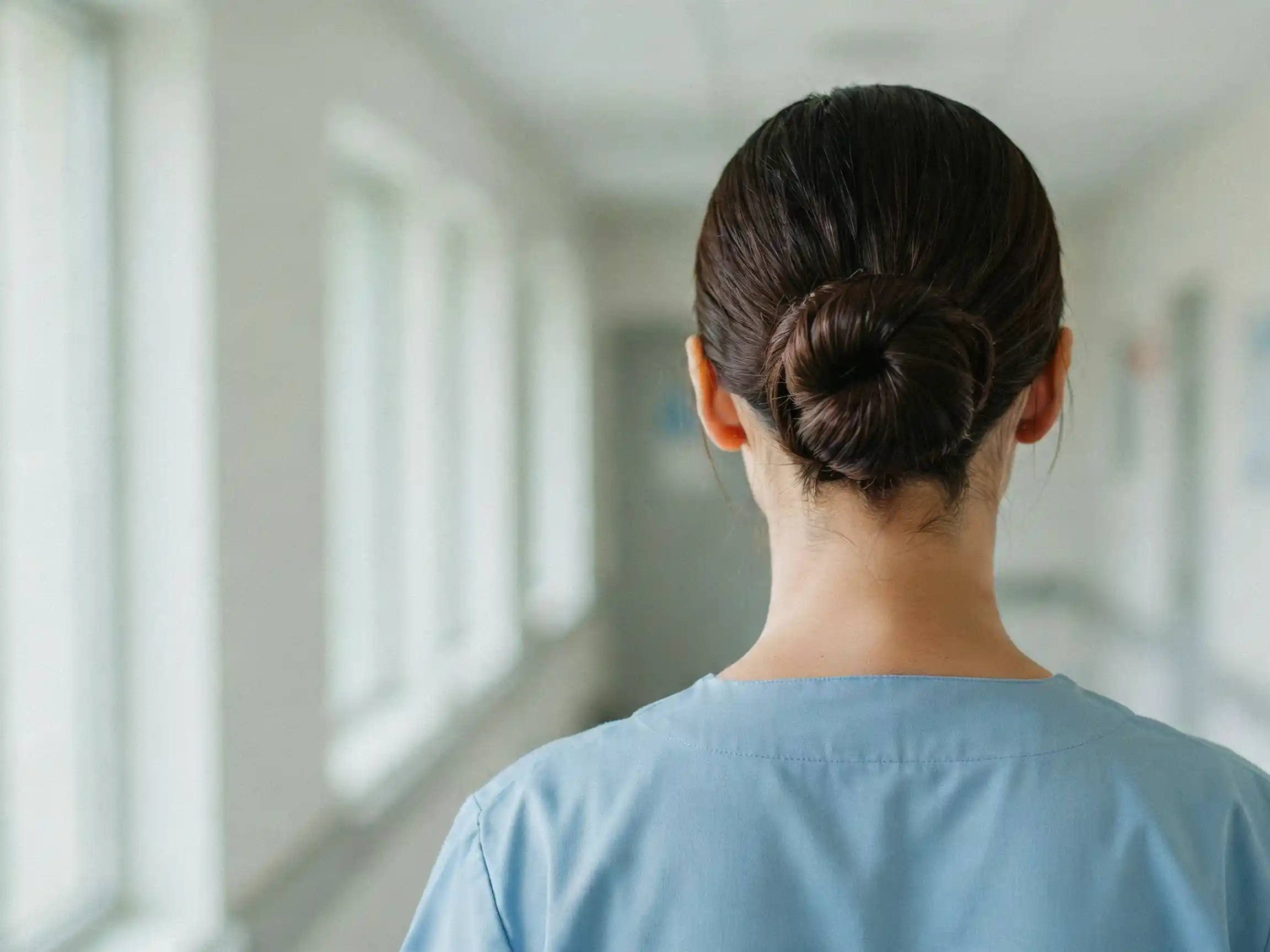
My old reliable. A low bun sits neatly at the nape, stays out of the way when you lean over a patient or a chart, and doesn’t get crushed by a scrub cap. Smooth it back, twist, pin, done. It looks tidy and professional, and it survives the day better than almost anything. When in doubt, this is the one.
The top knot
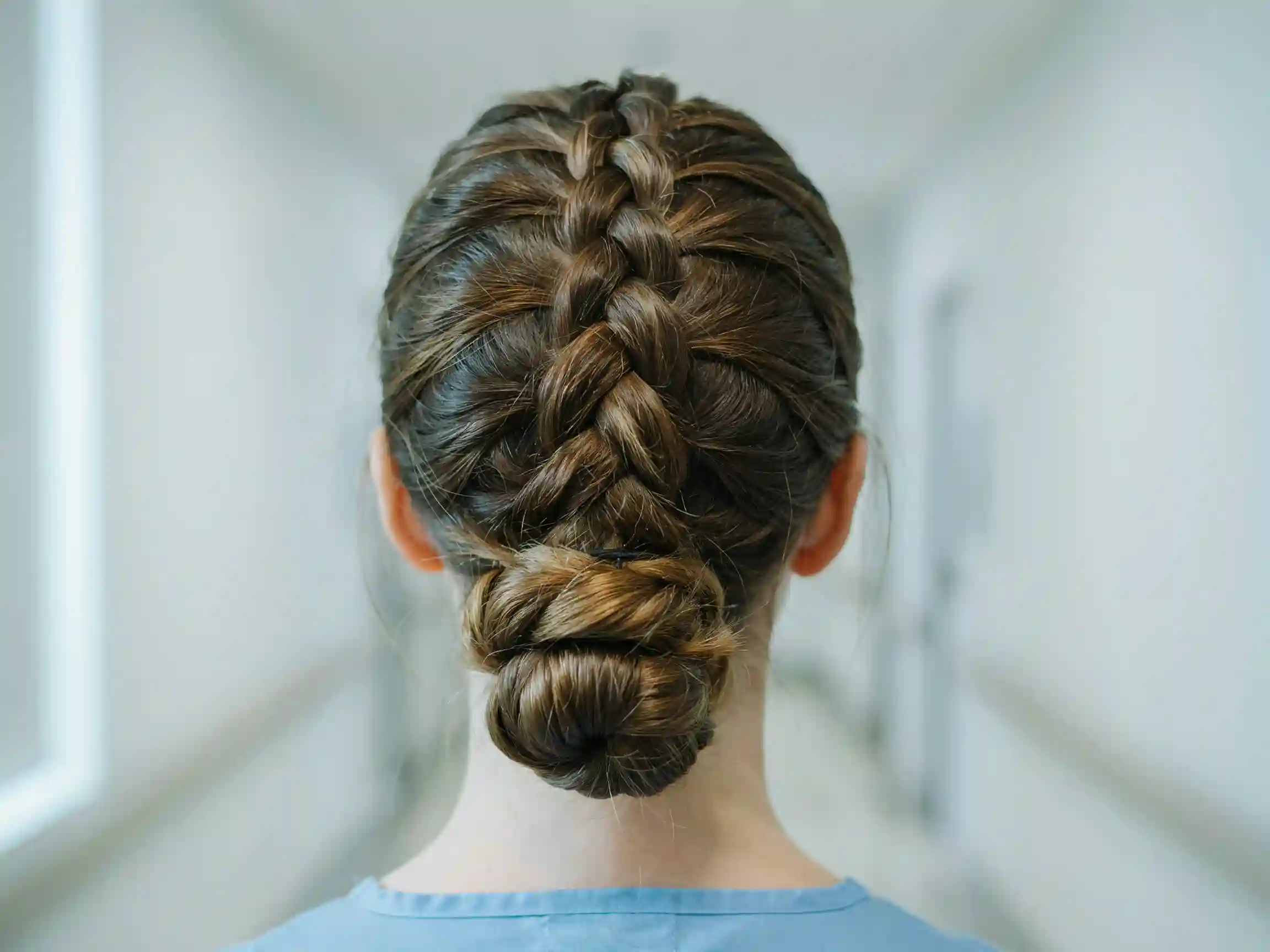
For the days I want my hair fully gone, a high top knot is the move. It’s quick, it keeps every strand off your neck and face, and it’s comfortable enough to wear bell to bell. Just don’t crank it so tight it tugs, since that’s a fast track to a headache. A slightly loose, secured knot is the sweet spot.
Braids that go the distance
Braids are a healthcare worker’s best friend because they lock everything down. A French or Dutch braid keeps your whole head tidy with nothing loose to fall forward. Want it even more secure? Braid it and then tuck it into a low bun, a braided bun that genuinely will not move no matter how chaotic the shift gets. It also looks put-together with very little effort.
The sleek ponytail

A ponytail seems basic, but done right it’s a great shift style. Pull it back smooth and secure, and it keeps hair contained while still being fast. A mid or low pony tends to sit better under a cap than a high one, and it’s easy to tuck or pin the length if you need it fully out of the way during a procedure.
Half-up for shorter or layered hair
If your hair’s too short to fully pull back, a half-up style is your friend. Clip or tie the top and sides away from your face while the rest stays down. It keeps the bits that would otherwise fall into your eyes under control, which is really the whole battle on a busy floor.
The claw clip (for the truly tired days)
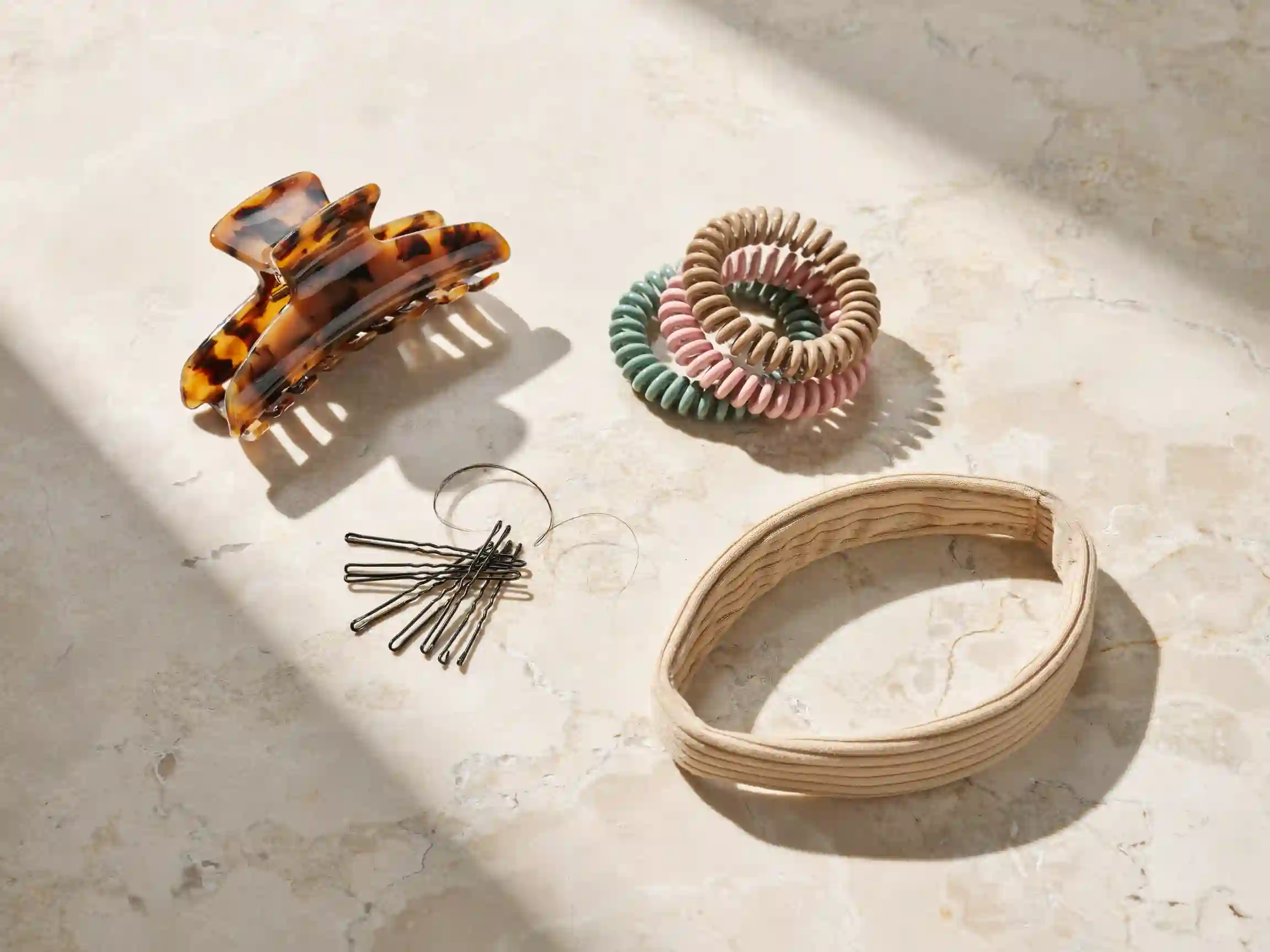
Some mornings you’ve got nothing left, and that’s what claw clips are for. Twist your hair up and clip it, and you’ve got an instant, comfortable updo in five seconds flat. It’s not the most locked-down option, so it’s better for calmer shifts, but on a slow day it’s a lifesaver.
For curly and natural hair
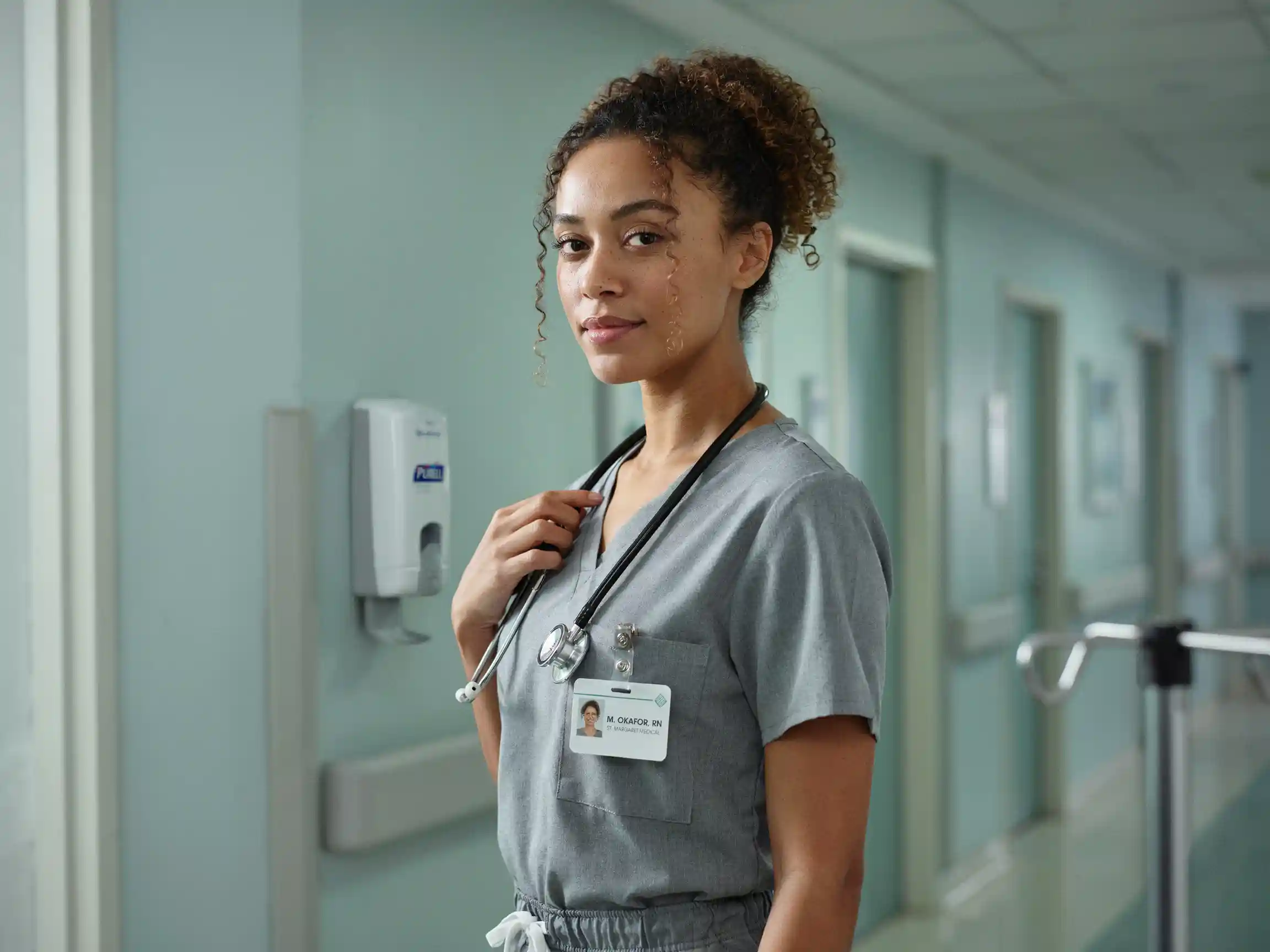
Curly and coily hair has its own needs, and protective styles shine here. A bun, twists, braids, or a secured puff keep your curls out of the way while protecting them from all the friction of a long day. Pop on a satin-lined scrub cap or bonnet-style cap if your facility allows it, and your hair stays protected and comfortable through the whole shift.
Mask and scrub-cap friendly tips
A few small tricks make the gear less annoying. Mask ear loops tugging all day are brutal, so a style with a button headband or a ponytail you can loop the elastics onto saves your ears. For scrub caps, lower styles, low buns and braids, sit more comfortably than high ones. And keep flyaways down with a little gel or a soft headband so you’re not pushing hair off your face with gloved hands.
Protecting your hair through it all
Wearing your hair up every single day takes a toll, so be a little kind to it. Switch up where you place the bun or pony so you’re not stressing the same spot constantly. Use gentle, snag-free ties or scrunchies instead of tight elastics that snap strands. And let it down to breathe and recover on your days off. Small habits, but they save you a lot of breakage over time.
Frequently Asked Questions
What are the best hairstyles for healthcare workers? Low buns, top knots, braids, braided buns, and sleek ponytails are the most reliable. They keep hair off your face, stay secure through a long shift, and work well under masks and scrub caps.
How do I keep my hair out of my face during a long shift? Go for a fully secured updo like a bun or braid, and tame flyaways with a little gel or a soft headband. Braided styles are especially good because nothing comes loose to fall forward.
What hairstyle is most comfortable under a scrub cap? Lower styles like a low bun or a braid sit more comfortably under a cap than a high bun or top knot, which can create a pressure point. Keep it secure but not too tight.
How can I protect my hair from daily updos? Use gentle, snag-free hair ties, vary where you position your bun or ponytail, and wear your hair down on days off. This reduces tension and breakage from the same daily style.
What are good healthcare hairstyles for curly or natural hair? Protective styles like buns, twists, braids, or a secured puff keep curls out of the way and protected. A satin-lined cap, if allowed, helps reduce friction during the shift.
Final Thoughts
The best healthcare hairstyle is the one you can do half-asleep that still lasts your whole shift. Buns, braids, and ponytails earn their keep because they’re fast, secure, and comfortable, exactly what a twelve-hour day demands.
Find two or three that work for your hair and rotate them, both to keep things easy and to give your scalp a break. Your future self, the one not fussing with falling hair mid-shift, will absolutely thank you.