Pasta salad has a bad reputation and most of it is deserved. It usually arrives at the table dry, slightly gluey, and tasting mostly of nothing, which is why people take a polite spoonful and move on.
Mine were like that for years.
The problem is not the recipe, it is that pasta keeps absorbing dressing long after you have mixed it, so the salad that tasted perfect in your kitchen is dry by the time anyone eats it. Once I understood that, the fix was obvious and this became the thing people ask me to bring.
The two things that decide whether this works
Absorption is the first. Cooked pasta soaks up oil and vinegar for hours, so a salad dressed once at noon will be dry at two. The fix is to dress it in two stages, most of the dressing while the pasta is still warm so it drinks it in, and the rest held back in a jar and stirred through right before serving.
The second is seasoning, and specifically salting the vegetables. Cucumber and tomato hold a lot of water, and if you dump them in raw that water leaches out and dilutes everything. Salt them for ten minutes and drain first. I noticed the batch where I did both of these things properly was the first one that came back as an empty bowl, and I had been making essentially the same salad for years before that.
1. Choose a pasta shape with grip
Rotini, fusilli, or farfalle. You want ridges and twists that hold dressing rather than a smooth shape that lets it slide off. Penne works but is a distant fourth. Use one pound of dry pasta, which serves eight to ten as a side.
2. Salt the pasta water properly and cook one minute under
The water should taste like the sea, roughly one tablespoon of salt per four quarts. Cook to one minute short of the package time, since the pasta softens slightly more as it sits in dressing. Underdone is far better than overdone here.
3. Rinse the pasta, which you would never do otherwise
This is the one dish where rinsing is right. Cold water stops the cooking and washes off surface starch that would otherwise turn the salad gluey as it cools. Drain well and shake it properly, because water clinging to the pasta thins your dressing.
4. Make the dressing at a 3 to 1 ratio
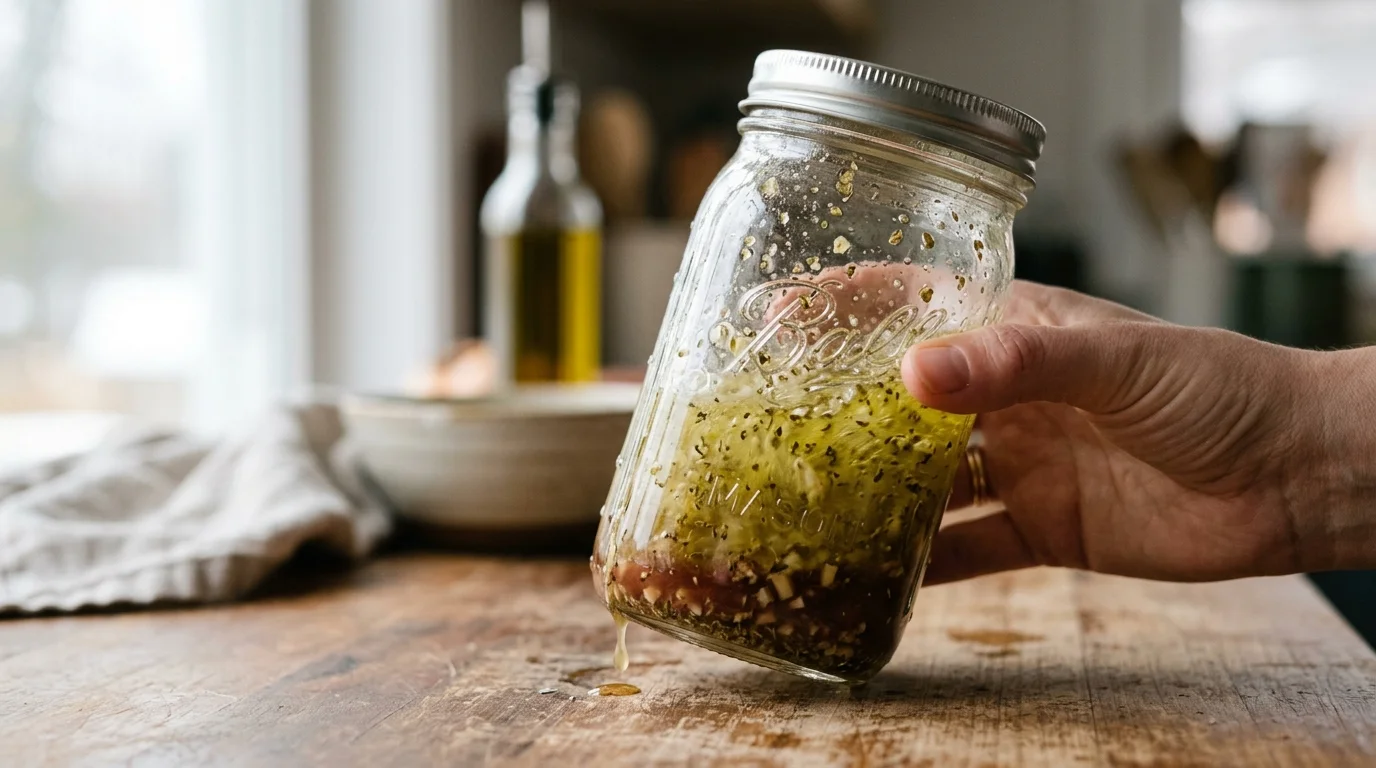
Three quarters of a cup of good olive oil to a quarter cup of red wine vinegar, plus one minced garlic clove, one teaspoon of dried oregano, half a teaspoon of salt, and plenty of black pepper. Shake it hard in a jar so it emulsifies. A teaspoon of Dijon helps it hold together if you are making it ahead.
5. Dress the pasta while it is still warm
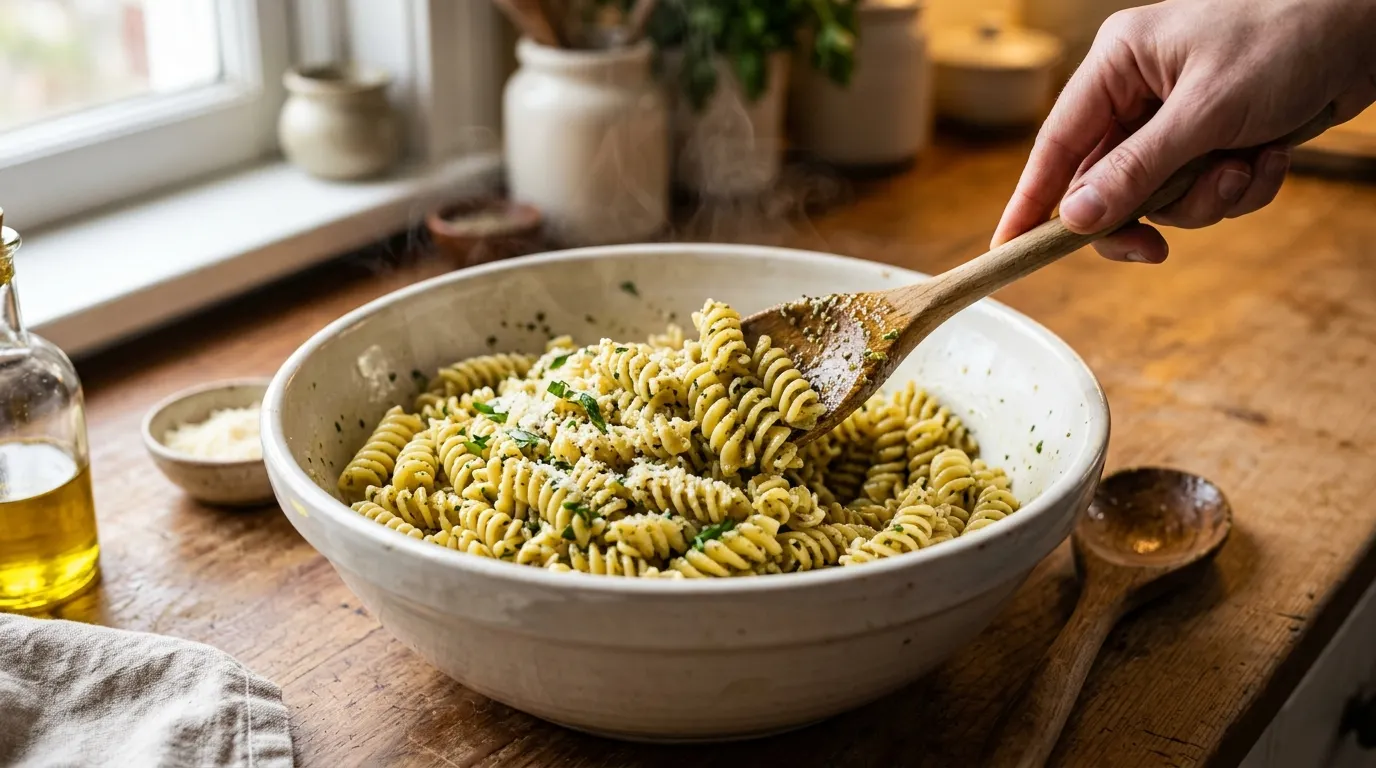
Toss two thirds of the dressing through the pasta right after draining, while it is warm rather than hot. Warm pasta absorbs dressing far more readily than cold, so this is where the flavour gets in. Keep the remaining third in the jar for later.
6. Salt the cucumber and tomato first
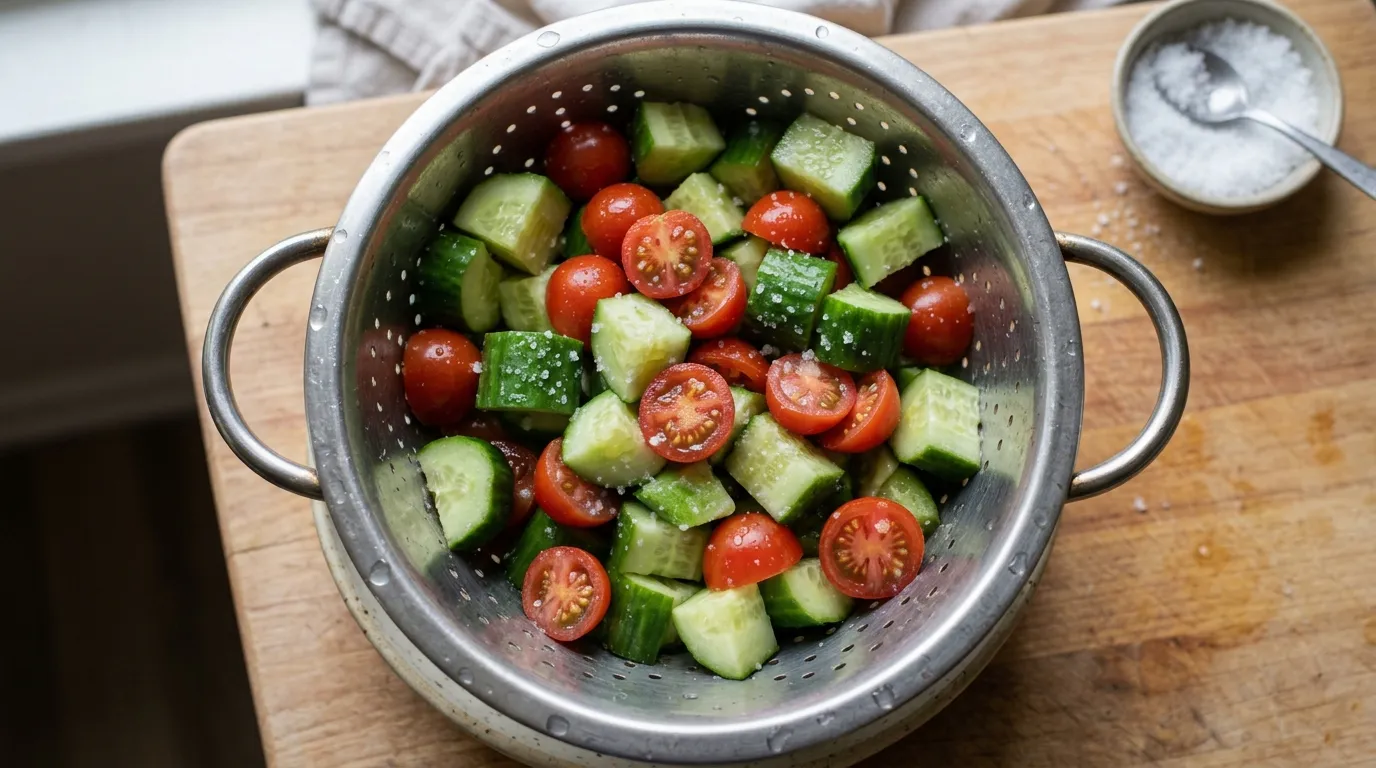
Chop one English cucumber and two cups of cherry tomatoes halved, toss with half a teaspoon of salt, and leave in a colander for ten minutes. Then pat dry. This concentrates their flavour and stops a puddle forming at the bottom of your bowl by hour two.
7. Slice the red onion thin and soak it
Half a red onion, sliced paper thin, soaked in cold water for ten minutes and drained. It removes the harsh sulphur bite while keeping the sweetness and the colour. Raw onion straight in will dominate every bite by the time the salad has sat for an hour.
8. Use block feta, not the pre crumbled kind
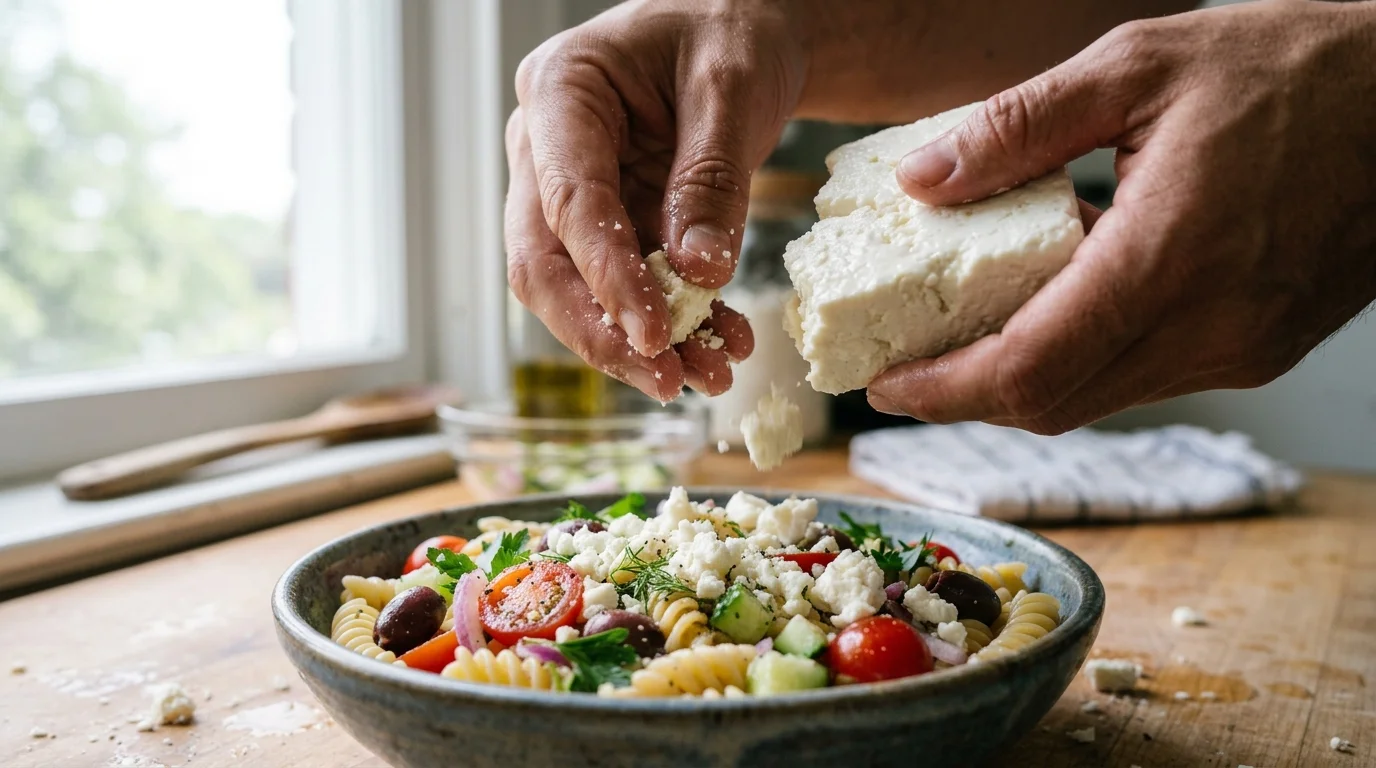
Buy feta in a block in brine and crumble it yourself with your fingers into rough pieces. Pre crumbled feta is coated in anti caking agents that make it dry and slightly powdery. Six to eight ounces is right for a pound of pasta.
9. Add olives with actual flavour
Kalamata, pitted, roughly half a cup. The pale canned black olives contribute almost nothing here. Halve them rather than leaving them whole so their flavour distributes rather than arriving in occasional intense mouthfuls.
10. Keep the herbs fresh and add them late
A generous handful of fresh dill or flat leaf parsley, chopped and stirred in near the end. Dried oregano goes in the dressing, fresh herbs go in at the finish. Herbs added early lose their colour and turn dull green in the acid.
11. Fold everything gently and taste for salt
Combine the pasta, drained vegetables, onion, olives, and herbs, then fold in the feta last so it stays in pieces rather than breaking into paste. Taste it. Pasta salad almost always needs more salt than you expect, since the pasta absorbs seasoning as it sits.
12. Rest it, then finish it with the reserved dressing
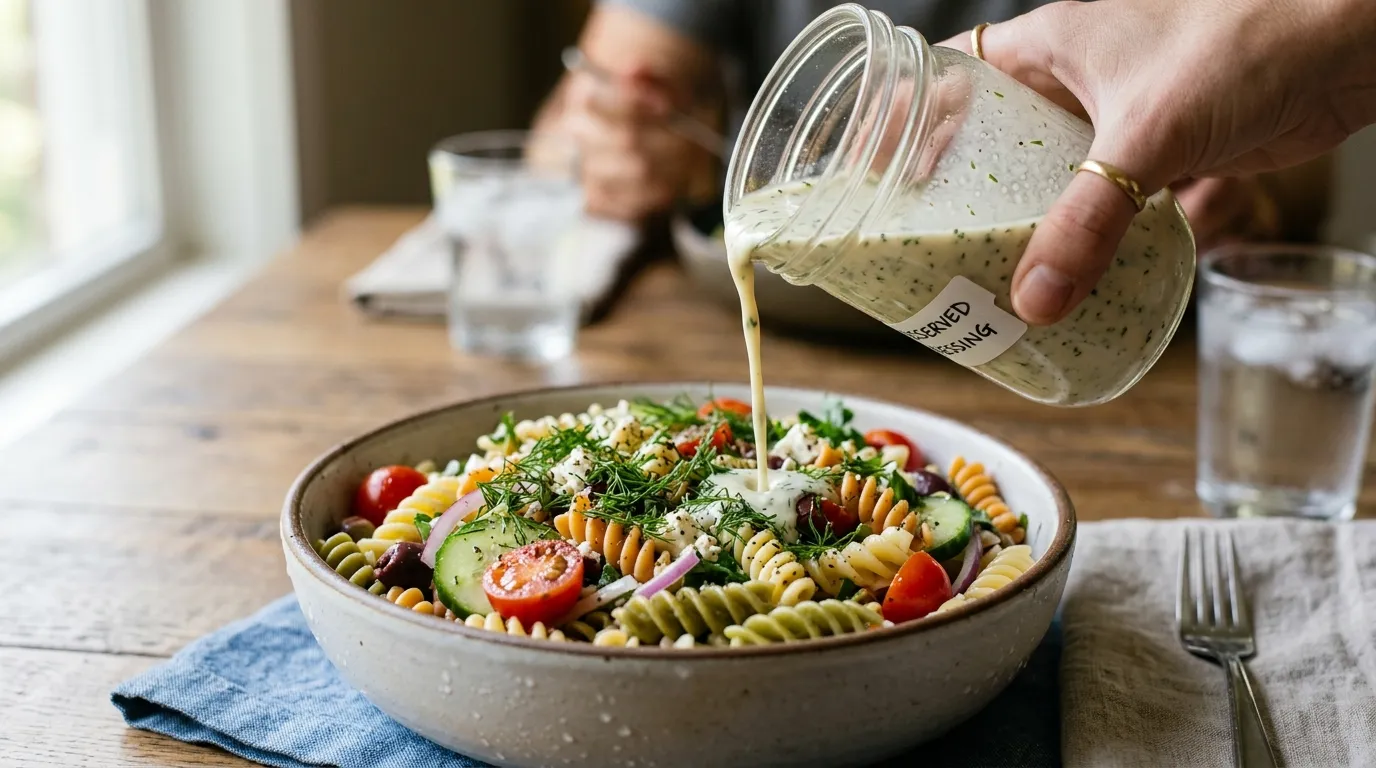
Refrigerate at least an hour so the flavours settle, then take it out about twenty minutes before serving and stir through the reserved third of the dressing. This last step is the entire difference between a good pasta salad and a dry one, and it takes thirty seconds.
How to make it ahead and carry it to a barbecue
This is a good make ahead dish as long as you stage it properly. Up to a day ahead, cook and dress the pasta with two thirds of the dressing, chop and salt the vegetables, and keep the vegetables, feta, herbs, and reserved dressing in separate containers in the fridge. Combine everything an hour before you leave and finish with the reserved dressing at the venue. Fully assembled it holds for about three days refrigerated, though the cucumber softens noticeably after day two and the herbs lose their brightness. On serving temperature, take it out of the fridge twenty to thirty minutes before eating, since fridge cold dulls the olive oil and mutes everything. On quantities for a crowd, one pound of pasta serves eight to ten as a side, so double it for a party of twenty and use two bowls rather than one enormous one, since a deep bowl means the salad at the bottom gets crushed. And a practical note for outdoor eating, this contains dairy in the feta, so keep it in a cooler or in the shade rather than sitting in the sun, and put it away within two hours, or one hour if it is above 90 degrees Fahrenheit.
Frequently asked questions
Why is my pasta salad dry? Cooked pasta keeps absorbing dressing for hours after mixing. Dress it in two stages, most while the pasta is still warm and the rest reserved in a jar and stirred through just before serving.
Should I rinse pasta for pasta salad? Yes, and this is the one dish where you should. Rinsing stops the cooking and removes surface starch that would otherwise make a cold salad gluey. Drain thoroughly so water does not thin the dressing.
How far in advance can I make Greek pasta salad? Up to a day ahead if you keep the components separate, combining them an hour before serving. Fully assembled it keeps about three days refrigerated, though the cucumber softens after day two.
What pasta shape is best for pasta salad? Rotini, fusilli, or farfalle, since their ridges and twists hold dressing. Smooth shapes let the dressing slide off and end up tasting bland compared to a textured shape.
Can I add protein to make it a main dish? Yes. Grilled chicken, chickpeas, or canned tuna all work well with this dressing. Add about two cups of cooked protein to a pound of pasta and check the seasoning again afterwards, since it will need more salt.
Final thoughts
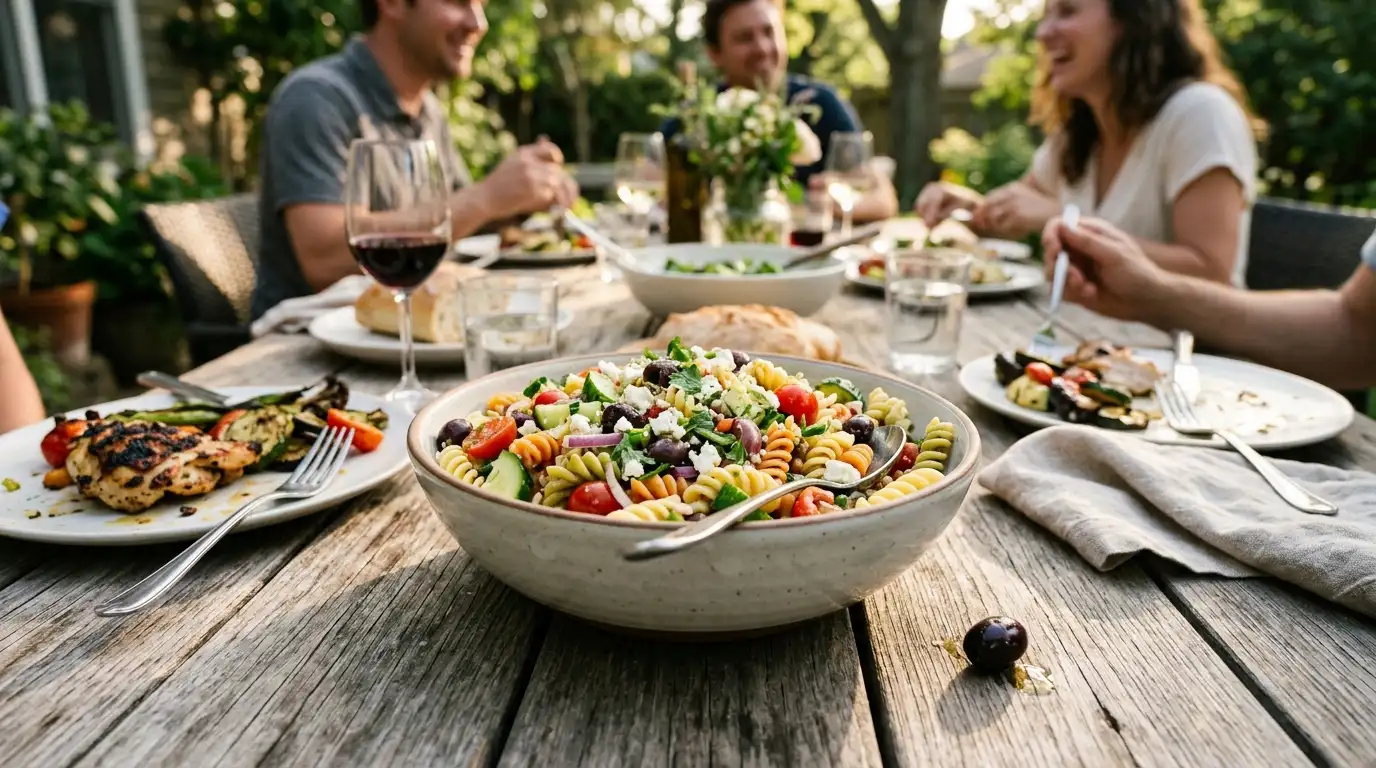
The reason this one gets requested is not that it is clever. It is that it arrives tasting the way it did in the kitchen, which is a low bar that most pasta salads somehow fail to clear.
So make it the day before, hold back that last third of the dressing, and stir it through in the car park if you have to. Come back and tell me how it went, because the reserved dressing trick is the one people are most sceptical about and most surprised by.