
Getting dressed for a road trip is a strange puzzle. You need to be comfortable enough for hours of sitting still, presentable enough for the petrol station and whatever town you stop in, and adaptable enough for a car that is freezing at eleven and roasting by three.
Most outfits do one of those.
I learned this the slow way, on a nine hour drive in rigid jeans with a belt, which I chose because I wanted to arrive looking put together. By hour four the belt buckle had left a permanent mark on my stomach and I was pulling at the waistband at every red light.
Why sitting is a different problem than standing
Everything about clothing changes when you are seated for hours. Waistbands press into your stomach in a way they never do standing up, seams sit differently against your thighs, and anything with hardware at the back, like jean rivets or a chunky belt, is now between you and the seat for the entire journey.
Then there is temperature, which people underestimate. Car aircon usually blasts cold at the front and the sun bakes whoever is by the window, so two people in the same car can be in genuinely different climates. I noticed after a few long drives that the single best thing I could do was dress for the coldest I expect to be and carry one layer to remove, rather than the reverse.
1. Choose a soft or elastic waistband
Wide waistband leggings, joggers, a knit trouser, or jeans with real stretch. This is the single biggest comfort decision and it is the one most people get wrong because they dress for arriving rather than for driving. If you must wear a belt, take it off once you are in the car.
2. Skip back pockets with hardware
Chunky rivets, thick stitching, and anything with a stud on the rear pockets will make itself known by hour three. Front pocket detailing is fine. This sounds like a small thing and it is the kind of small thing that quietly ruins the last two hours of a drive.
3. Layer with a full zip, not a pullover
You will take the top layer on and off several times, and doing that with a hoodie you have to pull over your head is genuinely awkward in a seat with a seatbelt on. A zip up fleece, a shacket, or an unbuttoned overshirt comes off in one motion. Keep it within reach, not in the boot.
4. Wear or pack a soft loose layer for the cold blast
Aircon on a long drive gets cold, especially on your arms and shoulders. An oversized cardigan, a light sweatshirt, or a big scarf doubles as a pillow against the window. I keep one in the car permanently, and it has been useful on about eighty percent of the drives I have taken.
5. Pick a top with no seams across the shoulder blades
Your back is against a seat for hours, so a chunky seam, a decorative zip, or a bra with a thick back clasp becomes a pressure point. A soft tee, a rib knit, or a relaxed long sleeve in cotton blend or modal is the safe answer. Front detail is fine, back detail is not.
6. Choose a bra you would happily nap in
Bralettes, soft cup bras, or a supportive tank with a built in shelf. Underwire plus a seatbelt plus six hours is a specific kind of misery. If you want the support for arriving somewhere, pack the other bra and change at the last service stop, which takes four minutes.
7. Wear slip on shoes and bring socks
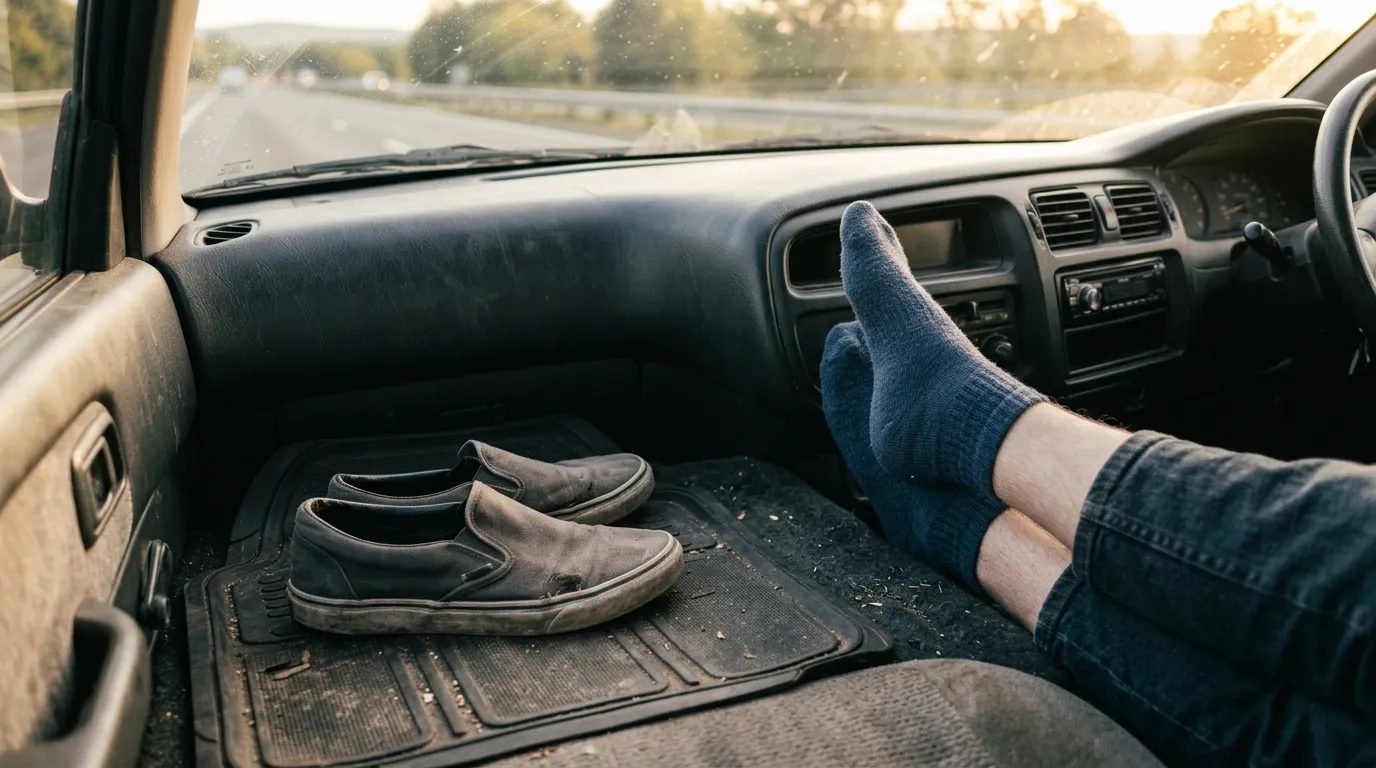
Something you can kick off while a passenger, and put back on in two seconds at a stop. Trainers with a firm sole for whoever is driving, since driving in flip flops or backless shoes is genuinely unsafe and illegal in some places. Socks matter because feet get cold in aircon even when the rest of you is warm.
8. Bring one nicer piece to change into
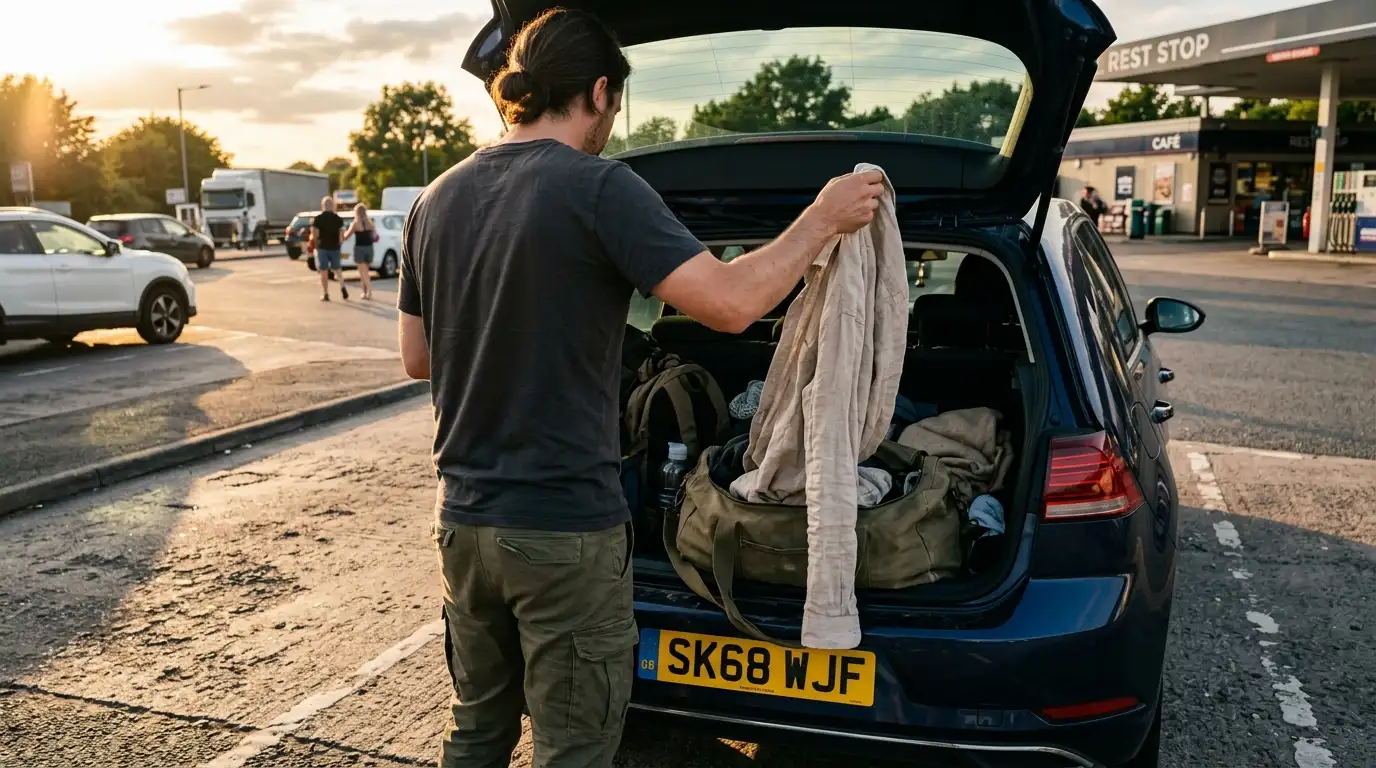
A linen shirt, a dress, or a decent jacket rolled at the top of your bag. You arrive, swap one item in a bathroom, and suddenly you look like you did not just spend the day in a car. This is the trick that makes the practical outfit worth wearing, since you get comfort and a good arrival.
9. Keep sunglasses and lip balm within arm’s reach
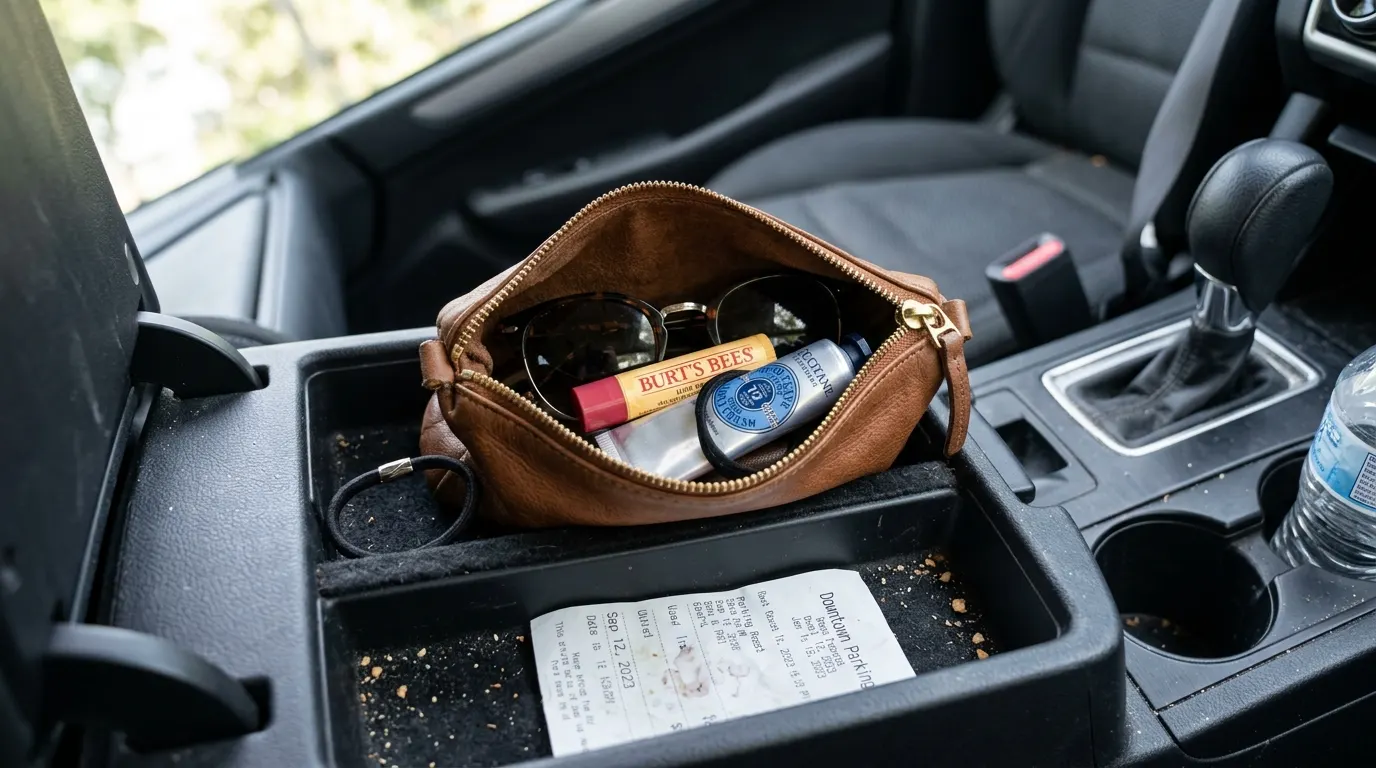
Not in a bag in the boot. Driving into low sun without sunglasses is unpleasant and unsafe, and car air is drying enough that lips and eyes suffer on long journeys. A small pouch in the door pocket or console with sunglasses, lip balm, hand cream, and a hair tie covers most of it.
10. Tie hair up in something that will not dent
A claw clip, a scrunchie, or a low loose braid. A tight elastic high ponytail leaves a dent and gets in the way against a headrest. Claw clips are the road trip winner here because they come out cleanly and your hair looks fine afterwards.
11. Dress for the destination climate, not the departure one
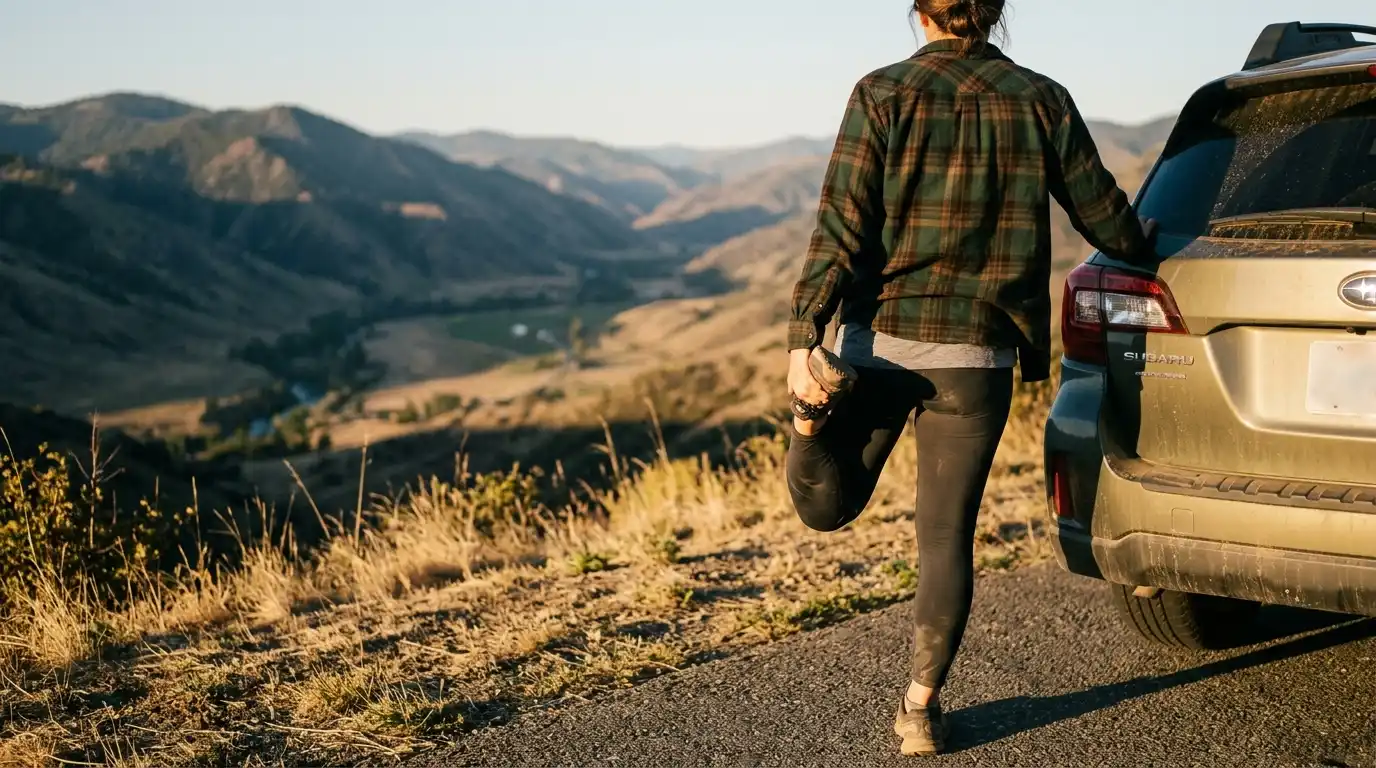
Long drives cross weather. Leaving a cool morning for a hot coast, or a warm city for a mountain town, means the outfit that made sense at seven in the morning is wrong by four in the afternoon. Check the forecast where you are going and layer toward that.
12. Keep a small kit for the unglamorous parts
Wet wipes, a spare pair of socks, deodorant, and a plastic bag for rubbish or wet swimwear. It is not an outfit exactly, and it is the thing that decides whether hour eight feels bearable. The spare socks in particular have saved me twice.
How to build the outfit depending on the drive

Match the outfit to the length and the destination. For a short drive under three hours, wear whatever you would wear at the other end, since comfort barely matters over that distance. For a full day of driving, go soft waistband, soft back, zip layer, slip on shoes, and pack the nicer piece to change into. For an overnight or multi day trip, wear your bulkiest items rather than packing them, since a jacket and boots take up disproportionate space in a bag and cost nothing to wear. On fabrics, cotton blends, modal, and jersey all breathe well and forgive creasing, while linen looks great and will be a map of wrinkles by hour three, so save it for the change of clothes rather than the drive itself. Avoid anything white on the seat side if you are eating in the car, which you will be. And on the driver specifically, this matters more than for passengers. Firm soled shoes, nothing that restricts shoulder or hip movement, sunglasses within reach, and no oversized sleeves that could catch. Comfort for a driver is a safety issue rather than a preference, and it is worth being stricter with yourself than with whoever is asleep in the passenger seat.
Frequently asked questions
What should I wear on a long car ride? Soft or elastic waistband bottoms, a top with no seams across the back, a zip up layer you can remove while seated, and slip on shoes with socks. Pack one nicer item to change into before you arrive.
What are the most comfortable pants for a road trip? Wide waistband leggings, joggers, knit trousers, or jeans with genuine stretch. Avoid rigid denim, belts, and back pockets with chunky hardware, since all three create pressure points once you are seated for hours.
How should I dress for a road trip in summer? Breathable natural fabrics in loose cuts, plus one light layer for aircon which is often colder than people expect. Sunglasses within arm’s reach matter more in summer, and keep a sun layer for whoever is by the window.
What shoes are best for driving? Firm soled trainers or flats for the driver, since flip flops and backless shoes can slip off the pedals and are illegal to drive in some places. Passengers can wear anything easy to slip on and off.
How do I look good after a long drive? Pack one item to change into at the last stop, keep hair in a claw clip rather than a tight elastic, and carry wet wipes, deodorant, and lip balm within reach. Swapping one garment does most of the work.
Final thoughts
The point of a good road trip outfit is that you stop thinking about it. No adjusting the waistband at every stop, no digging in the boot for a jumper, no arriving stiff and creased and slightly grim.
So next long drive, try the soft waistband and the one nice thing to change into, and see whether hour seven feels different. Come back and tell me where you drove, because the road trip is still my favourite way to travel and I want to hear about yours.