The promise of a sheet pan dinner is that you throw everything on one tray and walk away. The reality, the first few times, is chicken that is either dry or the vegetables that are still raw, because those two things almost never finish at the same moment.
That was my whole problem for a while.
Once I worked out the staggering, meaning what goes on the pan first and what gets added later, sheet pan dinners became the thing I make more than anything else. Here are twelve, with the timing done for you and the rules that make all of them work.
The two things that decide whether it works
Timing is the first one. Dense vegetables like potatoes and carrots take far longer than chicken, and quick things like asparagus or cherry tomatoes take far less. Putting them all on at once is why you get the raw and dry problem. The fix is to stagger, giving the slow things a head start and adding the fast things partway through.
The second is crowding. A pan packed edge to edge steams instead of roasting, and you get pale soggy food instead of browned crisp food. Everything needs a little space and a single layer, which is the thing I got wrong most often. I noticed the day I started using two pans instead of cramming everything onto one, the food browned properly for the first time and I stopped wondering why mine never looked like the photos.
1. Classic chicken thighs and potatoes
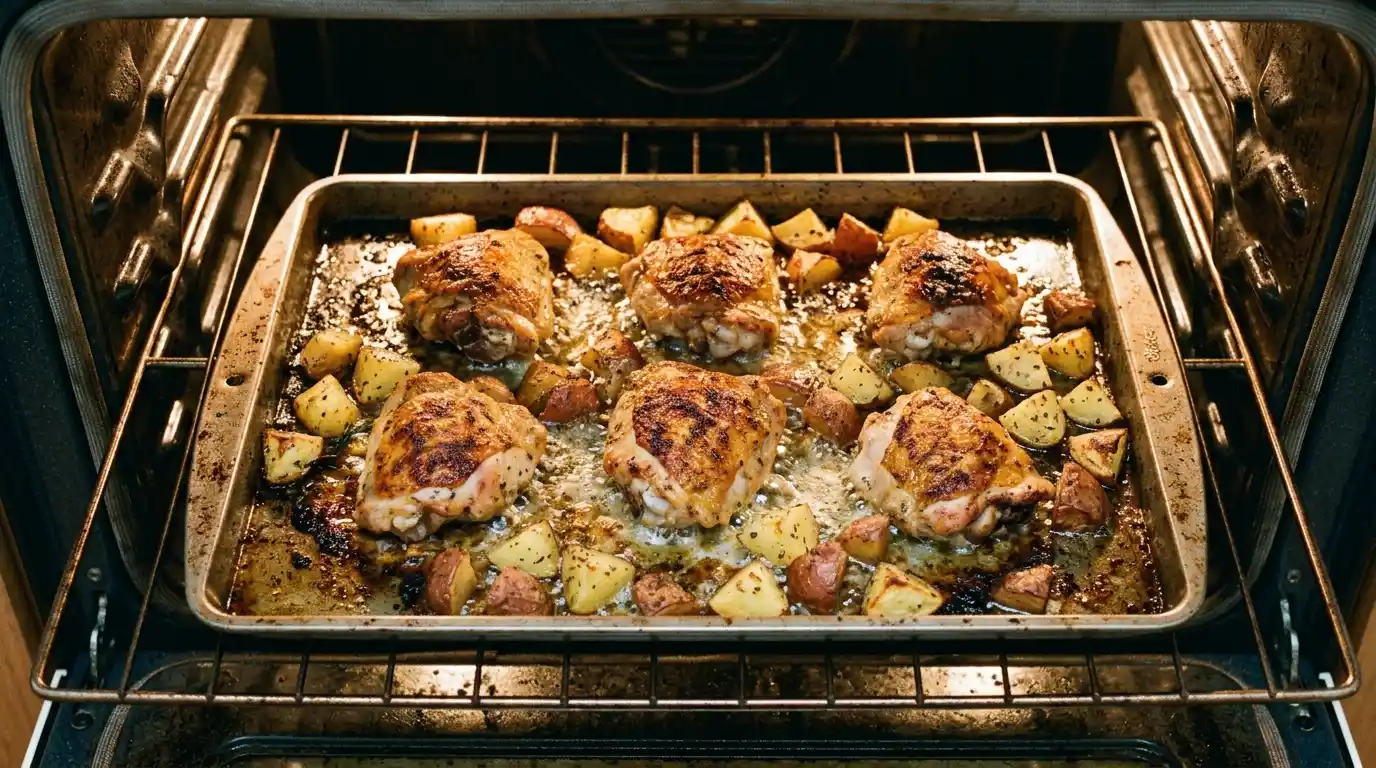
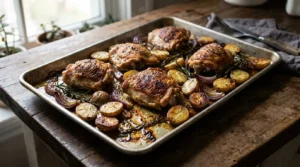
Bone in skin on thighs and halved baby potatoes, tossed in oil, salt, and rosemary, at 425 degrees Fahrenheit. Give the potatoes a fifteen minute head start alone, then add the thighs skin side up and roast 35 minutes more. The rendered chicken fat dripping onto the potatoes is the entire point, so do not line under the chicken.
2. Chicken fajitas
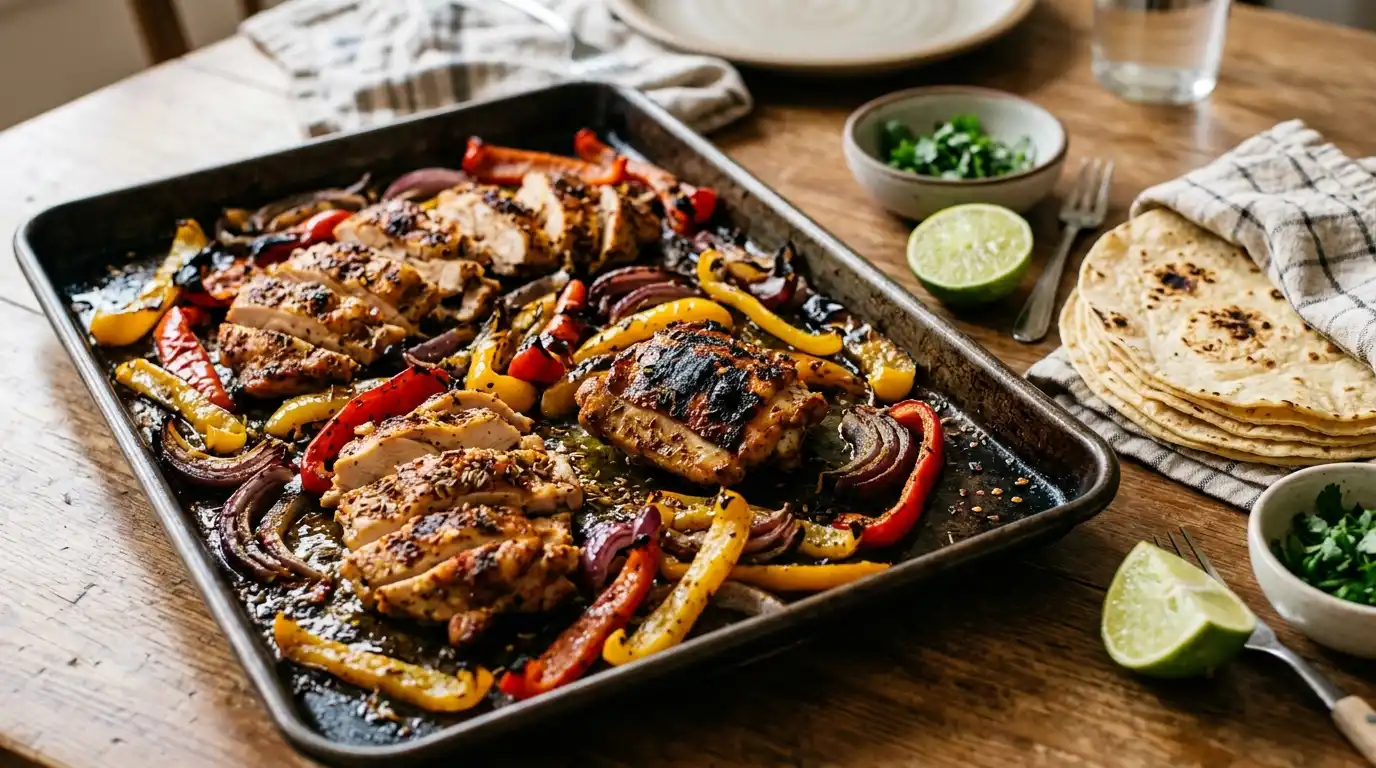
Sliced chicken breast, peppers, and onion tossed with cumin, chili powder, and lime, spread thin at 425 for about 20 minutes. Everything is thin and cooks together here, so no staggering needed. Char them slightly under the broiler for the last two minutes and pile into warm tortillas.
3. Honey mustard chicken and broccoli
Thighs coated in a mix of honey, mustard, and garlic, roasted at 400 for 20 minutes, then broccoli added around cooked chicken for the final 15. Toss the broccoli in oil first or it dries into little burnt trees. A squeeze of lemon at the end cuts the sweetness.
4. Greek chicken with potatoes and feta
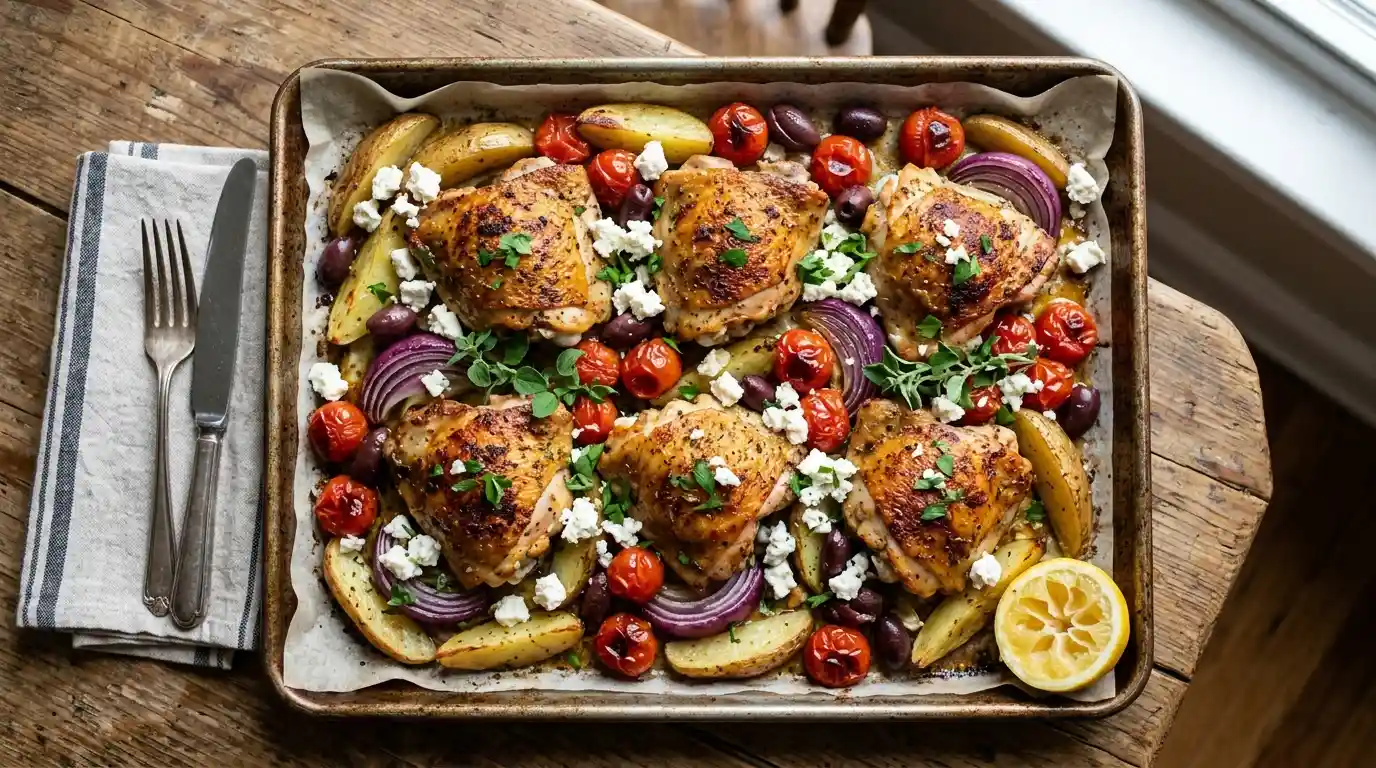
Chicken thighs, potato wedges, red onion, and oregano roasted at 425, with crumbled feta and olives scattered over the last five minutes so the cheese warms without melting into nothing. Add a handful of cherry tomatoes at the halfway point. Lemon juice over everything at the table.
5. Chicken sausage and autumn vegetables
Sliced chicken sausage with cubed butternut squash, brussels sprouts, and red onion at 425 for 30 minutes. Cut the squash smaller than the sprouts, since it is denser and needs the extra surface area to cook through in the same time. Maple syrup and a little mustard tossed in at the end.
6. Chicken shawarma tray
Chicken thighs marinated in yogurt, garlic, cumin, coriander, and turmeric for at least an hour, roasted at 425 with red onion until charred at the edges. The yogurt marinade tenderises the meat and helps it char, which is the trick behind takeaway shawarma. Serve with flatbread and a quick garlic sauce.
7. Buffalo chicken and ranch potatoes
Chicken tossed in buffalo sauce alongside potatoes seasoned with ranch spices, at 425. Add extra buffalo sauce to the chicken only in the last ten minutes, since the sugars in it burn if they roast the whole time. Blue cheese crumbled over at the end if you are that kind of person, and I am.
8. Lemon garlic chicken and green beans
Thighs with lemon slices and whole garlic cloves at 400 for 25 minutes, then green beans added around the chicken for the last 15. The garlic goes soft and sweet in its skin and you squeeze it out over everything. Do not add the green beans early or they go grey and limp.
9. Chicken parm tray version
Breaded chicken cutlets baked at 425 until crisp, then topped with a spoon of marinara and mozzarella and returned until the cheese melts. Bake the cutlets on a wire rack set in the pan for the first stage so the underside crisps instead of steaming. Basil at the end.
10. Jerk chicken and pineapple
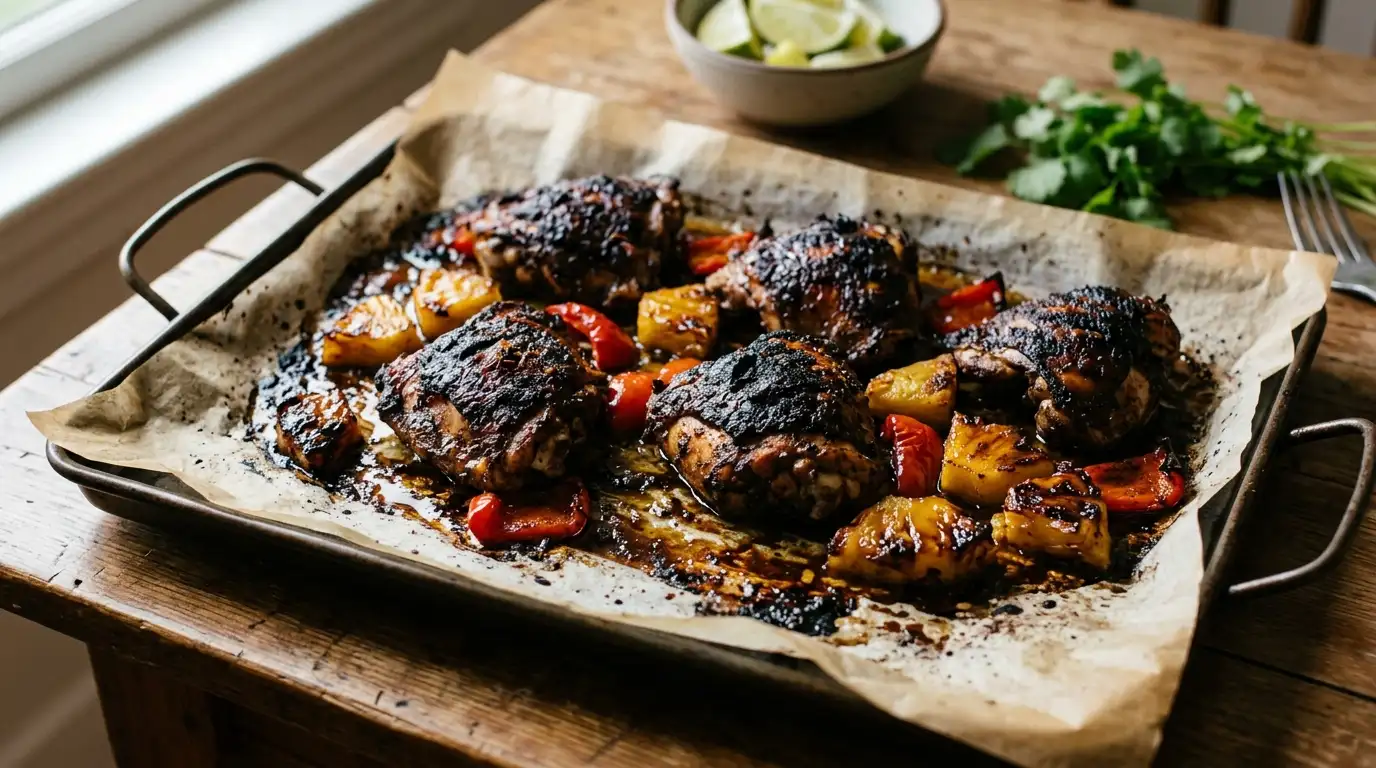
Thighs coated in jerk seasoning with chunks of pineapple and red pepper at 425 for 30 minutes. The pineapple caramelises and its sweetness balances the heat of the jerk. Line this one with parchment, because the sugars from the pineapple will weld themselves to a bare pan.
11. Pesto chicken and tomatoes
Chicken breasts coated in pesto with cherry tomatoes and a drizzle of oil at 400 for 22 to 25 minutes. Tomatoes burst and make a light sauce as they roast. Add fresh mozzarella torn over the top for the last five minutes if you want it more substantial.
12. Whole spatchcocked chicken with vegetables
Ask the butcher to spatchcock a whole chicken, or cut out the backbone yourself, and it lies flat and cooks in about 45 minutes at 425 instead of over an hour. Vegetables go underneath to catch the juices. This is the one that looks impressive for almost no extra effort, and it is what I make when people come over.
How to build your own and get the timing right
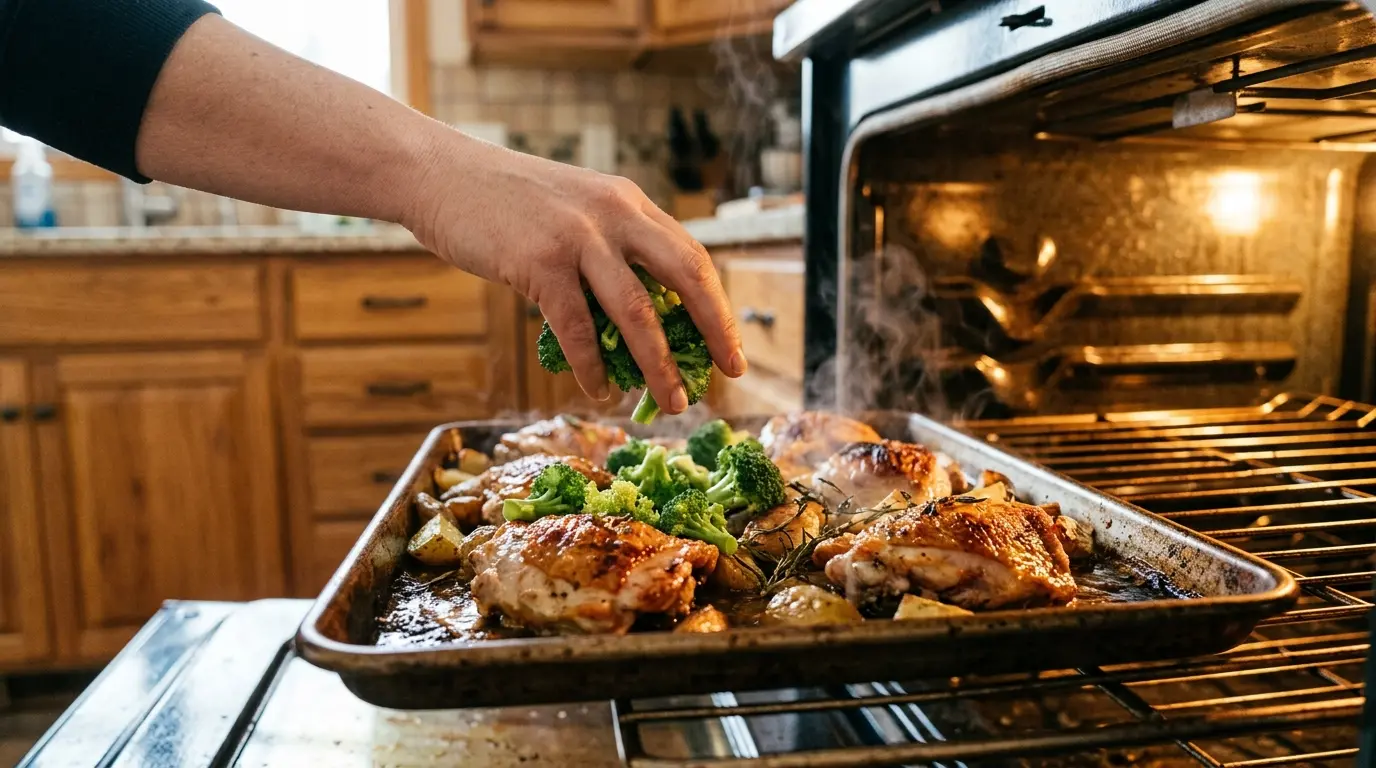
Once you understand the staggering, you can build any sheet pan chicken dinner without a recipe. Group your ingredients by how long they take. Dense vegetables like potatoes, carrots, squash, and beets go on first and need around 40 to 45 minutes total. Chicken thighs need about 35 to 40 minutes and go on next, or at the same time if the vegetables are cut small. Medium vegetables like broccoli, peppers, and green beans want 15 to 20 minutes, so they join partway through. Delicate things like cherry tomatoes, asparagus, and any cheese go on for the last 5 to 10 minutes only. On temperature, 425 is the sweet spot for browning without drying, and thighs are far more forgiving than breasts, which go from juicy to dry in about five minutes. If you use breasts, pull them at an internal temperature of 165 degrees Fahrenheit and check early. On equipment, use a heavy rimmed sheet pan rather than a thin one, since thin pans warp and buckle in a hot oven with a bang that will make you jump. Line with parchment for anything sugary or sticky, but leave the pan bare under chicken where you actually want the browning and the fond. And the crowding rule again, because it is the one people ignore, if it does not fit in a single layer with a little space, use two pans and rotate them halfway.
Frequently asked questions
Why is my sheet pan chicken dry while the vegetables are raw? The vegetables were too dense to finish in the chicken’s cooking time. Give potatoes and other hard vegetables a 15 minute head start before adding the chicken, and use thighs rather than breasts since they stay juicy far longer.
What temperature is best for sheet pan chicken dinners? 425 degrees Fahrenheit is ideal for most, hot enough to brown and crisp without drying the meat. Drop to 400 for saucy or sugary coatings that would otherwise scorch, and always check chicken breast early since it overcooks quickly.
Should I use chicken breasts or thighs? Thighs are more forgiving and stay juicy through the longer roasting a sheet pan dinner needs. Breasts work but must be pulled at 165 degrees Fahrenheit, so add them later than the vegetables or use a separate quicker tray.
How do I stop my vegetables from steaming instead of roasting? Do not crowd the pan. Everything needs a single layer with a little space, so use two pans if you have to. Patting vegetables dry and using enough oil also helps them brown rather than steam.
Can I prep sheet pan chicken dinners ahead? Yes. Chop the vegetables and marinate the chicken up to a day ahead and keep them separate in the fridge. Store them dry, since salted vegetables release water overnight, and toss everything with oil just before it goes in the oven.
Final thoughts
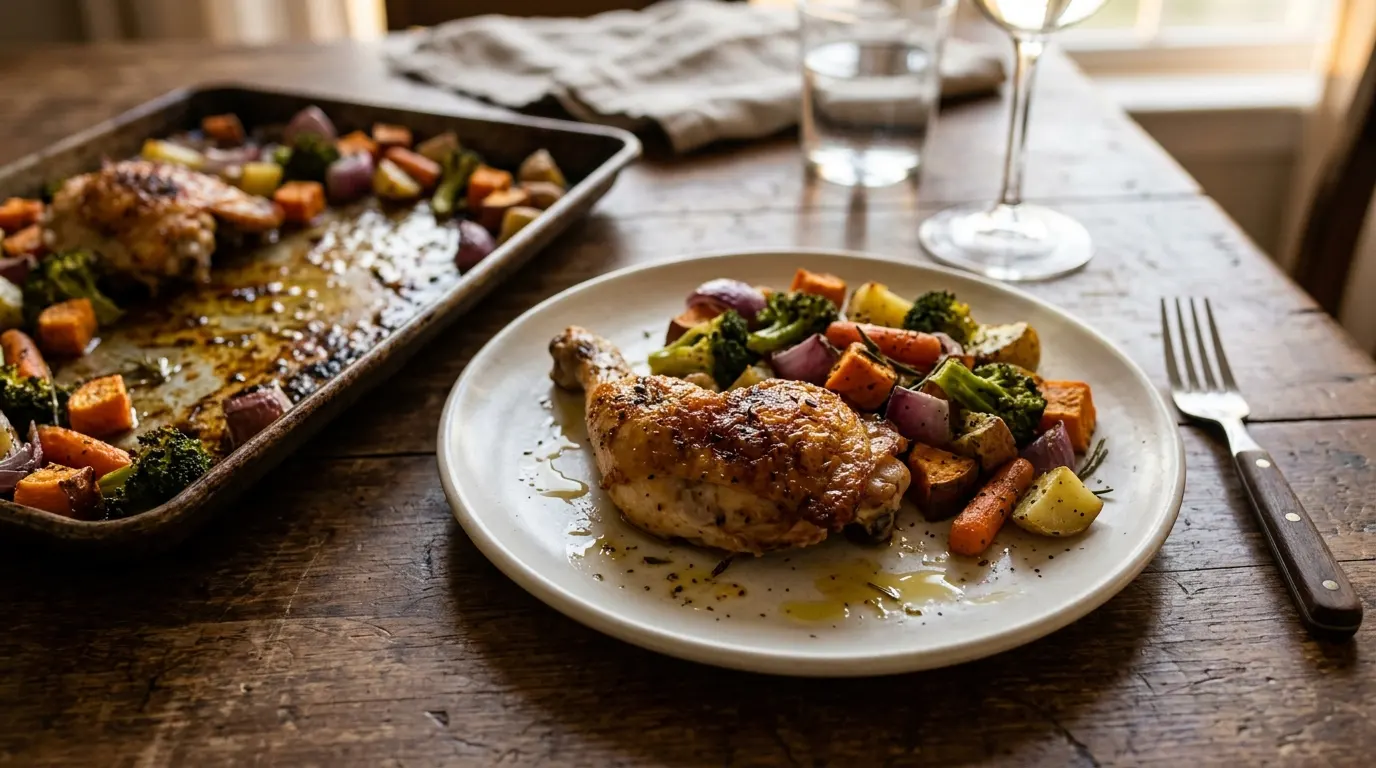
The reason these became my default is not the flavour, though that is good. It is that there is one pan to wash and the oven does the work while I do something else, and once the timing clicks you stop needing to think about it at all.
So pick one from this list for a weeknight and pay attention to the staggering, because that is the whole game. If you try the spatchcocked chicken, come back and tell me how it went, since it is the one that looks like far more effort than it actually is.